
JPMorgan roils campaign for Obama, Romney

Published May 12, 2012 4:00am ET


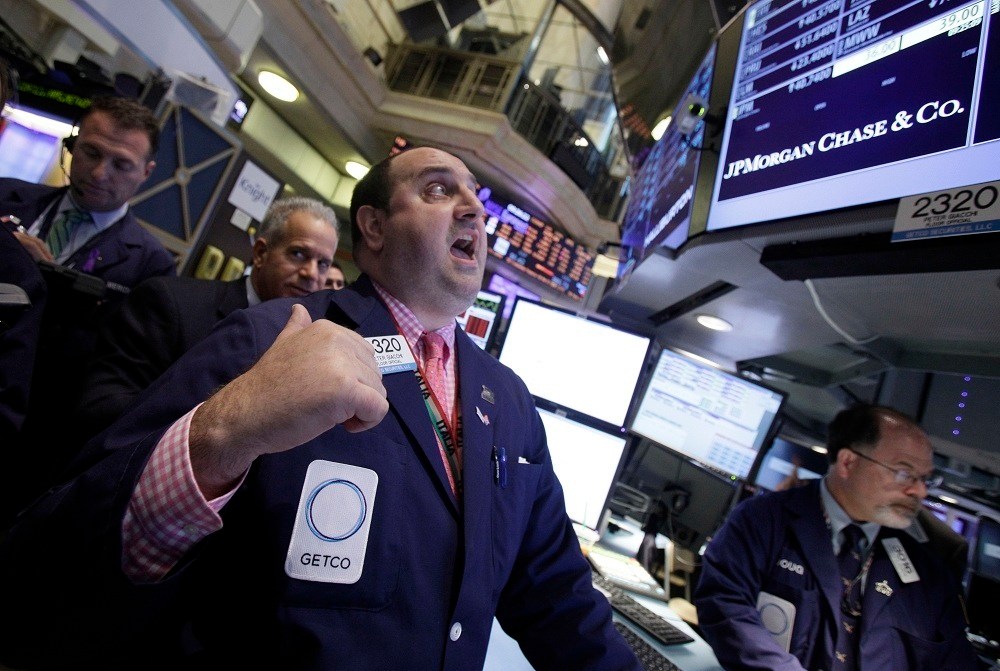
Reports that one of the nation’s largest banks, JPMorgan Chase & Co., lost $2 billion in just six weeks of derivatives trading have reverberated through Washington and on the presidential campaign trail, with Democrats renewing their call for stricter government regulations of Wall Street.

President Obama’s campaign jumped at the chance to use the bank’s loss of billions in customers’ money through the complex, opaque derivative trades to attack his Republican opponent, Mitt Romney, who already committed himself to repealing the tougher regulations Congress imposed on Wall Street following the mortgage crisis from which the nation is still recovering.

Republicans, Obama’s camp argued, are courting disaster with proposals to reduce regulations on institutions so large that their failure could drag the entire economy.

“Rolling back Wall Street reform, as Mitt Romney proposes, would be reckless,” said Obama campaign spokeswoman Lis Smith. “Returning to the failed policy of letting Wall Street write their own rules would put all of us at greater risk of another financial crisis.”

Romney argues that the so-called Dodd-Frank Wall Street reforms, the most sweeping financial rules imposed since the Great Depression, are an impediment to economic recovery and must be repealed. The law’s restrictions on banks’ capital levels, derivative trading and other changes “scared the dickens” out of the nation’s financiers and stifled investment needed to jump-start the economy, Romney said.

Romney’s campaign responded to the JPMorgan announcement by noting that “investors, not taxpayers, will incur any losses.” The episode, they said, “demonstrates the importance of oversight and transparency in the derivatives market.”

As the JPMorgan revelations roil the financial and political waters, it’s still unclear how public concerns over Wall Street will play out for Obama and Romney.

Obama struck a populist chord early in the campaign by railing against Wall Street excesses. But that angered his biggest campaign contributors, who felt like they were being made scapegoats for the nation’s financial crisis. Obama has since tried to buff his credentials as a pro-business Democrat.

Romney made his fortune on Wall Street and said recovery requires that the private sector be freed from burdensome government regulation. But the JPMorgan fallout won’t necessarily prove a negative for him in the long run, analysts said.

“Obviously, Romney will be attacked for being a creature of Wall Street, but this could be an opportunity if he wants to change gears,” said James Pethokoukis of the American Enterprise Institute. “If he comes out and says ‘let’s break up the banks,’ it could allow him to grab an issue that Obama’s been unable to grab. [JPMorgan] was supposed to be the best-run bank in the world.”

So far, Romney’s given no indication he’d take such a tact.

Still, even JPMorgan CEO Jamie Dimon, a former Obama backer and one of the most vocal proponents for reducing regulations on the banking industry, suggested that his bank’s losses are likely to empower Washington to get tougher with Wall Street.

“We know we were sloppy,” Dimon told NBC’s “Meet the Press,” according to an early transcript. “We know we were stupid. Regulators should look at something like this — that’s their job.”

[email protected]