

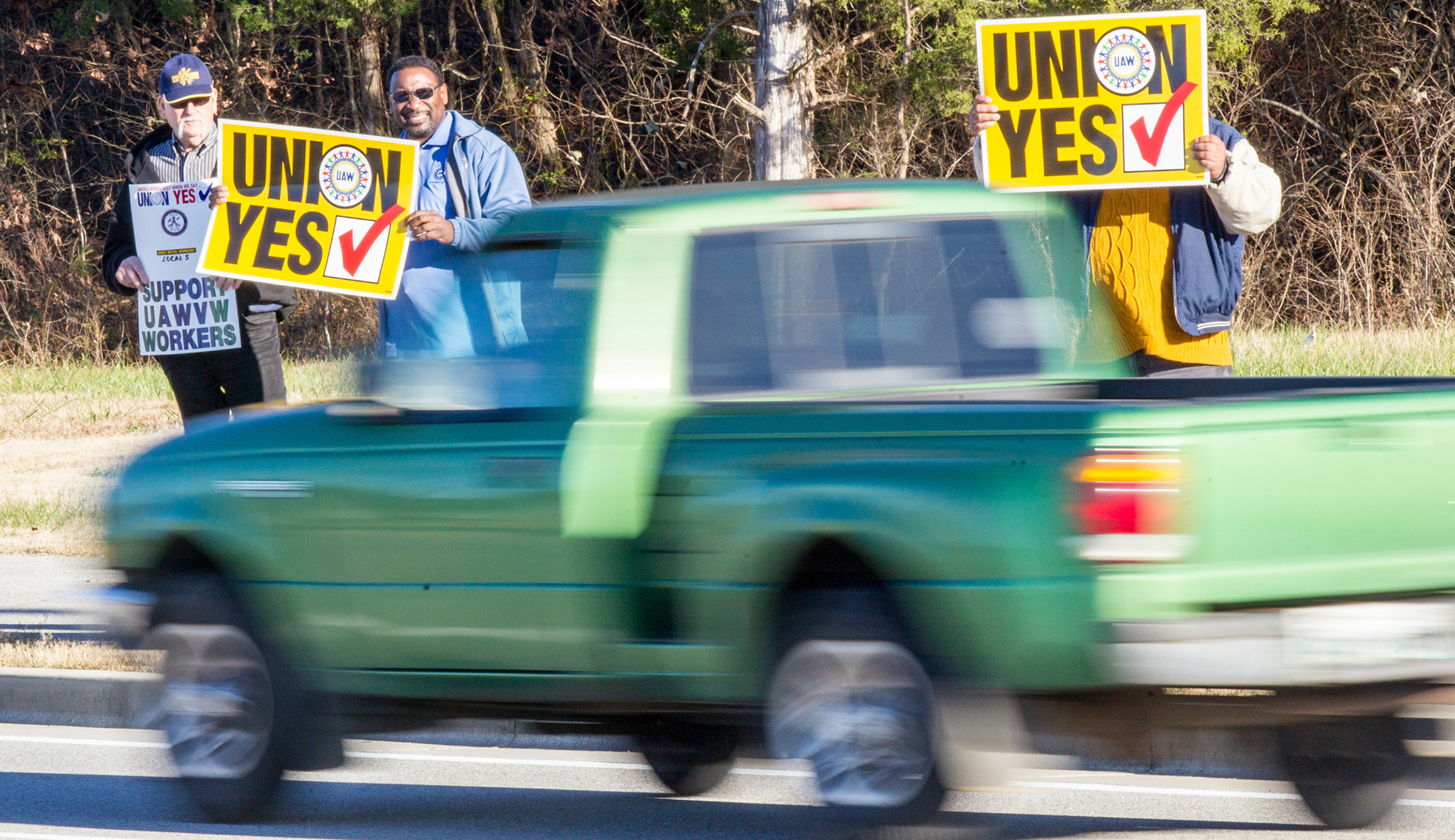
House Republicans marked up three bills Thursday in the Education and the Workforce Committee that would roll back changes made by the National Labor Relations Board, the main federal labor law enforcement agency, intended to streamline workplace organizing elections.
Business groups have long complained that the changes the board made under former President Barack Obama were unfair and designed specifically to boost union organizing. The bills passed on strict party-line votes and now go to the full House.
Recommended Stories



GOP lawmakers argued that the NLRB’s changes benefited labor leaders at the expense of the ability of individual workers to make informed decisions about joining a union. “These policies not only hampered our economic recovery … they also stripped away workers’ choice,” said Rep. Tim Walberg, R-Mich., chairman of the Health, Education, Labor and Pensions Subcommittee.
The Workforce Democracy and Fairness Act would roll back a labor board rule that shortened the period from when the board authorizes a workplace vote on unionizing to when the vote is scheduled. The board shortened the period to as little as 11 days in a 2014 rulemaking, which is down from about a month previously. The Republican legislation would allow the vote no earlier than 35 days after authorization. It also would specify that the vote must involve the entire workplace, not just one part of it, addressing another change the board made.
“The NLRB rule was designed to rush workers into a union before they had the opportunity to understand their options,” Walberg said.
The committee also marked up the Employee Privacy Protection Act, which would roll back a rule requiring employers to give unions seeking to organize their business all worker contact information, regardless of whether the employees authorize it. The bill limits employers to giving the unions “not more than one additional form of personal contact information of the employee, (such as telephone number, email address, or mailing address) chosen by the employee in writing.”
A third bill, the Tribal Labor Sovereignty Act, would clarify that the NLRB’s authority does not extend to Indian reservations. Unions have sought to organize many casinos on the reservations.
Democrats countered that the legislation had no purpose other than hobbling unions. “Labeling these bills with titles like ‘fairness’ and ‘democracy’ fails to mask their actual purpose,” said Rep. Bobby Scott of Virginia, the top Democrat on the committee.
Unions strongly backed the Obama-era changes, arguing the board was merely acting to prevent union-busting by managers. The changes appeared to have had an impact. The labor board presided over 1,628 private-sector workplace elections in 2015, of which the petitioning unions won 1,128 for a 69 percent success rate. That was the highest win rate for organized labor in a decade and the second highest in the last two decades. Overall, the elections netted unions 62,000 new members.
