

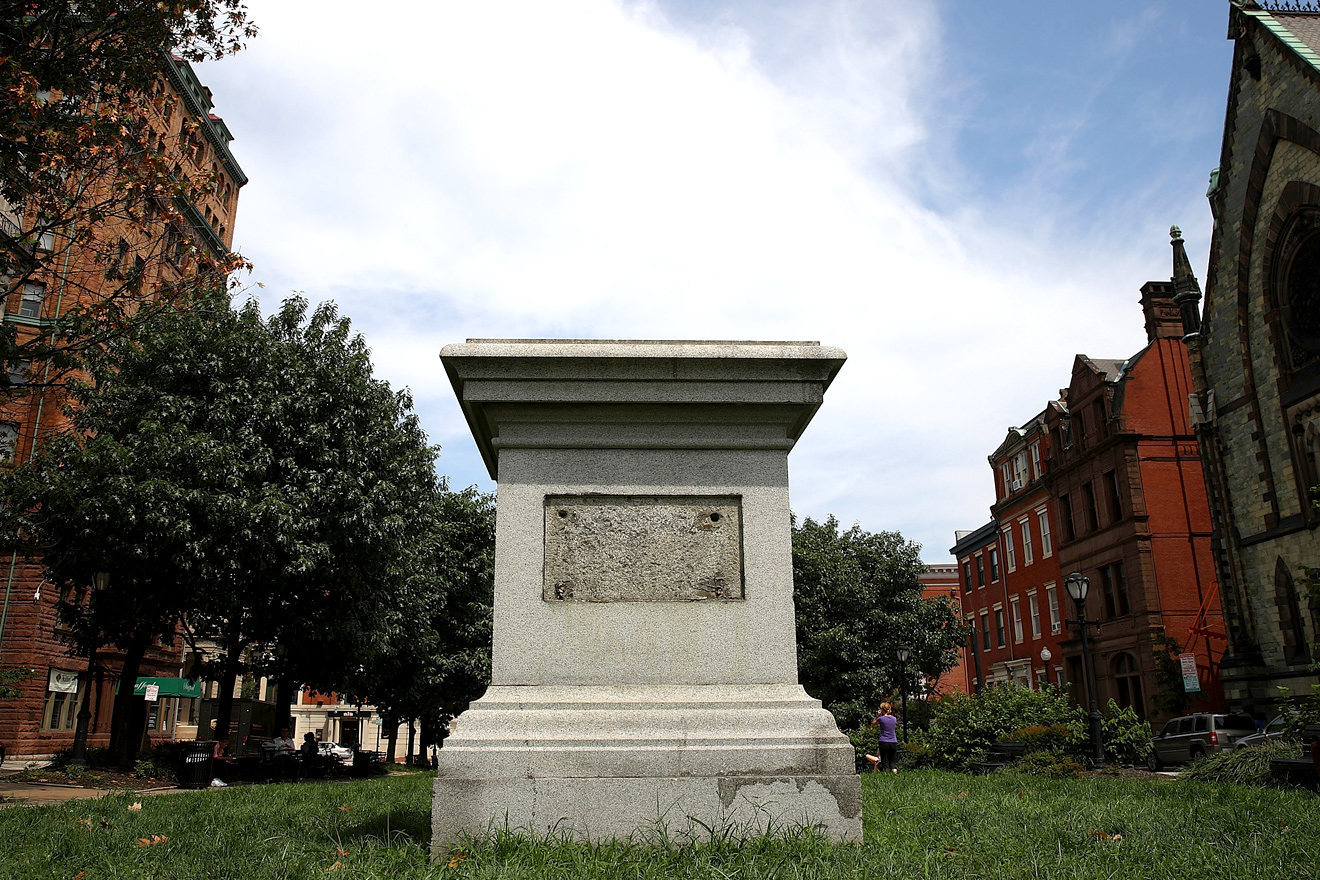
Much ink has recently been spilled because of America’s statues of Confederate generals; in Charlottesville, wicked men flying Nazi flags caused blood to be spilled as well. In hopes of avoiding further violence, the city of Baltimore, Maryland, recently removed its Confederate statues in the middle of the night (and, for good measure, one of Chief Justice Roger B. Taney, author of the Dred Scott decision). Activists have also set their sights on the quasi-Confederate quarters of Maryland’s state flag. Still, Maryland’s most prominent Confederate memorial remains, despite efforts to remove or change it: the official state song, a pro-Confederate anthem that has been called “America’s most martial poem.”
Maryland remained in the Union during the Civil War, but it was a slave state and tens of thousands of its citizens fled to fight for the Confederacy—though perhaps only half the number who fought for the Union. It was a Marylander, John Wilkes Booth, who assassinated President Lincoln just after the war’s end. Booth’s shout of “Sic semper tyrannis!” echoed a phrase from the poem that went on to be Maryland’s state song.
Stay informed.Stay ahead.
Join Washington Examiner for unlimited access to the news, analysis, and commentary that matter most.
Already a member? Log in
