

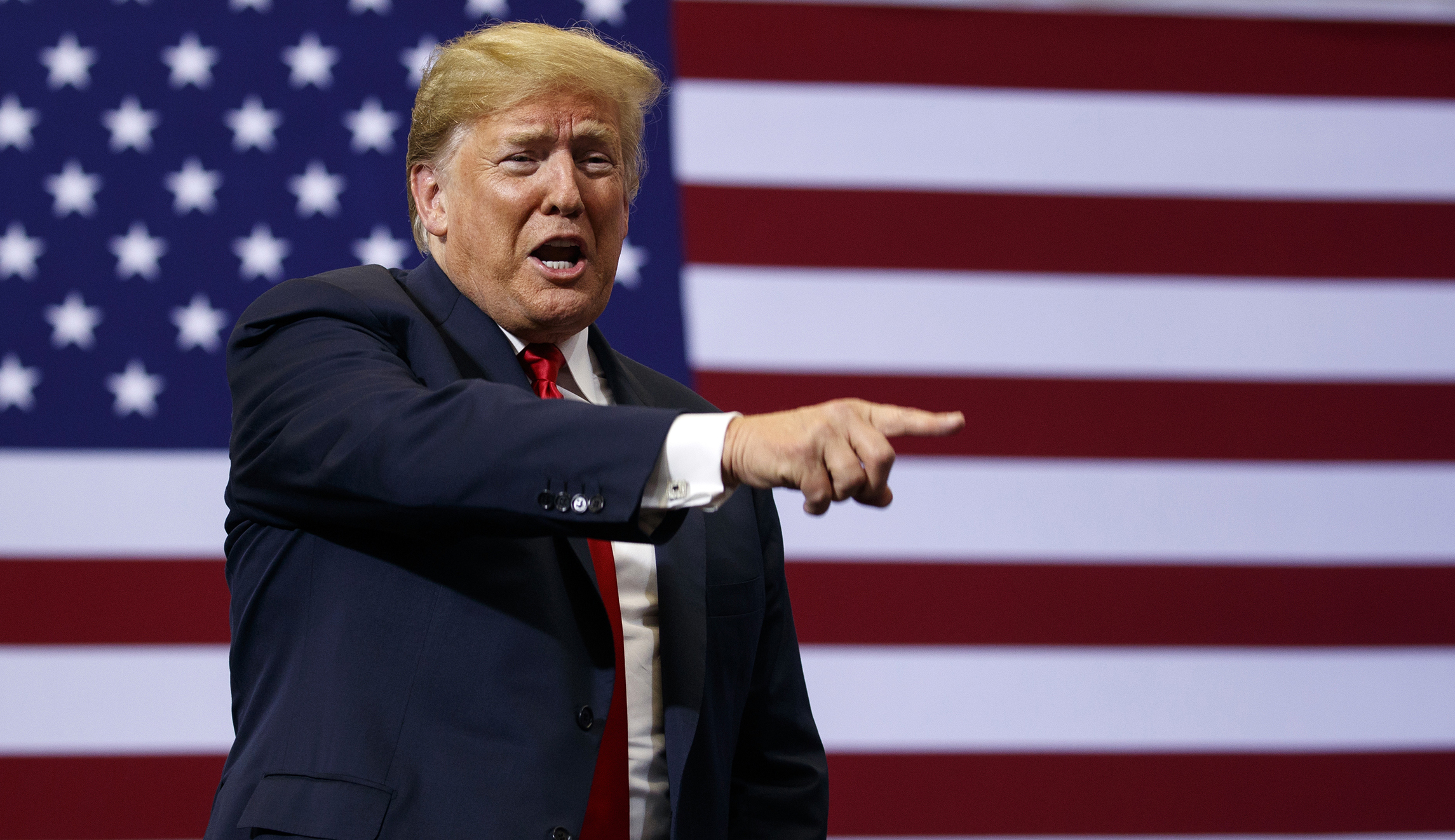
President Trump’s aggressive trade policies could punish his most committed supporters, according to an updated analysis from the Brookings Institution.
The centrist, Washington-based think tank projects that more than 1 million jobs in over 2,600 counties across America that voted for Trump in 2016 could suffer in a trade war with China that began in earnest on Friday. Nearly 564,000 jobs in just under 500 counties that supported Democrat Hillary Clinton two years ago are threatened.
Recommended Stories



“The U.S. soybean industry’s worst fears are coming to pass today with the implementation of tariffs on Chinese imports,” the Iowa Soybean Association said in a statement. “This aggressive action positions Iowa and America’s soybean farmers directly in the crosshairs of a full-scale, multi-national trade war if China, as it has promised, imposes tariffs on U.S. soybean imports.”
Trump defeated Clinton in Iowa by close to 10 percentage points. Almost 51,000 jobs could be adversely impacted in the battleground state if Trump’s effort to negotiate more favorable trading terms with China spins out of control and results in a war of escalating tariffs on a broad range of exports from both countries.
Republicans in Congress have for months been concerned that they could pay the price for Trump’s trade policies in the midterm elections, fretting that a tit-for-tat tariff battle with Beijing will undercut a strong U.S. economy that in June produced 213,000 jobs and an significant uptick in the number of Americans who joined the labor force.
Trump has dismissed those concerns, claiming that the U.S. economy has little to lose from a trade war. His theory will be tested after he slapped $34 billion in higher tariffs on Chinese imports and Beijing responded with $34 billion in new tariffs on U.S. imports. Among the affected U.S. exports are soybeans. Nationally, soybean farmers export 60 percent of their crop, about $14 billion annually, to China.
Agriculture stands to be hard hit, but it isn’t the only sector of the American economy concerned about Trump’s trade policies. Manufacturing, the industry that Trump said stands to benefit the most, also is concerned. Brookings first analyzed the potential impact of a trade war with China in the spring, after Trump threatened steep tariffs if Beijing didn’t agree to better terms for American products.
Yet many in the line of fire are hesitant to speak out, worrying that doing so could incite retaliation from the president, as experienced by Harley Davidson after the Wisconsin motorcycle manufacturer responded to threats of a trade war with the European Union by moving some manufacturing overseas.
“We now have an unparalleled opportunity to stop these practices at their root, through a strategic approach that includes the negotiation of a fair, bilateral, enforceable, rules-based trade agreement by an administration that champions manufacturing,” National Association of Manufacturers President and CEO Jay Timmons said in a statement.
“Tariffs, though, have not and will not solve the existing problems in China,” he added. “Tariffs will bring retaliation and possibly more tariffs. No one wins in a trade war, and it is America’s manufacturing workers and working families who will bear the brunt of continued tariffs.”
Senate Republicans are positioned to pick up seats in the midterm elections, despite an otherwise tough political environment for the GOP. The Democrats are defending nearly 10 seats in states won by Trump in 2016, about half of which continue to strongly support the president.
But if Trump’s aggressive trade tactics boomerang, voters could revolt, at least many Democrats believe so. Targeted Senate races are in states like Indiana (60,000 jobs impacted); Missouri (40,000); Montana (2,300); North Dakota (7,600) and Ohio (58,000), states with significant agriculture and manufacturing industries dependent on international trade, some with China, some with other countries.
Other states, like Iowa, could see reverberations in competitive House races.
Republican Mike Naig, Iowa’s elected secretary of agriculture, didn’t mince words on his concern about the effect Trump’s trade policies are having on his state.
“The continued escalation of trade tensions with China is having a real impact on Iowa farmers and businesses. We have seen a significant drop in prices for both crops and livestock and this is creating even more stress and uncertainty during what was already a difficult time for the ag economy,” Naig said in a press release.
“There are real issues in our trade relationship with China that need to be addressed, but Iowa agriculture cannot continue to bear the brunt of the retaliation from our trading partners.”
