

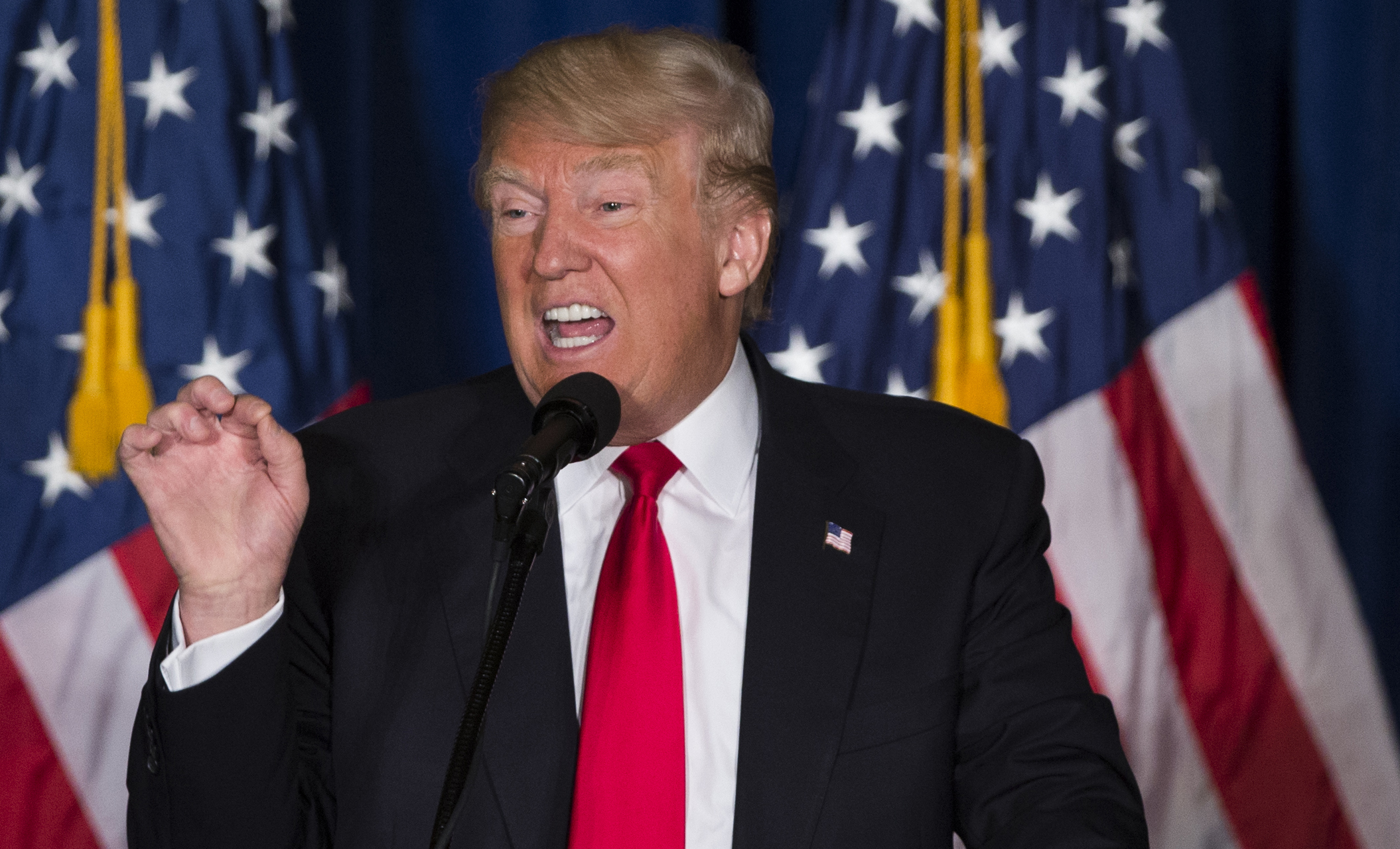
“Let Trump be Trump.”
It’s a popular slogan among enthusiastic Donald Trump supporters.
Recommended Stories


They view the presumptive Republican nominee’s authentic, off-the-cuff style as an asset against the much more scripted and traditional Hillary Clinton.
Now, Democratic political strategists are co-opting the slogan as their own, albeit for very different reasons.
In formulating a general election strategy, Democrats have concluded that the best way to undercut Trump is to let him do the talking, unobstructed and unedited.
So, as the summer unfolds, and the television and digital advertising platforms fill up with anti-Trump spots, don’t expect too much in the way of ominous voiceovers, distorted photography or creative editing.
As Democrats prepared to take on Trump, their research revealed that fewer voters are aware of Trump’s controversial statements and behavior than many political insiders had assumed.
Democrats also determined that letting Trump speak for himself afforded them their best opportunity to inflict damage on his campaign and boost Clinton, their party’s presumptive nominee.
“Trump is his own worst enemy,” Justin Barasky communications director for Priorities USA, the main pro-Clinton super PAC, said Friday in an interview with the Washington Examiner.
“Knowledge about Trump is a mile wide and an inch deep,” he added. “Not all voters are glued to their TV or smart phone or read political news all day.”
Priorities USA has reserved nearly $118 million in television advertising, to run through Election Day. On Friday, the group announced that it would begin advertising on television in Pennsylvania, with plans to spend $10.5 million there through Nov. 8.
Priorities USA also is investing in digital advertising, particularly to influence key voting blocs, such as women, Hispanics and Millennials. The super PAC reported raising $12.1 million in May and $52 million in the bank to spend, while claiming $45 million more in donor pledges.
Barasky declined to discuss future advertising or the Priorities USA view of which of Trump’s greatest hits from the GOP primary campaign leave him most vulnerable to attacks. But “dangerous and divisive” is a theme he returned to over and over in talking about how the group wants voters to think of him.
“We are going to communicate with as many voters as possible, in as many ways a possible, and show them that Donald Trump is too dangerous and divisive to ever be president of the United States,” Barasky said.
The message dovetails with the Clinton campaign’s line of attack. Trump, meanwhile, also is going after Clinton on character and temperament, although in a slightly different manner.
Last week, the Trump campaign unveiled the website, “LyingCrookedHillary,” to highlight what it bills as the former secretary of state’s “biggest lies.” First on the list, Clinton’s comments in the aftermath of the Sept. 11, 2012 terrorist attack on the U.S. consulate in Benghazi, Libya.
“But, you just wait. We have 9 additional videos that will cover everything from her illegal email server to her laughable claim of being “dead broke” upon leaving the White House,” Trump said in an email message to supporters.
Trump trails Clinton in fundraising. Likewise, pro-Trump super PACs are still ramping up long after Priorities USA hit the airwaves.
And, although the group didn’t want to provide a map to the Trump attacks it plans to roll out in the month ahead, the advertising it has run so far offers clues.
Nearly every spot features Trump speaking in his own words, and in some way tries to communicate that he is either too “divisive,” too “dangerous,” or both, to be elected president. Priorities USA contends that the message can work to undermine Trump on the economy, national security and other issues.
This month, the group unveiled a spot designed to undercut Trump’s national security credentials. It replays an audio clip from the GOP primary campaign where Trump said, in response to a question about who he consulted on national security, that he consulted himself.
The super PAC also issued a digital spot targeting Millennials that showed video of Trump mocking a disabled reporter who had written a critical story about him, and features a young cancer survivor talking about how the episode disgusted him. The same clip was used in a television ad targeting voters broadly.
Another digital ad, this one targeting Hispanics, highlights a recent Trump controversy. This time, Priorities USA used Trump’s comments from early June, when he suggested that a federal judge couldn’t be fair in a lawsuit involving one of his companies because of his Mexican heritage.
Clinton leads Trump by 6 points in the RealClearPolitics.com average of recent national polls, and holds smaller leads in most of the battleground states. The race is within reach and Republicans supporting Trump expect him to make up the difference by Election Day.
But Republicans that remain on the fence about Trump or outright opposed — itself a lingering problem — say the Priorities USA attacks are what they feared Democrats would use against the GOP standard bearer.
Trump’s rhetoric and conduct on the trail are powerful weapons against him and hard to explain away as standard, manipulated attack ads.
“They haven’t even gotten started on him yet,” said a Republican strategist, who requested anonymity in order to speak candidly. “Voters want to believe that somebody’s lying to them with a negative ad. But to do that with video — I think they’re going to take his own video and jam it down his throat for months.”
