

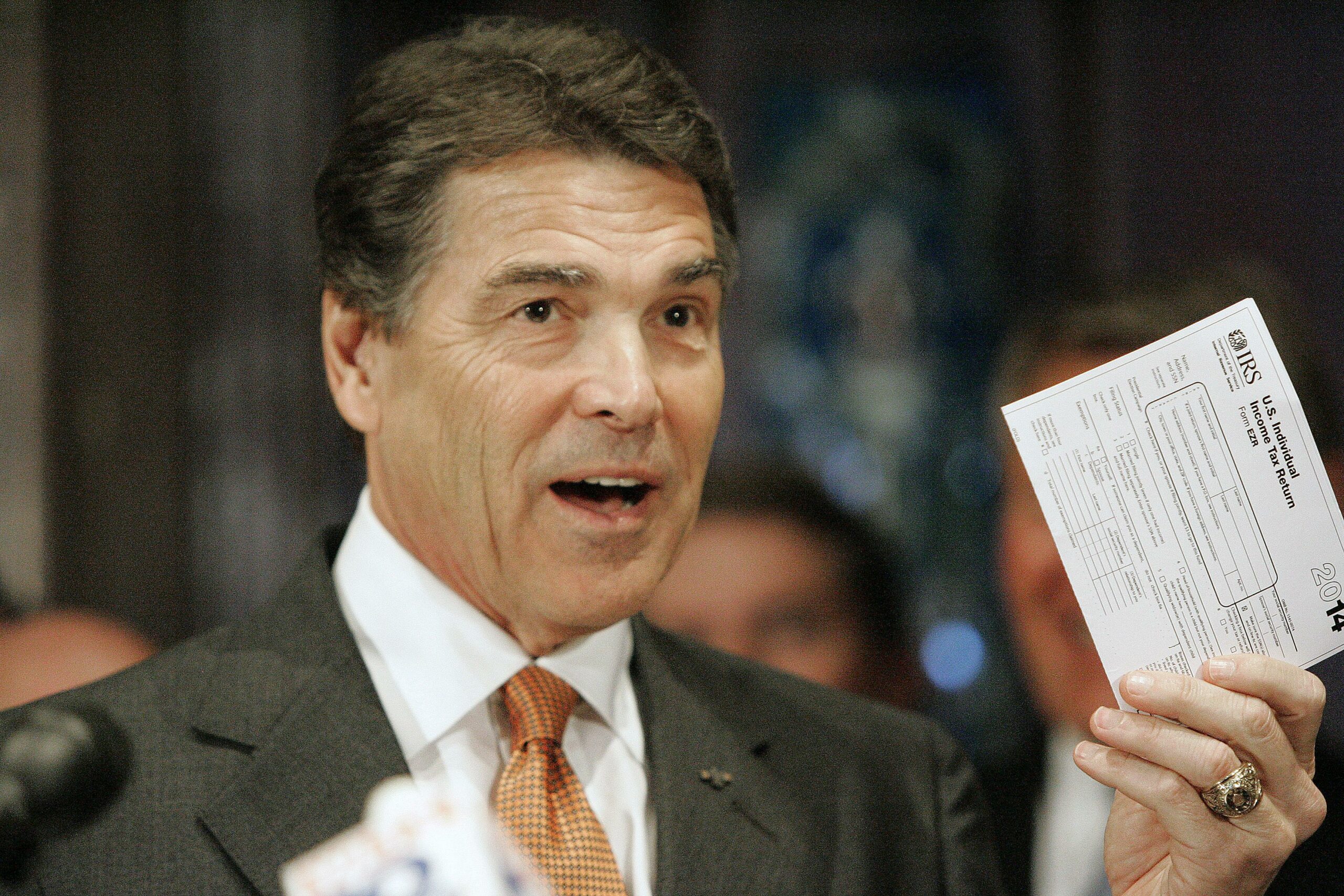
Texas Gov. Rick Perry on Tuesday called for the creation of a national flat tax on income, seeking to reignite a floundering presidential bid by overhauling a tax code that has long frustrated conservatives.
Perry, desperate for a game changer after plummeting from frontrunner to fifth place in recent polls, proposed that taxpayers choose between a 20 percent flat tax or their current income tax rate. He also proposed changes to Social Security and how the government spends money.
“It neither reshuffles the status quo nor expands the ways Washington can reach into your pocketbook,” Perry said during a campaign appearance in early-primary South Carolina. “Taxes will be cut across all income groups in America.”
Perry’s blueprint preserves tax deductions on mortgage interest and charitable donations for families earning less than $500,000 annually. It increases the individual standard deduction to $12,500. Perry also wants to lower corporate taxes to 20 percent and abolish the estate tax and taxes on capital gains and dividends.
Analysts predicted the plan would be welcomed by conservative voters.
“At least we have two candidates who are going big and not tinkering with the margins,” said Republican strategist Mark Corallo, praising both Perry and businessman Herman Cain’s 9-9-9 tax plan. “They’re willing to attack — and it’s about time.”
Yet, Corallo conceded that many taxpayers would reject the flat tax, meaning many of those who don’t now pay income taxes would continue to pay nothing under Perry’s plan.
“If we’re going to have a flat tax, let’s have a real flat tax and make everybody pay it,” Corallo said. “[The Perry plan] perpetuates the idea that some people can get a free ride.”
Perry is seeking to contrast his economic policies with those of Mitt Romney, who previously referred to a flat tax as “tax cut for fat cats,” and Cain, whose 9-9-9 plan would create a national sales tax. Perry said Washington politicians could not be trusted with another revenue pipeline.
Perry also proposed dramatic changes to the Social Security system, including allowing younger workers to opt out of the current system in favor of personal retirement accounts, a move likely to play well in a GOP primary but which backfired — most notably on former President George W. Bush — when actually proposed in the past.
Perry vowed to balance the federal budget by 2020, pass a Balanced Budget Amendment and cap federal spending at 18 percent of the gross domestic product.
However, some analysts dismissed the plan as a “fairy tale.”
“You just wonder how many times we have to play this game where we’re going to give everyone a lower tax rate and somehow raise more money,” said Dean Baker, co-director of the Center for Economic and Policy Research. “But there are enough people this is red meat for that it might be hard for Romney to attack it.”
Democrats were quick to pounce on the Perry blueprint as a boon for the wealthy.
“They would shift a greater share of taxes away from large corporations and the wealthiest onto the backs of the middle class,” said Obama campaign spokesman Ben LaBolt. “The belief that middle class Americans will benefit if we just give another special break to those at the top was long ago discredited.”
