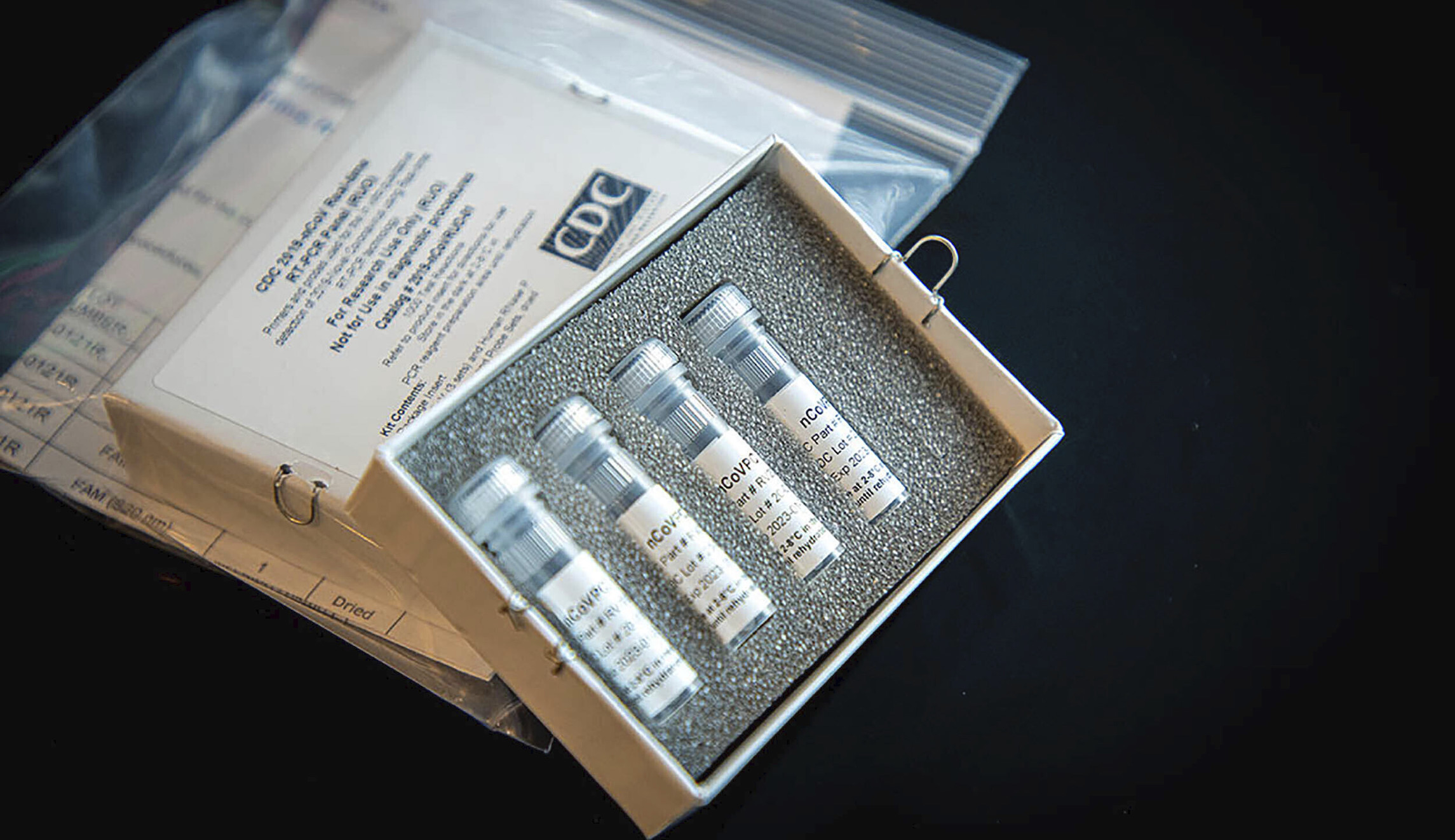
Comprehensive rapid COVID-19 testing has been the holy grail in tracking the disease and is a pivotal component in plans to get the grounded economy up-and-running.
Yet, in Florida, as elsewhere across the country, testing for the disease is episodic and restricted. Eligibility for a test requires permission from a personal physician, hospital physician or the state’s Department of Health (DOH), which prioritizes tests for only the sickest, the most vulnerable and health-care workers.
Recommended Stories
As of Wednesday afternoon, 144,570 Floridians had been tested for coronavirus with 15,455 results confirmed positive and 127,679 negative, according to DOH’s COVID-19 webpage, which reported 309 dead and 1,956 hospitalizations because of the disease.
Several types of rapid tests are infiltrating into some Florida hospitals. A 45-minute test by California-based Cepheid has been circulating since the U.S. Food & Drug Administration (FDA) approved it in late March.
Last week, the FDA approved a 5-15 minute test produced by Illinois-based Abbott Laboratories. Florida received 2,000 of the first 5,500 Abbott RealTime SARS-CoV-2 EUA tests shipped Monday and sent them to Jacksonville and south Florida hospitals.
Abbott’s nasal swab test is a “game-changer” for nursing homes, hospitals and first responders potentially exposed to coronavirus, Gov. Ron DeSantis said.
“When you have to wait 48, 72 hours for a test result, those are people that you’ve got to keep in the hospital most likely,” he said.
The governor said he scored the “instant” tests after Saturday discussions with Abbott Laboratories Vice President Tom Evers and President Donald Trump.
The company is producing 50,000 a day but will scale up production to ship 1 million tests a week by month’s end.
Because Abbott’s diagnostic platform only runs one sample at a time, it may not increase the volume of testing statewide dramatically, but it could be critical in testing nurses, doctors, EMTs and others to ensure they are not infected.
A blood diagnostic tool, DMGtest, also is being introduced in Miami-Dade County in one of the world’s first, if not the first, random tests to measure people’s exposure to coronavirus, not necessarily whether they have COVID-19.
The University of Miami Miller School of Medicine is coordinating with Miami-Dade County and BioMedomics of North Carolina to conduct serological testing of up to 750 random people contacted a week.
DMGtest will seek signs of people developing antibodies to the virus, which would mark a turnaround in stemming the disease’s spread and be “essential for tailoring interventions to stop local spread” that “may allow for less-restrictive measures,” the Wall Street Journal recently said.
In announcing the purchase of 20,000 DMGtests to screen first-responders, Miami-Dade Mayor Carlos Gimenez said the goal is to create a “snapshot.”
“This will give us tremendous insight into the dynamics of this virus,” he told reporters this week.
DeSantis said the state has purchased about 1 million doses of hydroxychloroquine, the anti-malarial drug primarily used to treat lupus that President Trump has called a “game-changer” despite only anecdotal evidence of a benefit for COVID-19 patients.
The governor spent much of his Tuesday new conference touting hydroxychloroquine and trotting out medical experts to say it should be used in treating severe coronavirus cases.
The state purchased the drug from Israeli manufacturer Teva, but DeSantis said prohibitions in shipping it from India, where it is produced, required a phone call from Trump to Prime Minister Narenda Modi.
