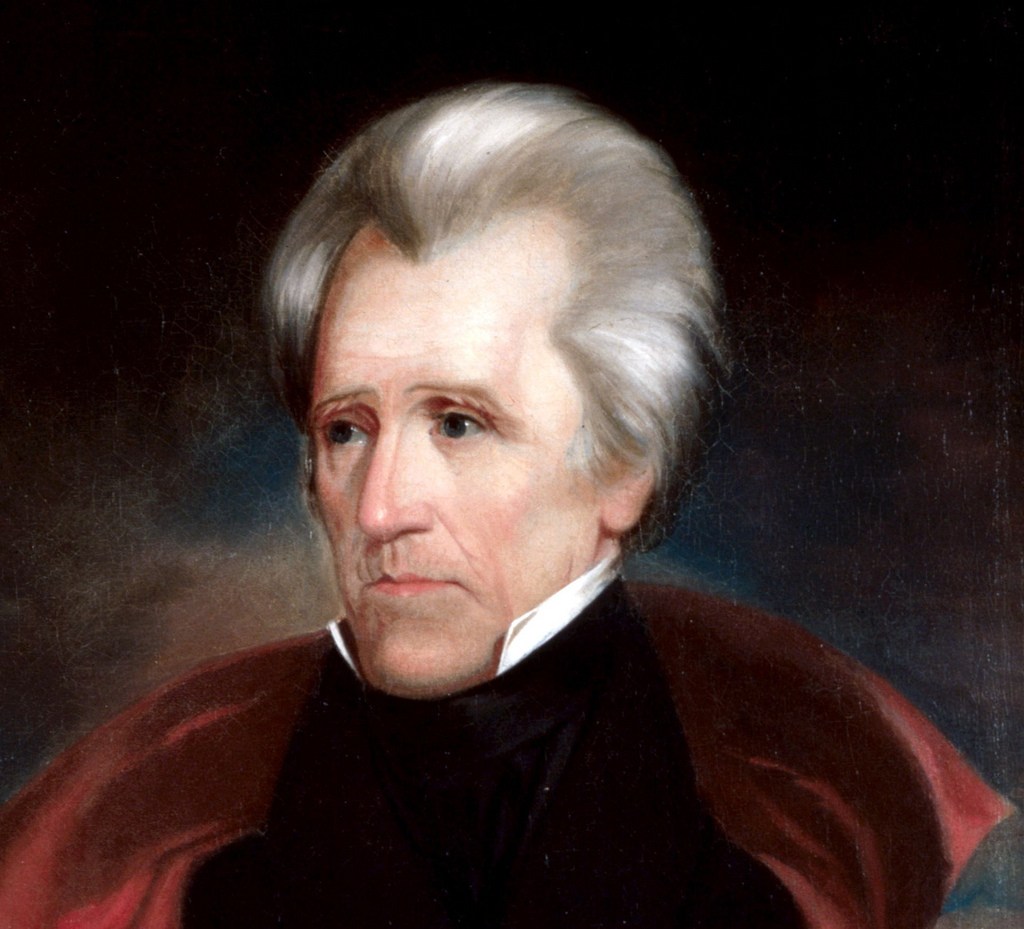
I had not realized, until very recently, that the business of depicting famous people on American currency is a zero-sum game. Alexander Hamilton is, at the moment, the hero of a blockbuster Broadway musical, and so there was never any chance that he might be supplanted on the $10 bill. (More about that in a moment.) But Andrew Jackson is another matter, and the zero-sum principle applies with a vengeance: In order that one famous person (Harriet Tubman) rises on the currency, another (Jackson) must fall—and in the spirit of the Age of Trump, must fall to universal glee and derision.
The sudden, and definitive, collapse of Jackson’s stock has been stunning, and I say this as one who is not an admirer. Up until very recently, Andrew Jackson was correctly perceived as the patron saint of the Democratic party, whose annual fund-raising dinners were named in his honor. The United States is full of cities, towns, and counties named for Jackson, and equestrian statues of Old Hickory may be found in squares and plazas around the country. “Jacksonian democracy” used to be something to which American politics aspired, and his portrait has been featured on the $20 bill since 1928—a bipartisan gesture, incidentally, on the hundredth anniversary of Jackson’s election.