House Democrats plan to include a major infrastructure proposal in an economic relief package they are drafting and hoping to consider by the time Congress returns — as soon as the end of April.
The legislation would implement a $760 billion measure drafted by the House Transportation and Infrastructure Committee and includes many provisions to combat climate change, such as requirements for more electric vehicles and high-speed rail.
Recommended Stories
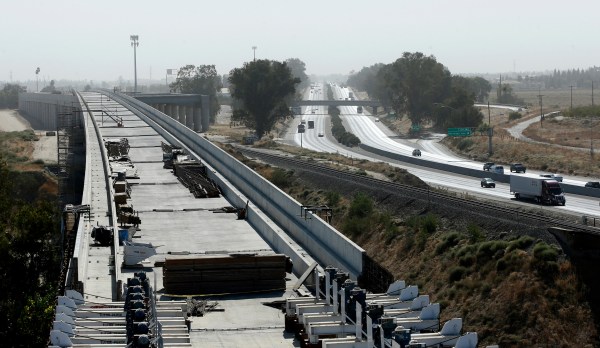
“This can be a very green bill,” said Rep. Peter DeFazio, an Oregon Democrat and the chairman of the committee. “It’s time to get serious. In rebuilding our infrastructure, we have a unique opportunity. It needs to be rebuilt in a way that looks to the future, the 21st century, and also deals with climate change and carbon pollution at the same time. It’s a no-brainer in my perspective.”
Democrats announced the plan a day after President Trump said that he, too, wants the country to embark on a massive infrastructure renewal effort.
“With interest rates for the United States being at ZERO, this is the time to do our decades long awaited Infrastructure Bill,” Trump tweeted on Tuesday. “It should be VERY BIG & BOLD, Two Trillion Dollars, and be focused solely on jobs and rebuilding the once great infrastructure of our Country! Phase 4.”
House Democrats are planning a major economic relief package that would serve as the “Phase 4” legislation. Congress and President Trump have enacted three laws to respond to the coronavirus outbreak, the last costing $2.2 trillion, which included economic relief for workers and businesses as well as direct aid to states and local governments.
The fourth package, Democrats said, will be a sweeping measure that includes infrastructure spending, expanding family paid leave, new worker-safety rules, a boost in food stamp spending, and aid to failing union pensions.
House Speaker Nancy Pelosi, a California Democrat, told reporters Wednesday the next bill will also address education and housing.
Democrats said the infrastructure portion of the bill would address expanding broadband internet to underserved communities, repairing infrastructure to ensure clean drinking water, and bolstering technology to improve the emergency response system.
Democrats in the last economic relief bill sought to eliminate some student loan debt and provide money to help colleges and universities deal with closures caused by the coronavirus.
A fourth bill may not move quickly.
While the House and Senate are scheduled to reconvene on April 20, Trump has extended social distancing guidelines until April 30.
Republicans are not enthusiastic about rushing to pass a fourth bill. Senate Majority Leader Mitch McConnell, a Kentucky Republican, wants to wait until the $2.2 trillion measure is fully implemented in order to determine what, if anything, is needed in a fourth measure.