

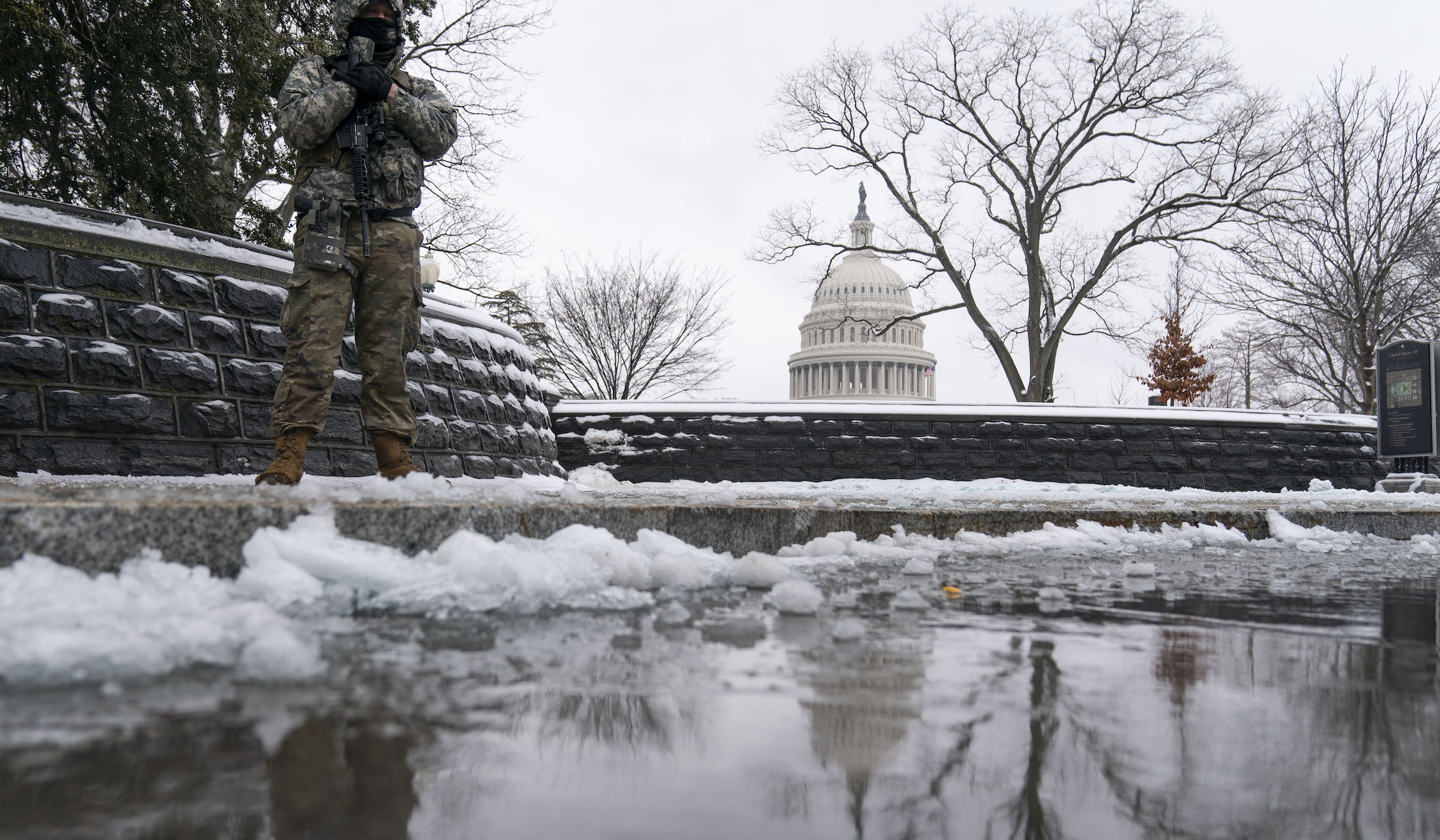
Snowy, freezing conditions, and a dearth of protesters across the capital region are not enough reason to reduce the National Guard presence in Washington, D.C., which currently stands at 6,000 troops from 30 states and U.S. territories following the riot on Jan. 6.
“The mission is to go through mid-March as planned,” D.C. National Guard spokesman, Capt. Tinashe Machona told the Washington Examiner on Friday. “We are not aware of any changes to that plan.”
Recommended Stories



The Guard is scheduled to draw down March 14 with a total expected price tag of $483 billion for the overall operation.
“There is no plan to extend that mission at this time,” Machona said.
Protesters’ handwritten signs with ink smeared by freezing rain call for the National Guard to be sent home. Members of Congress, too, have questioned their need, and some have demanded the threat assessments that officials are using to justify 7-foot, nonscalable fencing with barbed wire around a vast perimeter surrounding the Capitol building.
The Capitol Police, which was overwhelmed by pro-Donald Trump rioters on Jan. 6, are now calling for the fencing to remain for several months, while GOP lawmakers two weeks ago called on House Speaker Nancy Pelosi to tear it down.
NATIONAL GUARD DEPLOYMENT IN DC WILL COST $483M THROUGH MID-MARCH
Several days of snow and freezing temperatures in the capital region have led to severe weather accommodations to keep National Guard members safe from the elements in support of the Capitol Police, Secret Service, Park Police, and D.C. Metropolitan Police.
“Members of the National Guard supporting the security mission in Washington, D.C., are issued cold-weather gear, and they have a work-rest cycle designed to reduce their exposure to the cold and allow them to warm up,” Machona said, adding that all are housed at local hotels.
Following the riot, the National Guard presence surged to 26,000 to provide protection for President Biden’s inauguration. Meanwhile, fences expanded around government buildings, and heavy-duty trucks blocked nearby roadways in a militarization of the region never seen before in the nation’s history.
In recent weeks, a litany of questions has arisen surrounding the Guard presence, while the governors of Texas and Florida, among other states, called their troops home.
On Jan. 22, Capitol Police kicked the National Guard out of rest areas inside the Capitol building, forcing them to sleep in a nearby garage before a storm of criticism returned Guard members four hours later.
Guard members who spoke to the Washington Examiner days later wondered when they could go home, while others being lodged in ritzy Georgetown said they believed in the security mission and assured they were well taken care of.
Defense Secretary Lloyd Austin made a visit to the troops on Jan. 29 to thank them for their service. Pentagon spokesman John Kirby repeatedly said Austin wants to get the citizen-soldiers home “as soon as possible” but believes their mission is still needed.
CLICK HERE TO READ MORE FROM THE WASHINGTON EXAMINER
“The National Guard has been requested to continue supporting local and federal law enforcement agencies with security, communications, medical evacuation, logistics, and safety support through mid-March,” Machona said.
Despite initial concerns that events, such as Trump’s second impeachment trial, might lead to violent disturbances, none have materialized. With less than a month remaining in the mission, the FBI and Department of Homeland Security have made no mention of specific impending threats, but reports indicate that online chatter targets members of Congress.
