

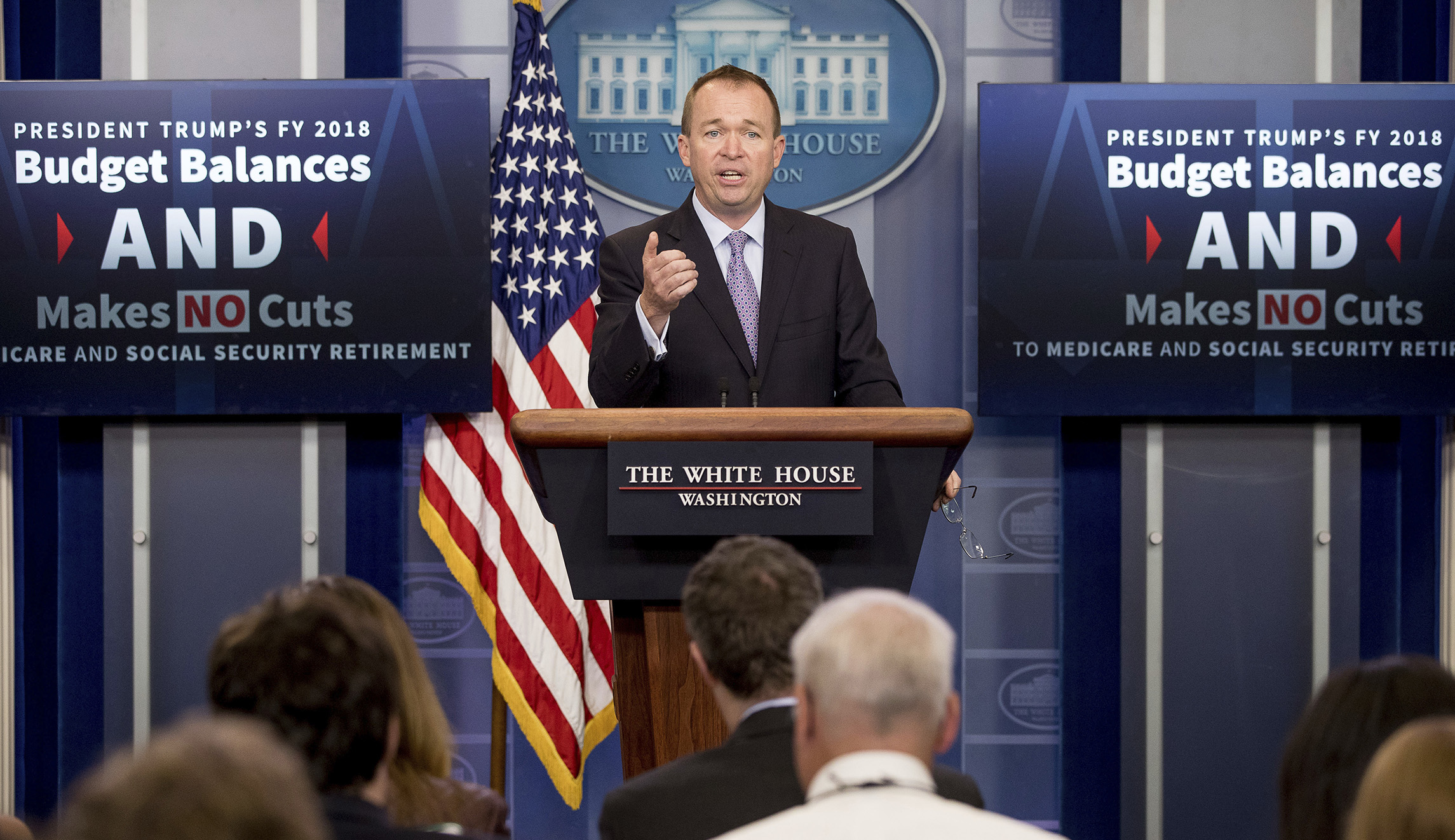
The Trump administration released a budget plan on Tuesday that says cutting spending and revitalizing U.S. economic growth would allow the government to balance the budget within a decade, and to pay back the entire $20 trillion national debt a few decades later.
“Under this plan, the debt will continue to fall both in nominal dollars and as a share of GDP beyond that point, putting us on a path to repay the debt in full within a few decades,” the budget plan said.
Recommended Stories



Trump’s plan was dismissed by most as politically impossible, especially given the hesitance within the Republican Party to make cuts as deep as Trump is proposing. But Trump’s budget nonetheless puts real emphasis on the need to trim spending and deal with the debt.
“Faster economic growth, coupled with fiscal restraint, will enable us to fully fund our national priorities, balance our budget, and start to pay down our national debt,” Trump wrote in the third paragraph of his budget message to Congress.
Elsewhere, the budget warned that the U.S. is “fast approaching having publicly held debt at or exceeding 100 percent of our Gross Domestic Product, a point at which hopes for a more prosperous future are irrevocably lost.”
The budget blamed the Obama administration for nearly doubling the national debt, and creating a stagnant economy that is hurting U.S. citizens and not keeping up with federal spending.
“Further compounding the twin challenges of growing debt and economic stagnation are social and economic policies that have failed millions of able-bodied adults,” it said. “Millions of Americans are too discouraged to remain in the labor force or are being forced to work part-time.”
“Deficit spending has become an ingrained part of the culture in the nation’s capital,” the budget added. “It must end to avoid passing unsustainable levels of debt on to our children and grandchildren and causing serious economic damage.”
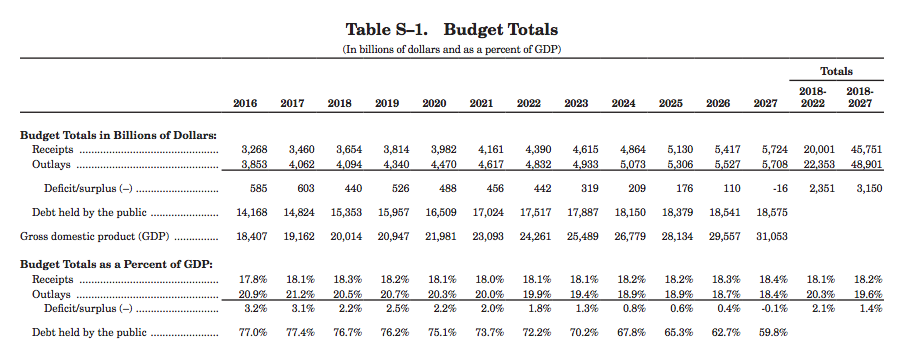
While Democrats criticized Trump’s budget for slashing some federal programs, the White House plan would allow total spending to rise over the next decade, although at a slower pace than currently envisioned.
For example, total federal spending would be $4.094 trillion in fiscal year 2018, and would rise to $5.708 trillion in 2027.
But the budget sees revenues soaring over the time period, thanks to tax cuts the Trump administration said would boost economic growth. By 2027, total tax revenue would exceed total spending by $16 million.
