

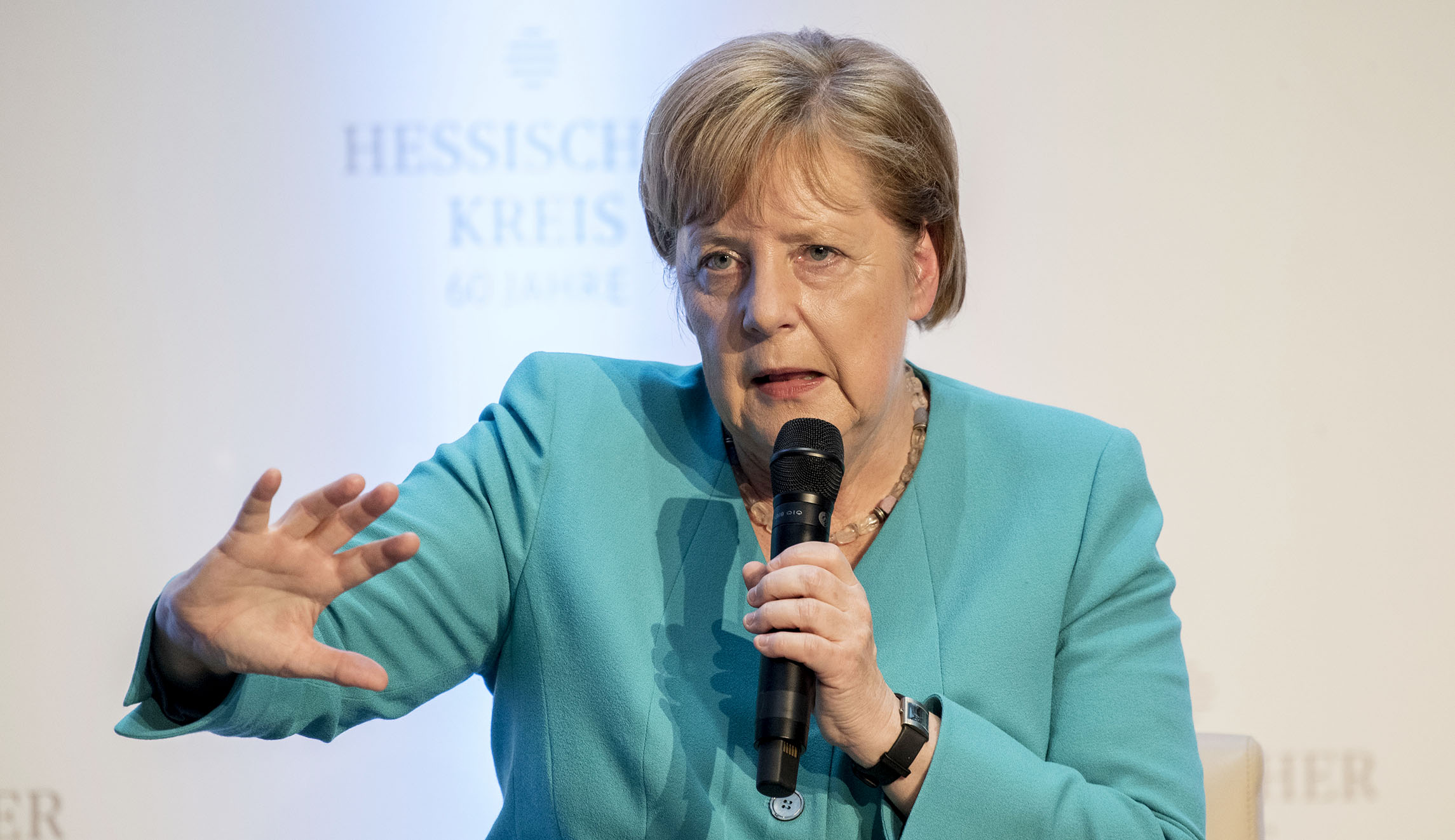
Germany has seen “strong evidence” of Iran’s responsibility for attacks on a pair of oil tankers in the Gulf of Oman last week, Chancellor Angela Merkel said Tuesday.
“We take these acts very seriously,” Merkel told reporters at a joint news conference with Ukraine’s new president, Volodymyr Zelenskiy.
Recommended Stories


Merkel’s meeting with Zelenskiy attracted international concern as she had a fit of trembling during a ceremonial greeting of her Ukrainian counterpart. But her subsequent remarks showed a solidifying consensus on Iran’s actions among transatlantic allies who have been divided about the wisdom of President Trump’s decision to withdraw from the 2015 nuclear deal with the Iranian regime.
“It is a very serious situation,” Merkel added. “[T]he situation should not escalate.”
Secretary of State Mike Pompeo welcomed her comments, coming just days after Germany’s top diplomat said that video footage released by the United States was “not enough” evidence to convince him that Iranian forces staged a mine attack on two tankers last Thursday.
“President Trump does not want war, and we will continue to communicate that message while doing the things that are necessary to protect American interests in the region,” Pompeo told reporters after meeting military commanders at MacDill Air Force Base in Tampa, Florida. “We’ll continue to work with partners all around the world.”
Iran has denied responsibility for the attacks, the latest in a series of incidents that have ratcheted up tensions in the Persian Gulf over the last six weeks. President Trump authorized the deployment of an additional 1,000 U.S. troops to the Middle East on Tuesday, while Iranian leaders announced that they will soon break key commitments imposed by the nuclear deal, breaking a cap on enriched uranium storage.
“So I think what we’re seeing here is really a challenge … to the international norms on how a country behaves, a challenge to the international norms on freedom of navigation and freedom of the seas,” State Department spokeswoman Morgan Ortagus told reporters Monday. “And so we would say to the international community that we should not yield to nuclear extortion by the Iranian regime.”
The status of the nuclear deal has been a sore spot for Western leaders, as Trump’s withdrawal was opposed by the United Kingdom, France, and Germany. But Merkel sent a diplomatic warning to Iran on Tuesday.
“We anticipate that Iran will continue to uphold the deal,” she said. “When that isn’t the case, there will naturally be consequences.”
