

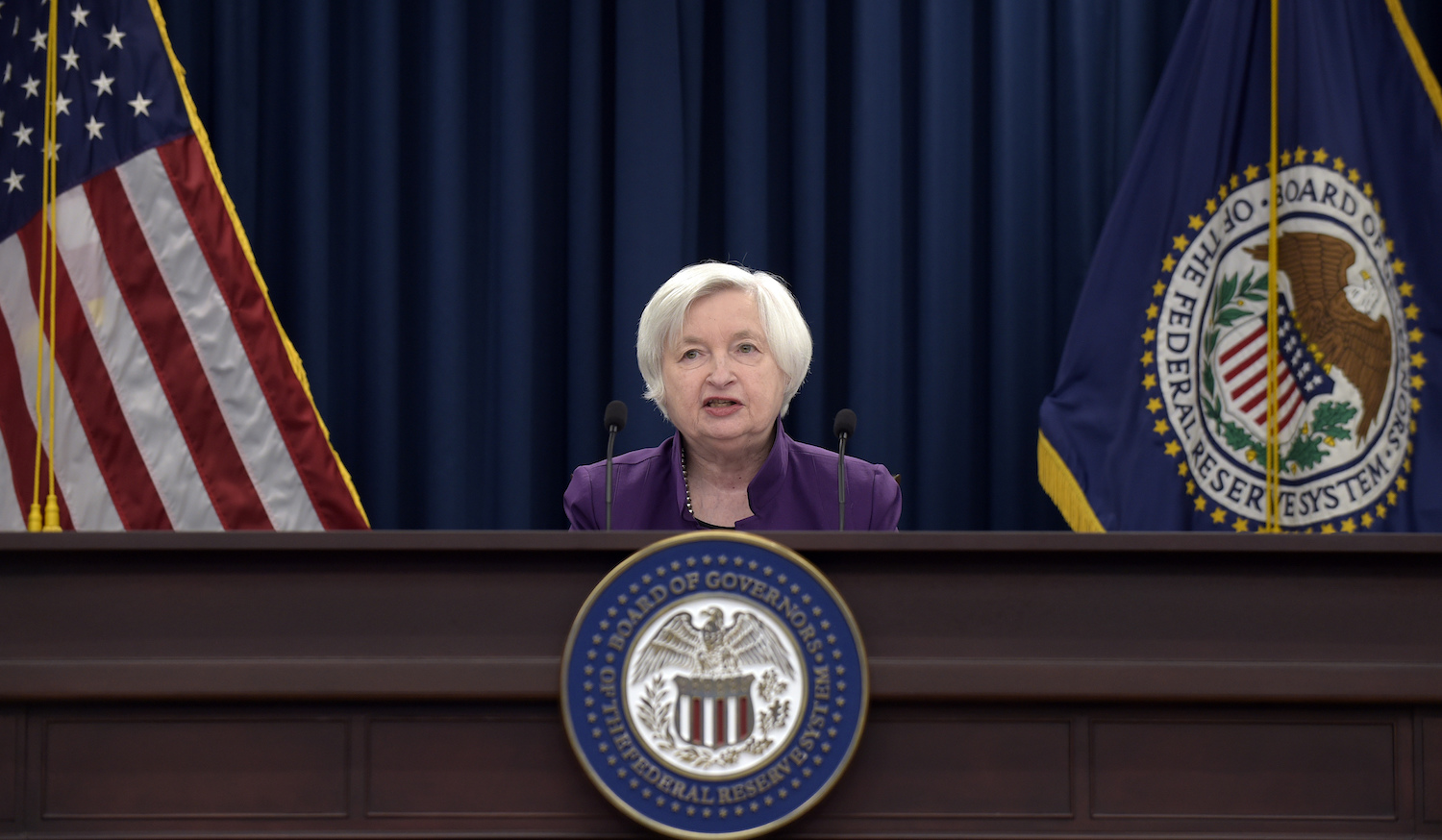
All big U.S. banks cleared the annual “stress tests” run by the Federal Reserve, the central bank announced Wednesday, giving the banking system the first all-clear on the first try since the stress tests have been conducted in the fallout from the 2008 financial crisis.
The passing grades mean that the banks are free to pay out dividends and buy back shares as planned.
Recommended Stories


“I’m pleased that the [stress test] process has motivated all of the largest banks to achieve healthy capital levels and most to substantially improve their capital planning processes,” said Fed Governor Jerome Powell.
Only one bank, Capital One, was faulted for its plans for paying out earnings to investors. But even it was allowed to pass on the condition that it resubmit its capital plans within six months.
Big banks announced plans to boost dividends and stock buybacks immediately following the announcement.
JPMorgan Chase, for instance, announced a $19 billion stock buyback in addition to increasing its dividend by 6 cents.
“Given the financial strength of the company and the significant capital and liquidity advancements we have made over the last several years, we are pleased to further increase capital returns to our shareholders while continuing to invest in our businesses for long-term profitability,” CEO Jamie Dimon said.
Rich Foster, the senior vice president for the Financial Services Roundtable, an industry group, said that the positive stress test results should prompt the Fed to implement recommendations from the Trump Treasury Department for regulatory relief.
Wednesday’s results were the second round of stress tests, which include qualitative judgments from the Fed about whether the biggest banks would hold up in a simulated crisis.
Last week, an earlier version of stress tests showed that all 34 banks examined would survive a hypothetical crisis with above-minimum levels of capital.
In the stress tests, the Fed puts the bank’s balance sheets through a crisis scenario that includes unemployment spiking to 10 percent, stock markets collapsing and housing prices falling, in addition to a financial crisis roiling Europe, the United Kingdom and Japan.
The Fed touted the progress the banking system has made since the stress tests began in 2009, when banks were just recovering from the free-fall of the crisis. Since then, according to the central bank, the 34 banks that undergo stress tests have increased capital by more than $750 billion, more than doubling capital relative to assets, adjusted for riskiness.
Higher capital levels mean that the bank is less indebted, and therefore more likely to weather a big loss without failing.
