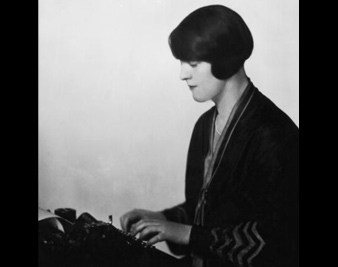
She was the Katharine Hepburn of letters, an outrageously dogmatic and stylish egoist who earned her arrogance by sheer intelligence, a flaming feminist who could be very hard on the male character and yet loved men and was loved by them. Her beauty was in her language — and very mannered it could sometimes be. Infuriating and intoxicating, partial and partisan, Rebecca West is looking like one of those writers who will live. She wrote a lot, and only a little will live, but that little is choice, or, as Spencer Tracy pronounces it when speaking of Hepburn in Pat and Mike, “cherce.”
She was born Cicily Fairfield in London in 1892 to Charles, a handsome but reckless journalist, and Isabella, a bright and educated woman. In 1901 Charles ran off to Africa (why was never clear); Isabella, ailing and poor, moved her three daughters to Edinburgh, where Cicily won prizes in school but preferred acting to studying. Isabella brought the family back to London so that Cicily could go to the Academy of Dramatic Art, but Cicily was pretty much a failure there. Doubtless, she was already too strong a personality to be good at impersonating others. Instead, she got a job at a new suffragist journal, The Freewoman, and was soon writing aggressively polemical articles for its pages. On November 30, 1911, still 18, she published her first review — of a book about women in India; it began, “There are two kinds of imperialists: imperialists and bloody imperialists.”