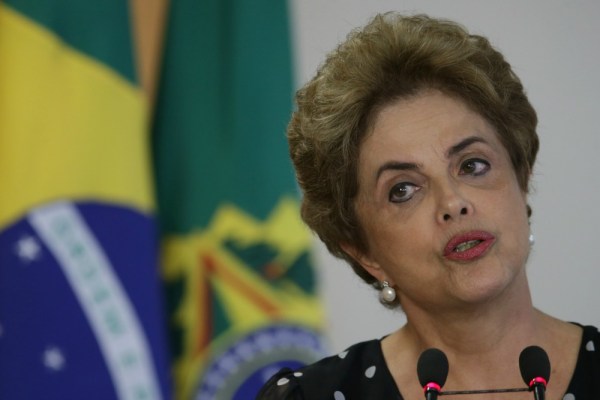
It’s official: Dilma Rousseff is no Lula. The left-wing Brazilian president may have been reelected late last month, but she enjoys nowhere near the popularity that Luiz Inacio Lula de Silva – better known simply as “Lula” – once did. Rousseff managed to squeak by with only 51.6 percent of the vote in a runoff – a far cry from the 61 percent that Lula garnered when he stood for reelection in 2006. And Rousseff’s close shave came despite the fact that Lula came out and campaigned hard for her.
Part of Rousseff’s problem is that she possesses none of the natural charisma and charm of the former president. But Rousseff is different from Lula in other ways as well. While they are both members of the leftist Workers’ Party, Lula avoided following in the far-left steps of Hugo Chavez or Fidel Castro when he was Brazilian president from 2003 to 2011. Lula kept inflation stable, invested in infrastructure, and simplified and reduced taxes – an impressive record for an avowed Socialist. He even balanced the budget for several years. Consequently, Brazil boomed under his leadership, enjoying rapid economic growth and lifting some 20 million people out of extreme poverty. Brazil is now the eight largest economy in the world, a significant achievement.