

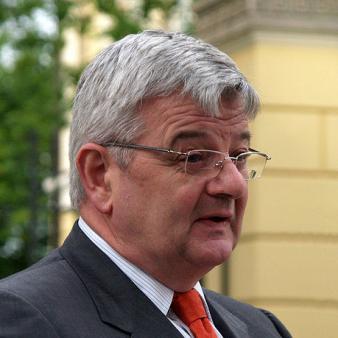
Lost in the shuffle of last week’s German elections was the plight of the Green party. It was understandable, of course. Angela Merkel’s Christian Democrats dominated. The Free Democrats fell out of the Bundestag. And the CDU is meeting with Green party officials to discuss a potential partnership in government (though a grand coalition with the Social Democrats seems more likely). Still, how did the Greens go from 24 percent support in 2011 to a meager 8.4 percent last Sunday? And why didn’t the most popular Green politician stump for his own party?
After years of living on the fringe, the Green party finally entered government with the SPD in 1998. The rot-grün coalition lasted until 2005, with Gerhard Schröder as chancellor and Joschka Fischer as the first Green foreign minister. The Germans called Fischer a “rock-star” politician, though it wasn’t entirely a compliment. But during Fischer’s tenure, German troops were deployed for the first time outside the country (to the Balkans) since, well, the 1940s. According to Fischer, the deployment was a humanitarian mission—indeed, it was an obligation. But his fellow Greens were less convinced and one party member, Jürgen Trittin, was particularly fierce in criticizing the foreign minister.
Real journalism.Trusted by millions.
Unlimited access to in-depth reporting, expert analysis, and the stories that shape our country.
Already a member? Log in
