

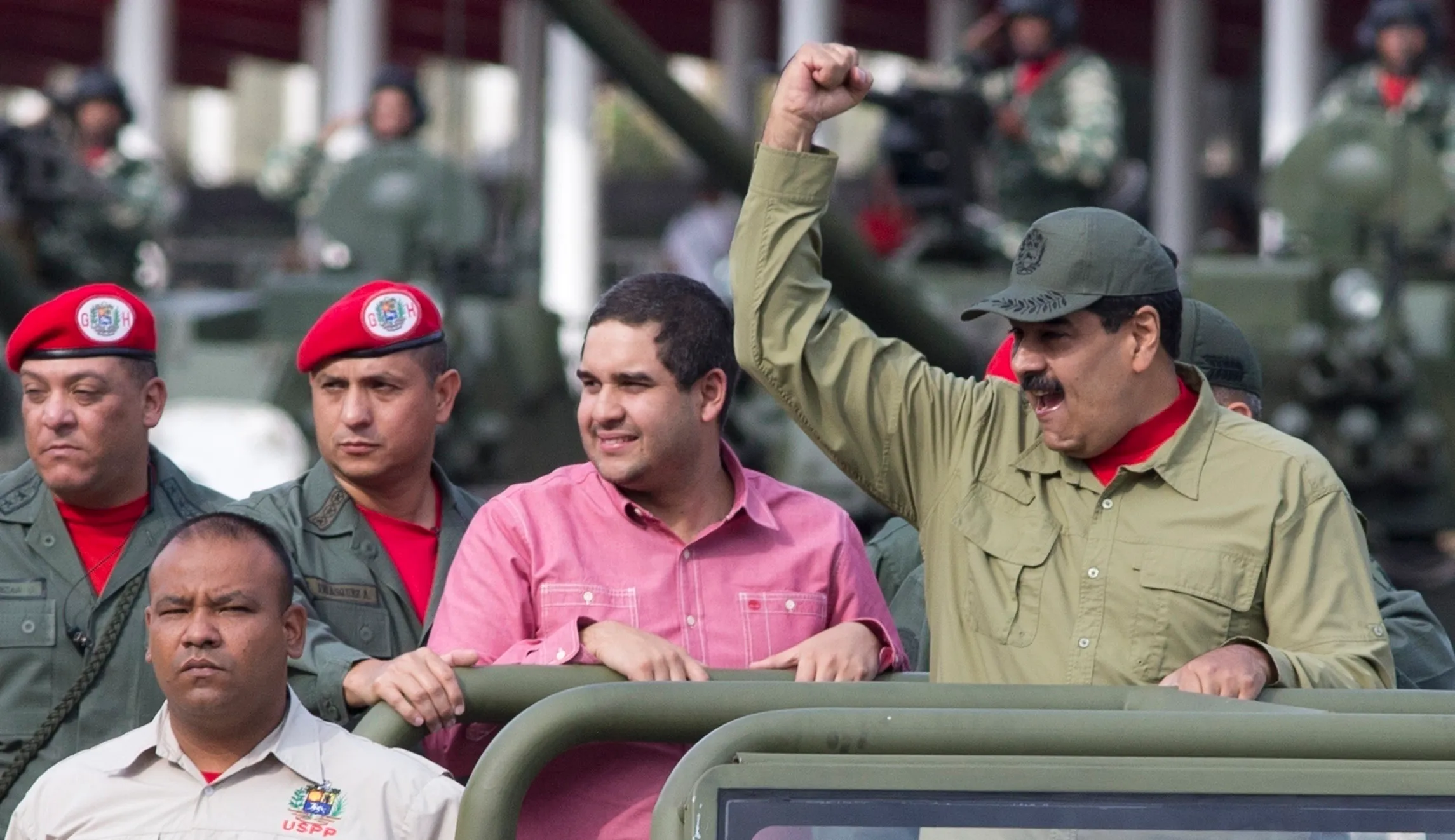
President Trump is blacklisting the son of Venezuelan strongman Nicolás Maduro as part of a flurry of sanctions targeting key loyalists.
“Maduro relies on his son Nicolásito and others close to his authoritarian regime to maintain a stranglehold on the economy and suppress the people of Venezuela,” Treasury Secretary Steven Mnuchin said Friday. “Treasury will continue to target complicit relatives of illegitimate regime insiders profiting off of Maduro’s corruption.”
Recommended Stories


That decision is the latest example of the Trump administration targeting the families of regime insiders with sanctions and the loss of travel visas. Maduro’s 29-year-old son is a member of the National Constituent Assembly, the entity that the regime created to sideline the opposition-controlled legislature.
“While Nicolas Maduro, his family and associates continue to enjoy lives of luxury, the Venezuelan people suffer and millions have been forced to flee their homes,” the State Department added Friday, in an apparent invitation for the younger Maduro to cut ties with his father’s regime. “U.S. sanctions need not be permanent. They are intended to bring about a positive change of behavior.
Maduro has defied calls to step aside in favor of the top opposition lawmaker Juan Guaidó, whom President Trump and other Western leaders recognized as the legitimate interim president of Venezuela in January.
“As dictator Nicolás Maduro and his corrupt inner circle run out of time and money, it’s long past due for Venezuelan military leaders and others on the sidelines to do the right thing and support the Venezuelan people’s efforts to restore their democracy and constitutional order,” Sen. Marco Rubio, R-Fla., said Friday.
That announcement came one day after the administration took aim at two of the individuals who mismanaged Venezuela’s electrical industry in the years leading up to a series of nationwide power outages in March. Justice Department officials indicted former electrical minister Luis Alfredo Motta Domínguez, as well as another once-senior official at the country’s state-owned electrical corporation, on corruption charges involving three U.S.-based companies.
The indictments arose from a pair of cases that have been percolating in Florida since March, when federal prosecutors accused two Venezuelan citizens, one of whom owns Florida-based companies that “purchase goods from around the world” for resale in Latin America, according to court documents. The businessmen bribed Motta to award them contracts, including one deal to spend nearly $10 million on transformers that were incompatible with the Venezuelan electrical grid, the court documents said.
“Venezuelans have suffered more than 23,860 interruptions of the electric service this year due to the corruption and bad administration by Nicolas Maduro and the people around him,” the Treasury Department, which also sanctioned Motta and his underling at the state-owned electrical company, noted Thursday. “The corruption contributed directly to the deterioration and collapse of the electricity system in Venezuela.”
The two businessmen charged in Florida — Jesus Ramon Veroes and Luis Alberto Chacin Haddad — pleaded guilty to their roles in the conspiracy on Monday. The related charges against Motta and his subordinate, Eustiquio José Lugo Gómez, align with the portrait of corruption and mismanagement that Trump’s administration has painted since the beginning of a blackout that left most Venezuelans without power from March 7 to March 14.
The new indictments could foreshadow a larger role for the Justice Department in applying pressure to the regime, which has survived so far due to Maduro’s control over the Venezuelan military and assistance from Cuba, Russia, and China.
“Maduro surrounds himself with self-serving criminal loyalists,” Rubio wrote to Attorney General William Barr in a June 7 letter. “I ask you to appropriately undertake further engagement with our intelligence community and with our allies in the region to investigate and ensure full visibility of Maduro’s crimes.”
