

President Trump is pushing for a broad range of fiscal stimulus measures including tax deferrals and small-business loans as the administration switches focus from the effects of the coronavirus on the public to escalating fears of economic slowdown.
The package was described to the Washington Examiner by a senior administration official and a GOP figure familiar with the proposals.
Recommended Stories



These sources painted a picture of a White House that initially underestimated the economic danger of the virus and was scrambling to put a rescue package together. Officials were blindsided earlier Tuesday by Trump’s decision to announce plans for a payroll tax cut and assistance for hourly workers who fear losing pay if they take time off sick.
“They are playing catch-up on the economic side,” said the official. “For the last 10 days, everyone has been focused exclusively, or nearly so, on the health side of the equation. Now, everyone is turning to the real risks of overreacting and the cascade of irrational public fear. Given the very low health risk, instead of getting the Wuhan flu, you could end up unemployed.”
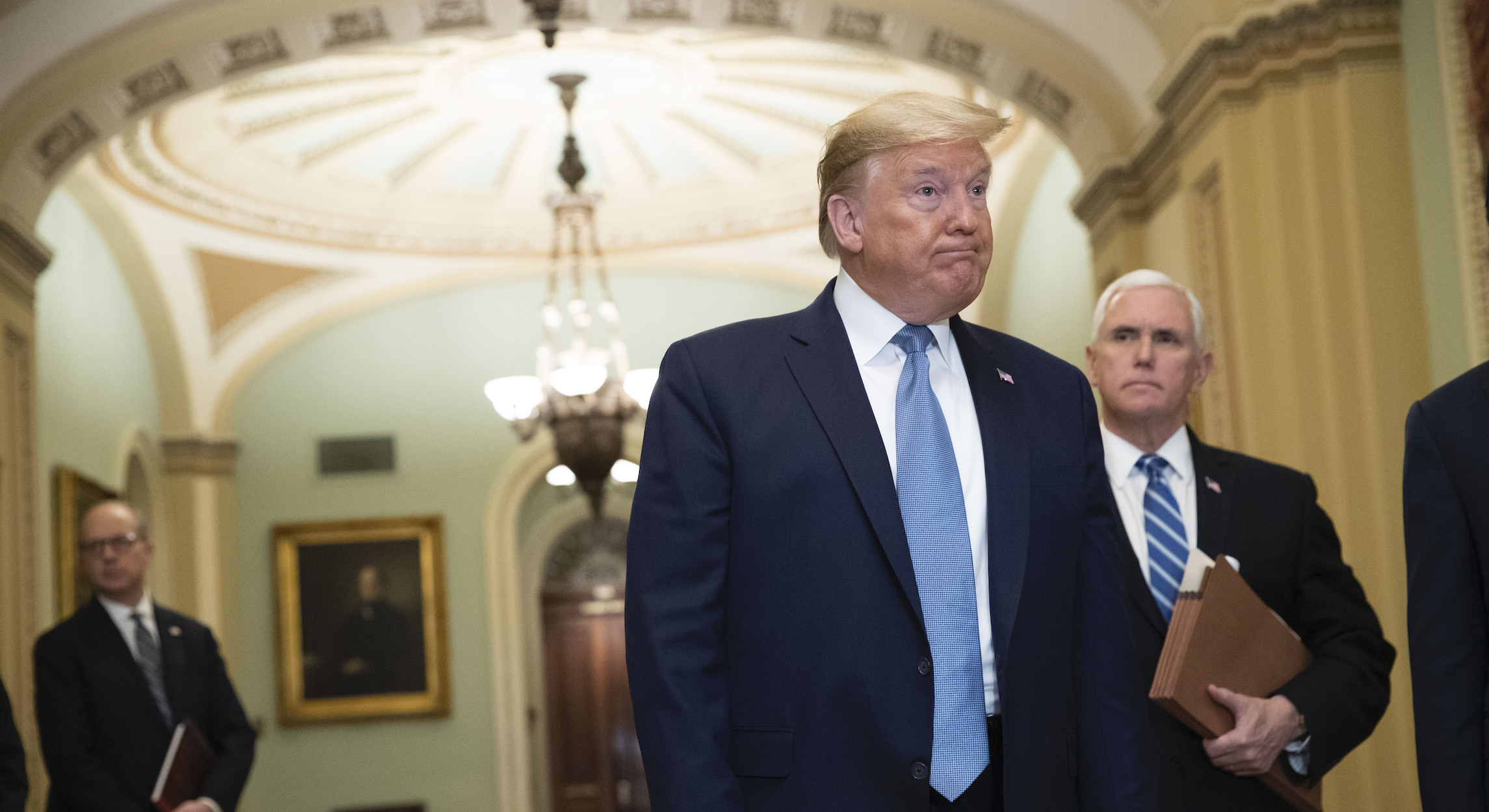
President Trump and his economic team addressed Senate Republicans on Tuesday to unveil his proposals.
“We’re taking this unbelievably seriously,” he said after his meeting at the Capitol. “It will go away. Just stay calm.”
The Republican source said the plan included tax deferrals, or possibly allowing airlines and hotels to delay payment until revenues rebound, and offering more flexible repayment options for small businesses taking out loans.
However, the presentation offered little in the way of finished detail and suggested a work in progress, he said.
Trump raised the prospect of a stimulus package on Monday after markets plunged once again amid the continuing spread of the virus. The prospect of an economic boost sent markets up on Tuesday, but the sudden announcement had some officials playing catch up.
The Department of Commerce had not even been consulted, according to the official.
White House officials “just haven’t asked what kind of stimulus might actually help those most impacted,” he said.
Skeptics point out that a payroll tax cut had cheerleaders within the administration before the emergence of the coronavirus.
Paul Winfree of the Heritage Foundation, a former deputy director of the Domestic Policy Council in the Trump White House, said the White House needed to convey confidence to the markets.
“And, right now, they are not inclined to serious thought. They are panicking,” he said.
Solutions need to address the underlying cause of the economic shock, which is the coronavirus epidemic.
“Our collective mind is freaking out over this, and we’re not quite sure whether or not that’s rational because we don’t know what the ultimate impact of coronavirus in the U.S. will be,” he said. “But, rather than wait and see what the impact would be and rather than conveying to the markets that we’ve got this under control, what they suggest we do is that we juice the economy with a payroll tax cut, which does not to address the underlying cause.”
