

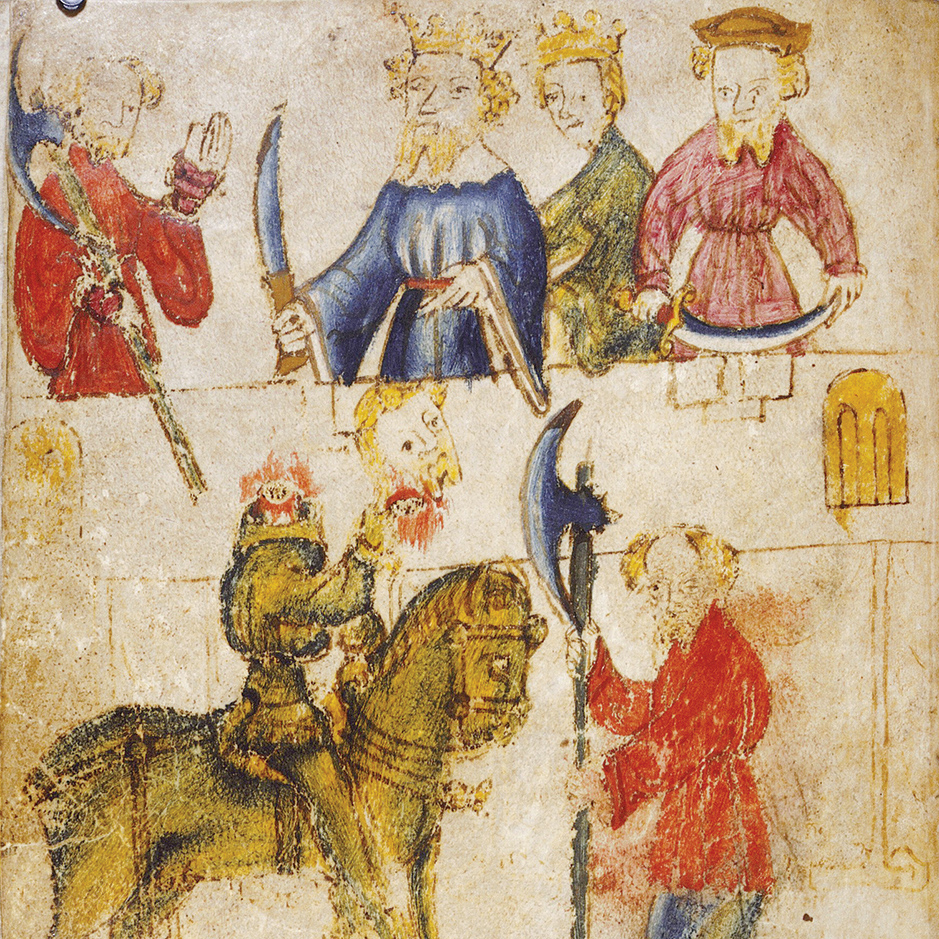
When Sir Gawain and the Green Knight first appeared in print, in 1839, its wintry world of Christian revelry, chivalric honor, and Arthurian romance had long since vanished. Indeed, that world, or rather, medieval romantic literature as a whole, was antiquated even at the time the poem was written, somewhere in northwest England, in the late 14th century. In that same period, Geoffrey Chaucer was scribbling away down south, inventing the principles of modern English versecraft and casting a comic and condescending eye back on the old tales of Arthur. The age of chivalry was dead.
And yet, Gawain is not just a belated instance of medieval romance. Although the anonymous poet begins by insisting he shall tell the tale “to you right away, as I heard it in the court / Being told,” and closes by claiming that “the books of British history bear witness to” what he has reported, in story and form, Gawain is a thing of striking originality and poetic genius. Although it seems to have had a small and isolated audience at the time of its writing, it has long since come to be recognized as the crown jewel of medieval romance and, second only perhaps to Chaucer, the polished masterpiece of Middle English. As is the case with Chaucer’s poetry, Gawain at once looks back to an age that appears at times enchanted, at others merely strange, and ahead to the English poetic tradition as it came to maturity.
Stay informed.Stay ahead.
Join Washington Examiner for unlimited access to the news, analysis, and commentary that matter most.
Already a member? Log in
