

On Tuesday, a state legislator in South Carolina proposed a law that would force journalists to register with the state as part of a “responsible journalism registry.” Of course, Rep. Mike Pitts wasn’t seriously proposing this. He was simply engaged in a bit of formal trolling to point out the hypocrisy of Democrats and liberal pundits who think registries of law-abiding gun owners are somehow a prudent and acceptable thing under the Second Amendment, whereas a media registry to ensure the “responsible” exercise of the First Amendment was an affront.
Suffice to say, many a member of the media was publicly upset by the proposal and didn’t get the joke. One Washington Post reporter went so far as to write a column denouncing the proposed law, and Ed Morrissey has a good rundown of the foofaraw surrounding Pitts’s proposal.
However, if even such a proposal is outrageous, why are reporters strangely silent about the fact that Democrats have long wanted to register and/or license the media and have made many serious proposals to that effect?
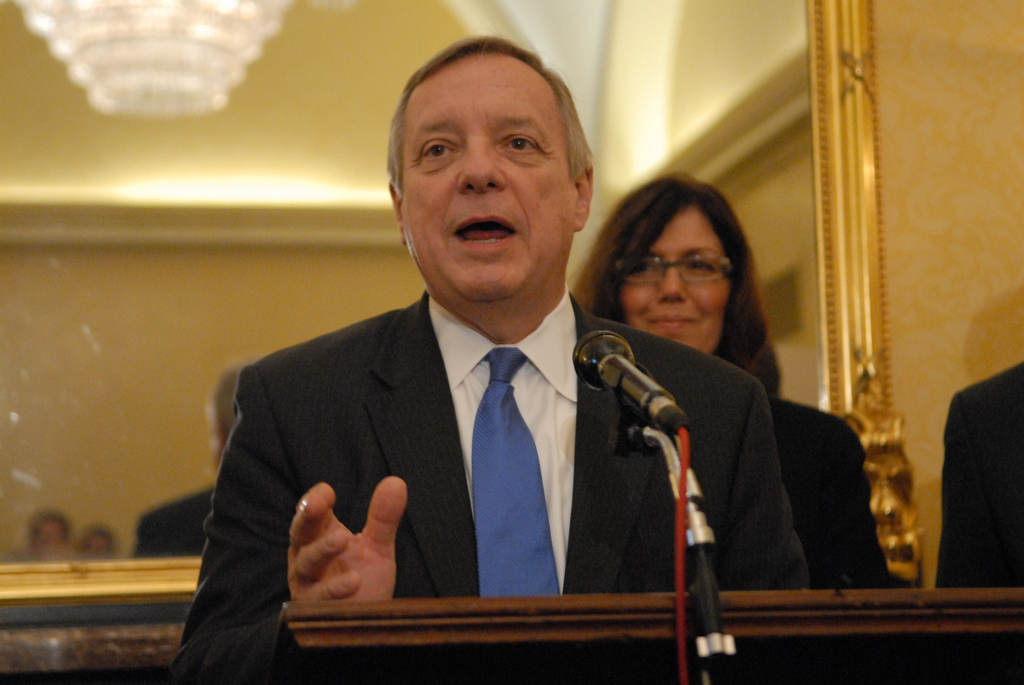
Back in 2009, reeling from the undercover expose of ACORN by conservative provocateur James O’Keefe, Democratic senators Dick Durbin and Dianne Feinstein tried to legally define who was a journalist in a way that would not include bloggers or ordinary citizens, as well as strip people of the right to anonymously report things. In a fairly Orwellian fashion, this amendment was attached to a “press shield” law:
To their credit, some liberals sounded the alarm about this, but for the most part the media didn’t take it seriously or otherwise roundly condemn Feinstein and Durbin.
But that’s just the tip of the iceberg. It’s become a standard-issue talking point among liberals that the Supreme Court’s Citizens United campaign finance decision should be overturned. Hillary Clinton in particular has been very vocal about it. Now recall the particulars of that case. It hinged on whether showing a film criticizing Hillary Clinton herself would constitute a campaign finance violation. During oral arguments, President Obama’s deputy solicitor general — then working for Solicitor General Elena Kagan, who would later join the Supreme Court — argued that properly enforcing campaign finance laws might mean banning books, as well as films.
The obvious conclusion here is that in order to enforce Democrat’s preferred campaign finance regime, the government has to legally define who has the right to criticize politicians and when it’s allowable.
If the media get this animated about an unserious press registry law proposed by an obscure Republican state legislator, shouldn’t they be really worked up that Democratic senators and presidential candidates want broad government limits on the media’s First Amendment rights — and they’re dead serious about it?
