

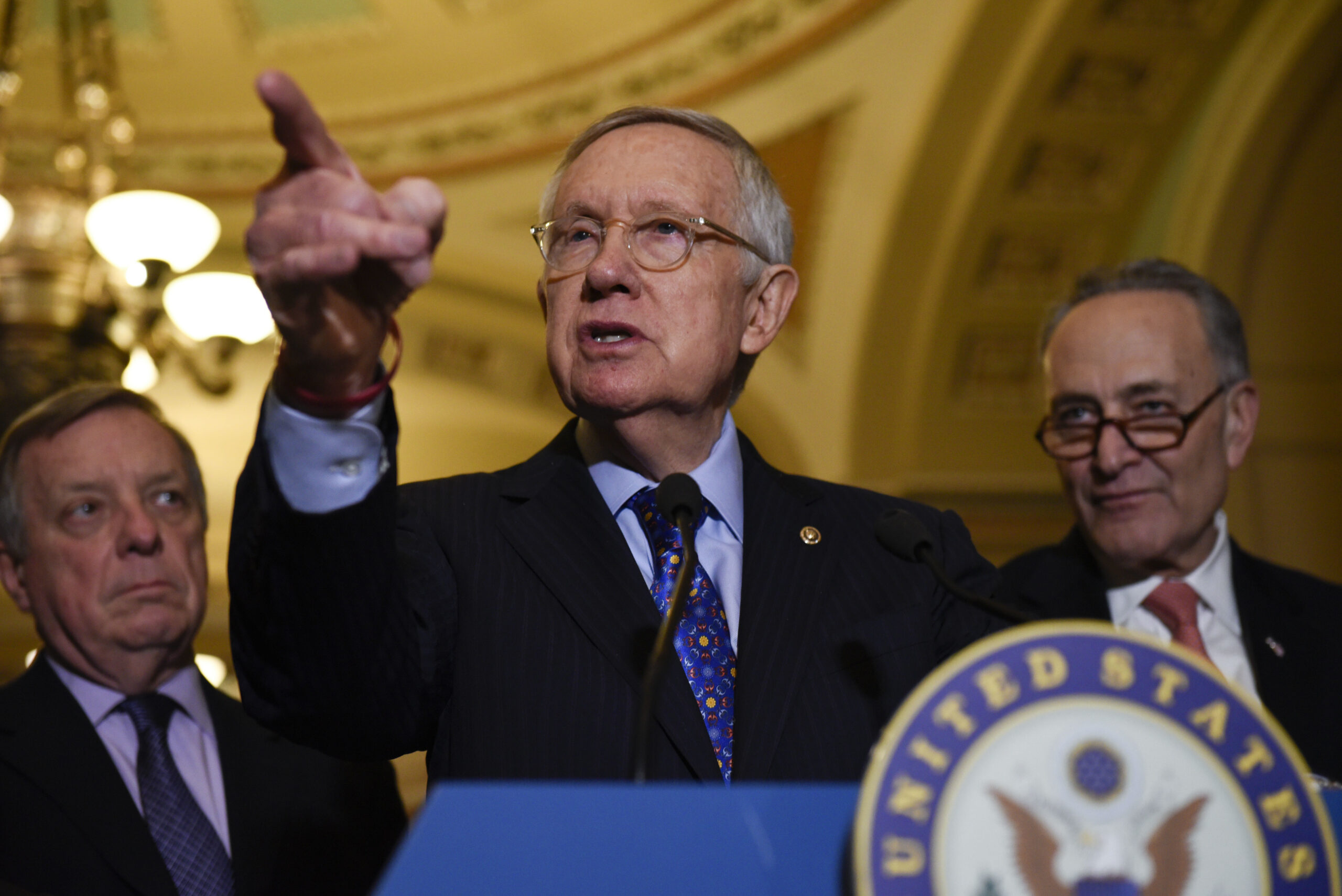
Democrats on Thursday used one of the last few days of the 114th Congress to take pot shots at President-elect Trump, his cabinet picks, and his promise to keep jobs in the U.S., which some doubted given Trump’s past decision to outsource some products in his clothing line.
Sen. Gary Peters, D-Mich., noted that Trump’s ties and dress shirts for the “Donald J. Trump” collection at Macy’s were made overseas, and that he used Chinese steel in some of his construction projects. He also dismissed Trump’s highly-publicized press conference about the deal struck to keep hundreds of jobs at Carrier air-conditioning from moving to Mexico as a “photo-op.”
Recommended Stories


“We need a lot more than a photo-op,” Peters said. “We need comprehensive manufacturing policy and a willingness to stand up when it’s really tough for an entire industry.”
Peters spoke at a press conference with incoming Senate Minority Leader Chuck Schumer, D-N.Y., which was aimed at publicizing a project being run by the Center for American Progress, which will track all of the jobs outsourced under Trump.
“We are also here to challenge the president-elect to stick to his words on the campaign trail and work with Democrats to change our laws to stop companies from shipping jobs overseas,” Schumer said, pointing to the need for the “Buy American” provision that would force American companies to only use American made steel in projects.
Democrats also made new effort to fight back against Trump’s cabinet nominees. Democrats are powerless to stop any of his nominees as long as Republicans all agree to support them, since Democrats changed Senate rules in 2013 to allow them to be confirmed by a simple majority.
But Sen. Richard Blumenthal, D-Conn., made an effort to improve the Democrats’ chances by demanding that Sen. Jeff Sessions, Trump’s nominee to head the Department of Justice, agree not to vote for himself or any other Trump nominees.
“If the Senate votes on the confirmations of your potential Cabinet colleagues while your nomination is pending, I urge to recuse yourself from these votes as well,” Blumenthal wrote. “Such recusal is essential to avoid any appearance of bias and impropriety. Judges routinely recuse themselves from any matters where they may be seen as having a personal interest.”
Blumenthal’s letter seemed aimed at giving Republicans just 51 votes in the Senate next year, dangerously close to the edge of the majority they need to approve nominees.
Members of the House also railed against Trump’s nominees. Lawmakers in the House Progressive Caucus held a press conference to complain that Trump is stocking his administration with billionaires.
A sign posted at the group’s event said, “Trump’s cabinet: $35 billion. Average American: $56,516. Draining the swamp? Or filling it with [dollar bills].”
“We are not just disturbed by one pick here or one pick there, but the sum-total of all represents a very disturbing trend,” said Rep. Keith Ellison, D-Minn., who chairs the caucus and is campaigning to become the next Democratic National Committee chairman. Ellison pointed to Trump’s selections of Betsy DeVos as education secretary, Dr. Ben Carson to head up the Department of Housing and Urban Development, and Steve Mnuchin to run the Department of Treasury as examples of this trend.
“We want to offer our view that this is not what working people thought they were getting when they cast votes for President-elect Trump,” Ellison said. “His proposal to help working Americans get jobs, to help working Americans build infrastructure and to challenge trade bills is a far cry from what they’re going to be getting with these series of nominees. If personnel is policy, we’re looking at some pretty scary policy.”
