

WARSAW, Poland — On the edge of the Polish capital of Warsaw’s Old Town, five American airborne troops stood musing about President Joe Biden’s recent visit.
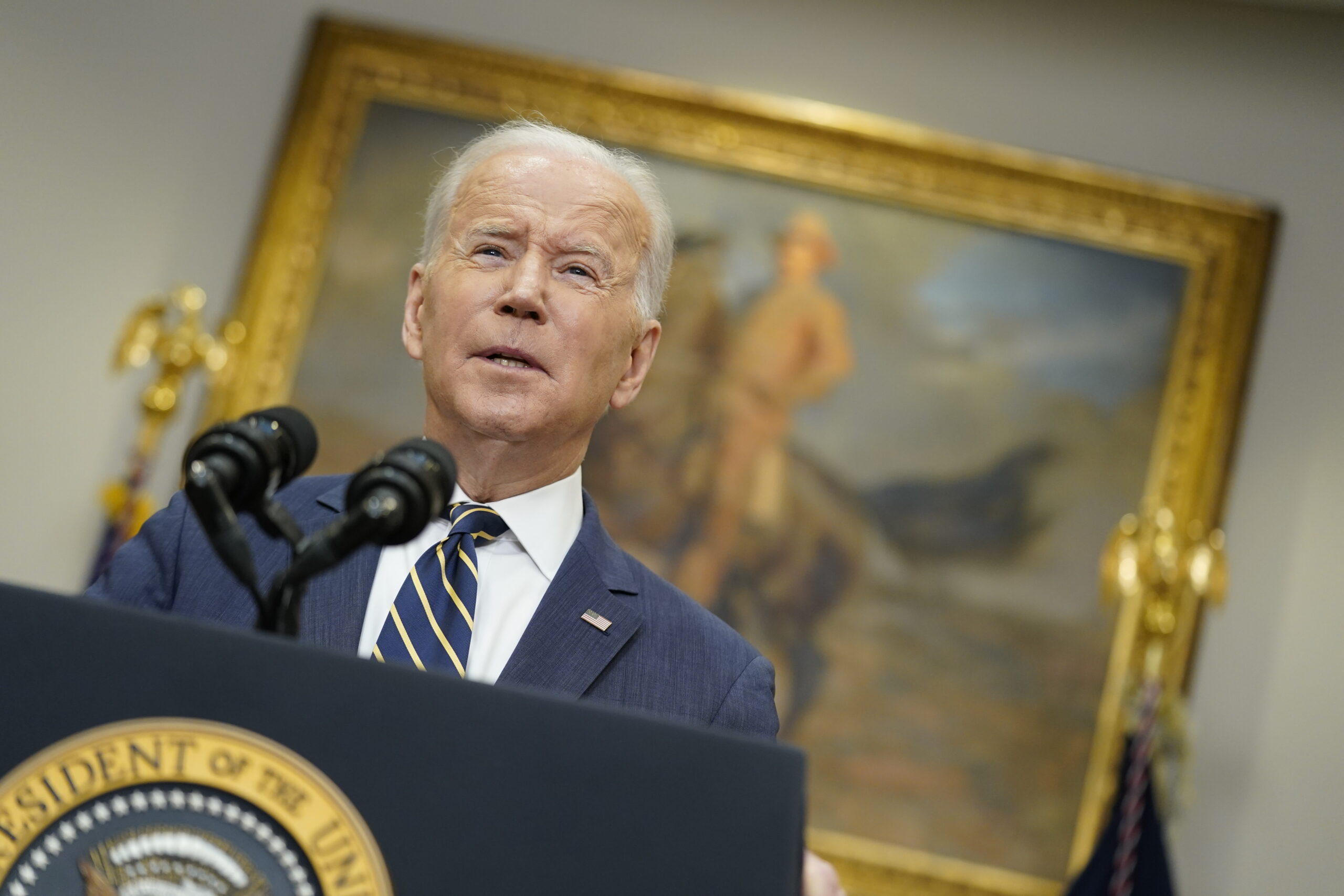
Biden had traveled to the continent to marshal trans-Atlantic leaders on a strategy to punish Russia’s war in Ukraine, with a promise not to draw Western troops into the conflict. On his return to Washington, hand clasped around a notecard of talking points, the president would insist that nine errant words heard by the world as calling for Russian President Vladimir Putin’s ouster were no expression of U.S. policy.
Recommended Stories


Under the headline “Tough Putin Q&A Talking Points,” another talking point claimed no breach in NATO unity despite pushback on the remark from France and Britain.
Before that, Biden had appeared to suggest to 82nd Airborne Division paratroopers stationed in southeastern Poland close to the Ukraine border that they would soon be heading into Ukraine. “You’re going to see when you’re there,” Biden had said at the time. The president has been adamant that U.S. troops will not fight in Ukraine, making his words more surprising.
CHRISTIAN CHARITIES BRACE FOR WAVE OF UKRAINIAN REFUGEES
A few days earlier, during a Q&A with reporters at the NATO headquarters in Brussels, the president said the United States could respond “in kind” to a chemical weapons attack by Russia.
The White House later clarified that the U.S. would not use chemical weapons after Biden’s ambiguous wording sparked confusion.
After Biden’s visit, some American troops deployed to Poland were left wondering what rhetorical glitch would come next.
“The president said some crazy things,” one troop told the Washington Examiner as the president mopped up the confusion over his remarks back home.
The five airborne soldiers said they had been in Poland since the week before Valentine’s Day. Asked when they would be leaving, one explained that they didn’t know.
“It’s up to Putin,” the soldier said. “It could be tomorrow, or it could be next year.”
Service members from the 82nd and 101st airborne divisions and 18th Airborne Corps headquarters were sent to Europe in early February to deter Russia, which had massed roughly 150,000 troops on Ukraine’s border. Other units have had their tours extended or have been repositioned in the area.
The U.S. has also committed $1 billion to Ukraine in security assistance in recent weeks, including $200 million in defense equipment and “military education and training” authorized March 12.
When the president appeared to disclose new information about U.S. support for the Ukrainian military this week, his comments prompted backpedaling by administration officials clarifying the extent of American aid.
Biden said the U.S. was “helping train the Ukrainian troops that are in Poland” before adding, “I was referring to being with, and talking with, the Ukrainian troops that are in Poland.”
A White House official later asserted that “Ukrainian soldiers in Poland [are] interacting on a regular basis with U.S. troops, and that’s what the president was referring to.”
Military leaders also sought to clarify the extent of American support, with Army Chief of Staff Gen. James McConville telling reporters at a Defense Writers Group breakfast Thursday that U.S. soldiers in Poland are “not training Ukrainian soldiers or units right now.”
“There are materials being provided to Ukrainians, but that’s just a ship — it comes in, and it moves out,” said McConville, according to Task and Purpose. “We are not training Ukrainians right now.”
On Tuesday, NATO Supreme Allied Commander Gen. Tod D. Wolters told lawmakers that the U.S. has been lending assistance “with respect to materiel” being sent into Ukraine but that U.S. forces are not “in the process of currently training military forces from Ukraine in Poland.”
There are “liaisons” who are “being given advice,” Wolters said. “That’s different.”
Biden has promised not to send U.S. troops into Ukraine to fight Russia and has avoided actions that U.S. officials said could be viewed as directly confronting Moscow. Washington rejected a Polish proposal to send fighter jets to Ukraine by first delivering them to a U.S. airbase in Germany, fearing Russia’s reaction.
But Biden also faces pressure to show that U.S. support for Ukraine isn’t waning.
“There’s a little bit of tension between the strategic imperative in terms of wanting to be covert and minimizing escalation and the domestic imperative to respond to critics or reassure different domestic audiences that you are responding in a forceful way and supporting the Ukrainians,” said Kelly Grieco, a senior fellow on U.S. defense policy at the Atlantic Council’s Scowcroft Center.
On Friday, Ukraine’s foreign affairs minister said more sanctions should be imposed on Russia and asked for new weapons. Dmytro Kuleba said both would help facilitate negotiations with Russia over a potential ceasefire. Lawmakers have also urged the president to do more.
It is a dynamic the president has been navigating for several weeks.
“There’s a tendency to want to reveal what you’re doing,” Grieco said.
CLICK HERE TO READ MORE FROM THE WASHINGTON EXAMINER
Whether the hesitancy is justified isn’t clear.
“The U.S. is taking a lot of precautions — I think that’s absolutely right,” said Alexandra Chinchilla, a fellow at the Dickey Center at Dartmouth College. “But it’s substantively not that different from giving them weapons.”
