

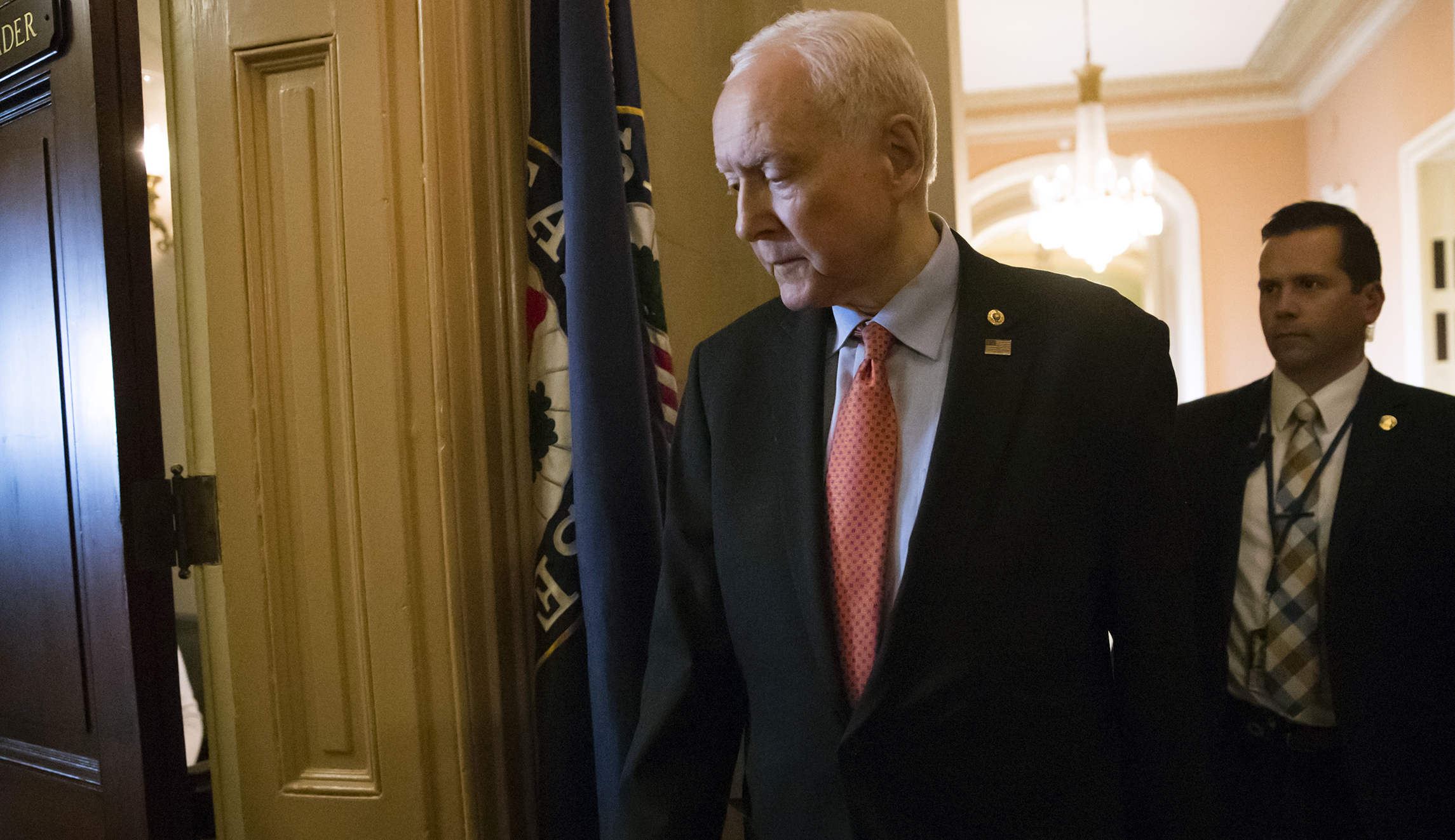
Republican senators on Tuesday showed deep frustration over why lawmakers and involved agencies had not raised concerns about a law that critics now say hamstrings the Drug Enforcement Agency’s ability to go after suspicious prescribing of opioids.
Recommended Stories


The 2016 law, called the Ensuring Patient Access and Effective Drug Enforcement Act, has come under scrutiny following reports in the Washington Post and “60 Minutes” that say Congress made it more difficult for the DEA and the Department of Justice to freeze shipments of mass amounts of opioids.
“The last few months have been deeply frustrating to me,” said Sen. Orrin Hatch, R-Utah, during a Judiciary Committee hearing. “I wish some of my colleagues would stop trying to rewrite history or pretend this is some short of show game.”
He noted that the bill, which he sponsored, had passed with full support from the House and Senate, and was signed into law by former President Barack Obama.
“No one ever told me they were dubious about this bill when it was going through,” Hatch said.
The sponsor of the House version of the bill, Rep. Tom Marino, R-Pa., had pushed the legislation for years and both he and Hatch received campaign contributions from drug companies, according to the article.
Hatch objected to this characterization during the hearing, saying, “Don’t tell me that it was because pharma donated whatever money to me.” Though he admitted he had sought industry input, he said the agencies involved had been the main reason he moved forward on the bill.
“If DEA has concerns with the bill, I’m happy to hear them,” he said. “But I’d also ask why DEA did not voice those concerns before it became law.”
Proponents of the legislation said it provided a balance by clarifying the DEA could no longer suspend narcotic shipments using a vague phrasing under former law that said the order can come only in times of “an imminent danger to the public health or safety.”
Under the new law, to suspend shipments, the DEA must determine that they present “substantial likelihood of an immediate threat,” meaning death, serious bodily harm, or abuse would otherwise occur. That would prevent people who have legitimate use for the drugs from being cut off, proponents said. The language, Hatch noted during the hearing, had been approved by the DEA and drafted by the DOJ.
Demetra Ashley, acting assistant administrator for the DEA’s Diversion Control Division, said while testifying that ”the new standard does make it more difficult” to seize the drugs, noting the provision had been used nine times after the bill was enacted.
Sen. Chuck Grassley, chairman of the Judiciary Committee, said the person quoted in the article who objected to the change in the law was a former DEA official who is now involved in lawsuits against the pharmaceutical industry over the opioid crisis.
“His objectivity could be questioned,” he said. “The sensational news stories failed to question this conflict of interest.
“We shouldn’t be repealing laws just because of the loudest person in the room or one person’s say-so.”
Grassley said he had not made up his mind about whether he would support repealing the measure.
