

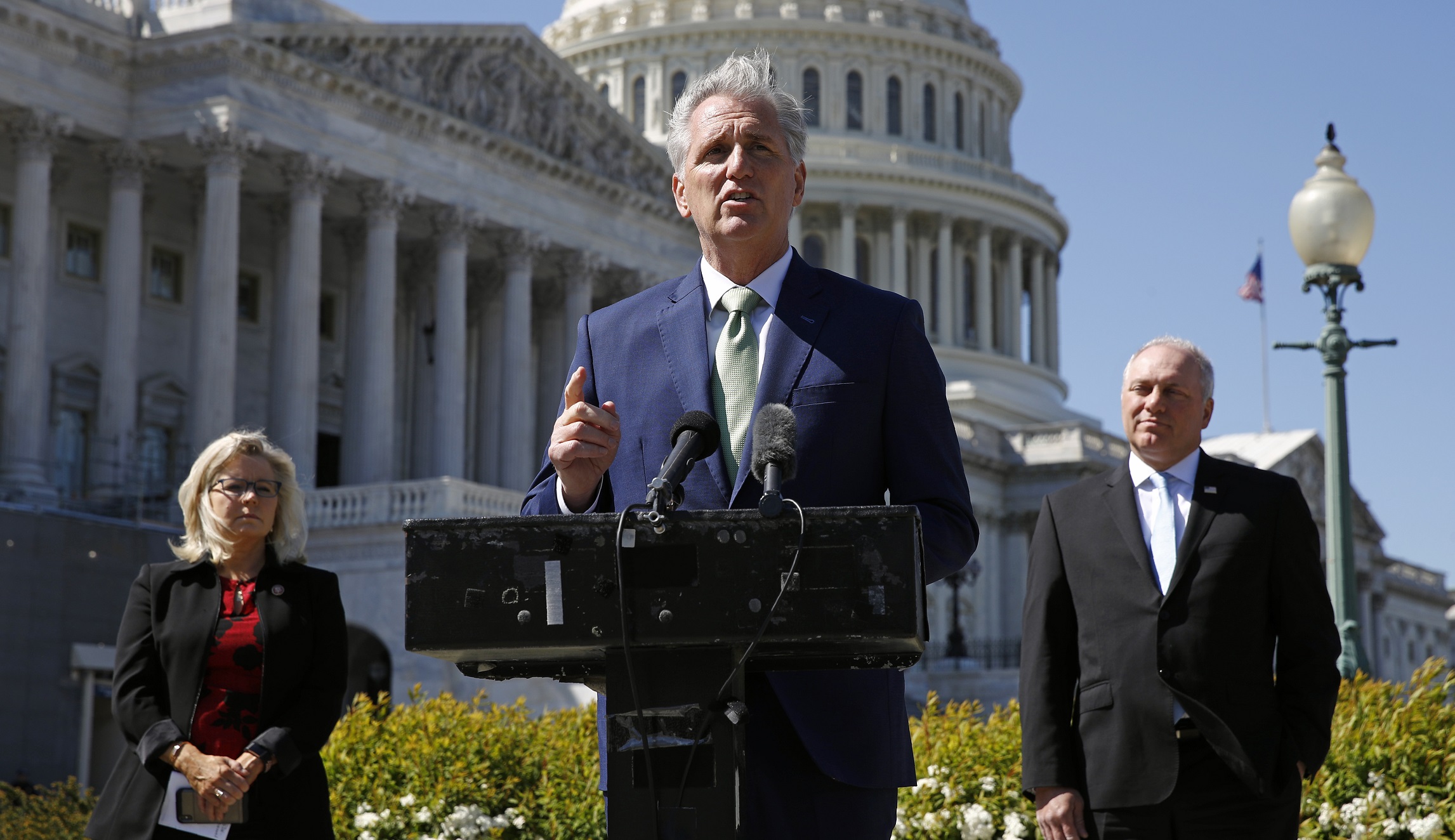
Republicans are set to take control of the House in January, and top party leaders are already eyeing immediate changes they want to make to the lower chamber with their new majority power.
Among those changes, Republicans have vowed to end the practice of proxy voting, which allows lawmakers to vote on legislation without being present in the Capitol building. Provisions to allow proxy voting emerged during the COVID-19 pandemic, the first time such rules were approved, and have continually been extended to allow flexibility.
WITH MAJORITY IN REACH, HOUSE GOP PLEDGES A MORE ‘OPEN’ CONGRESS
Republicans have long been against the practice of proxy voting, quickly filing a lawsuit against House Speaker Nancy Pelosi after the method was implemented in March 2020. Since then, GOP lawmakers have pledged to eliminate proxy voting once they assume the House majority in the next Congress.
However, those efforts could backfire, as Republicans will only have a very slim 222-213 majority in the new Congress. That means if any GOP lawmaker is absent or chooses to vote “present,” the party could have a harder time advancing its agenda.
“It seems to me pretty risky to eliminate proxy voting for the Republicans,” Brad Bannon, a Democratic strategist, told the Washington Examiner. “A lot of people in America are working from home now. So, I think the House should continue to follow suit and allow its members to do the same thing. We live in the age of technology. Why not? Why shouldn’t the GOP take advantage of it?”
But House Minority Leader Kevin McCarthy, who is vying to become the next House speaker, has been adamant about removing the practice of proxy voting, arguing it sets a “dangerous precedent” that “severely undermines the credibility of Congress.”
“From the get-go, we warned that proxy voting would be misused as a means of convenience rather than as a precaution for health — and it has been, by members of both parties,” McCarthy testified to the House Rules Committee in March. “You have given members an inch, and they have taken the proverbial mile. Whatever the initial intent of proxy voting, enough is enough. It’s time for this body to lead by example, show up to work as Congress has done since its inception, and end proxy voting once and for all.”
Despite some GOP pushback on proxy voting, the practice has become a popular method of casting votes over the last two years — for both Republicans and Democrats alike. As of May, more than 31,000 proxy votes were cast over 700 roll calls since the method was implemented, according to Cronkite News.
The practice also became popular among Republicans despite their initial effort to shun it. As of December 2021, 144 of the 213 sitting House Republicans voted by proxy at least once after the practice was implemented in May 2020, according to the Brookings Institution.
Proxy voting has resulted in higher participation rates among lawmakers because it allows lawmakers to cast their votes even if they aren’t present on the House floor. If the practice is eliminated, that could prove challenging for Republicans who had higher rates of missed votes over the last two years compared to Democrats.
CLICK HERE TO READ MORE FROM THE WASHINGTON EXAMINER
Fifteen of the top 30 House lawmakers who missed the most votes during the 117th Congress were Republicans, according to a data analysis by the Moonlight Foundation. In total, the 435 House lawmakers missed a combined 7,502 votes, accounting for about 1.8% of all votes cast.
“I think it will make it harder for McCarthy, or whoever else is going to be speaker, to maintain a very slim majority, and I think there’s going to come a time when [Republicans] lose an important vote because they weren’t able to get a few GOP members to vote … by proxy,” Bannon said.
