

When a draft of House Republicans’ Obamacare repeal bill leaked out, it sparked a fierce backlash from conservatives who argued that GOP leaders would be creating a new entitlement via tax credits.
But the fight over what type of federal assistance should be given to people getting health insurance has been waged for decades among Republicans. Now it appears that the two sides are headed for a cataclysmic clash as Republicans aim to repeal and replace Obamacare.
Recommended Stories



The core of the debate is how to help people seeking health insurance on the individual market, which is for people who don’t get insurance through their jobs. Some Republicans want a tax deduction to reduce the cost of insurance, while others think refundable tax credits, which are credits that are paid throughout the year, are the way to go.
A refundable tax credit is given to someone regardless of whether he pays taxes. Therefore, if a person is eligible for a $5,000 credit, he could receive that amount even if he doesn’t pay taxes.
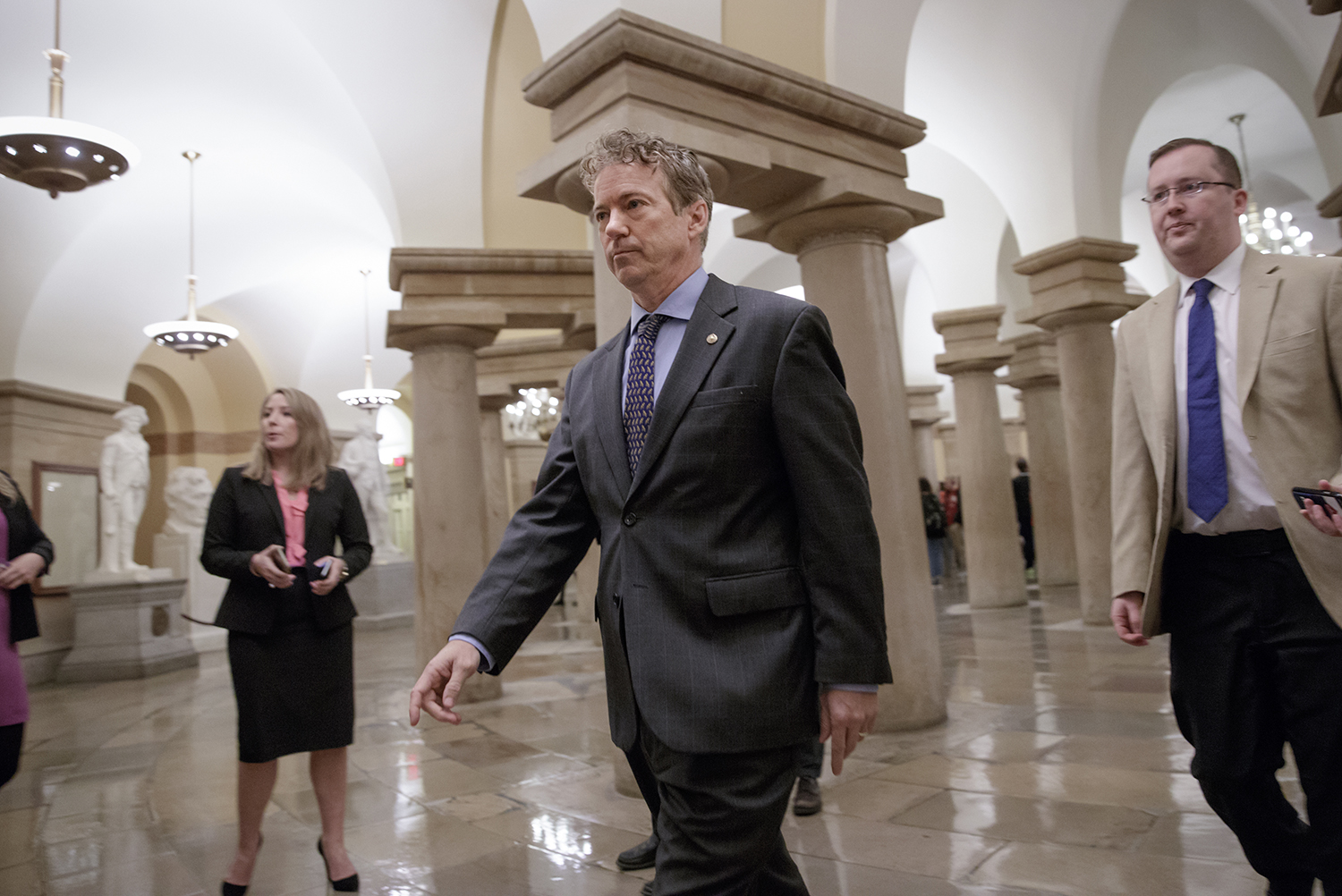
Conservatives such as the House Freedom Caucus and Sen. Rand Paul have pushed for tax deductions, which would level the playing field with employer-sponsored plans that receive a tax break.
The idea of tax credits and deductions aren’t new. Former President George W. Bush proposed a tax deduction in 2007, but the proposal never went anywhere.
Former Louisiana Gov. Bobby Jindal also pushed for deductions in his healthcare plan when he ran for president in 2016, saying his opponents who preferred tax credits were endorsing a new entitlement.
The Republican Study Committee, a group of more than 150 conservative lawmakers, introduced legislation in 2013 that would provide a standard deduction of $7,500 for individuals or $20,500 for families. The committee introduced an updated plan this year that also favors deductions.
On the opposite end, a slew of Republican Obamacare replacement plans offered over the years have turned to tax credits, including one from Health and Human Services secretary Tom Price.
Paul and the Freedom Caucus last week called refundable tax credits a new entitlement, since people who don’t pay taxes can get money.
“That is simply subsidies by another name,” Paul said on MSNBC.
Supporters of the credits counter that help is needed for low-income people who don’t pay taxes.
“They’ve gotta be refundable, otherwise they are useless,” Rep. Chris Collins, R-N.Y., told reporters last week. “What good is a tax credit for people who don’t pay taxes?”
Others countered that credits aren’t a new entitlement.
“What we’re talking about here is a cash advance — you get your tax credit in real time in order to help pay premiums in real time — as opposed to waiting until the next spring’s tax filing season to get a lump sum,” wrote Ryan Ellis, a senior adviser at the Conservative Reform Network, in Forbes. “That’s not an entitlement — it’s a simple matter of common-sense cash flow.”
It appeared that President Trump picked a side in the fight. During his address to Congress Tuesday night, Trump said Americans should get help purchasing their insurance “through the use of tax credits and expanded Health Savings Accounts.”
Republican leaders pointed to the remarks as an end to the debate.
House Ways and Means Committee Kevin Brady, R-Texas, told the Washington Examiner a day after the speech that Trump’s remarks send a “strong signal” for credits. His committee is crafting part of the repeal package.
But some lawmakers don’t see it that way.
Rep. Mark Sanford, R-S.C., said on Wednesday that Trump didn’t endorse the GOP leadership’s tax credits because he didn’t call them “refundable.”
And so the debate rages on. Republicans aim to introduce final repeal legislation within the next week.
