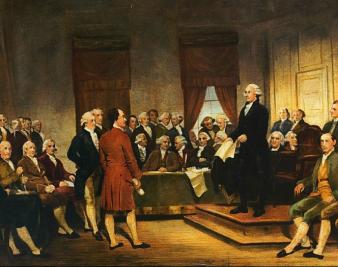
As military operations continue in Libya without formal congressional authorization, the debate about presidential war powers has resumed. Last week, former secretary of state James A. Baker III and former congressman Lee H. Hamilton jumped into the fray, writing a Washington Post op-ed calling for the passage of the War Powers Consultation Act. A product of the bipartisan National War Powers Commission, both the op-ed and the legislation, while not likely to gain much traction politically, contain fundamental mistakes about the proper functioning of our constitutional system—mistakes that are much more troubling because they arise from a bipartisan consensus. Their proposal departs from the Founding Fathers’ constitutional design and, in doing so, reduces governmental accountability, responsibility, and, ultimately, the American people’s security.
Baker and Hamilton complain that Congress and the White House are squabbling “over which branch of government has the final authority to send American troops to war.” Adopting the tone of those who lament partisan rancor in Congress, they bemoan the lack of coordination and cooperation between branches of government.