

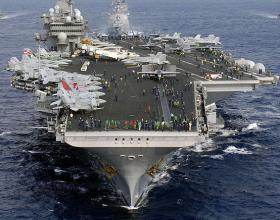
Since assuming his post during the Bush administration, Robert Gates has operated with a simple philosophy: win the war. But execution of that guiding objective has proven complicated. During World War II, America’s armed forces were transformed from a sleepy, mostly domestic border guard into a massive military juggernaut, which swiftly dismantled both the Nazi and Japanese empires in under four years. General George C. Marshall led that military industrial revolution, procuring the right weapons in the right numbers.
But Marshall’s task was simple: cripple the Axis. During World War II, the bad guys fought according to an established order of things — tanks, planes, ships, and a host of varied war machines fought to control the battlespace. When you could stand a rifleman unopposed on a chunk of territory, you owned it. Rules of war were (mostly) followed. Logistical lines stemmed from predictable centers of gravity, enveloped by established and recognized boundaries. The craft of warfighting and the utility of force were logical and symmetrical, making the art of military force shaping simple.
Stay informed.Stay ahead.
Join Washington Examiner for unlimited access to the news, analysis, and commentary that matter most.
Already a member? Log in
