

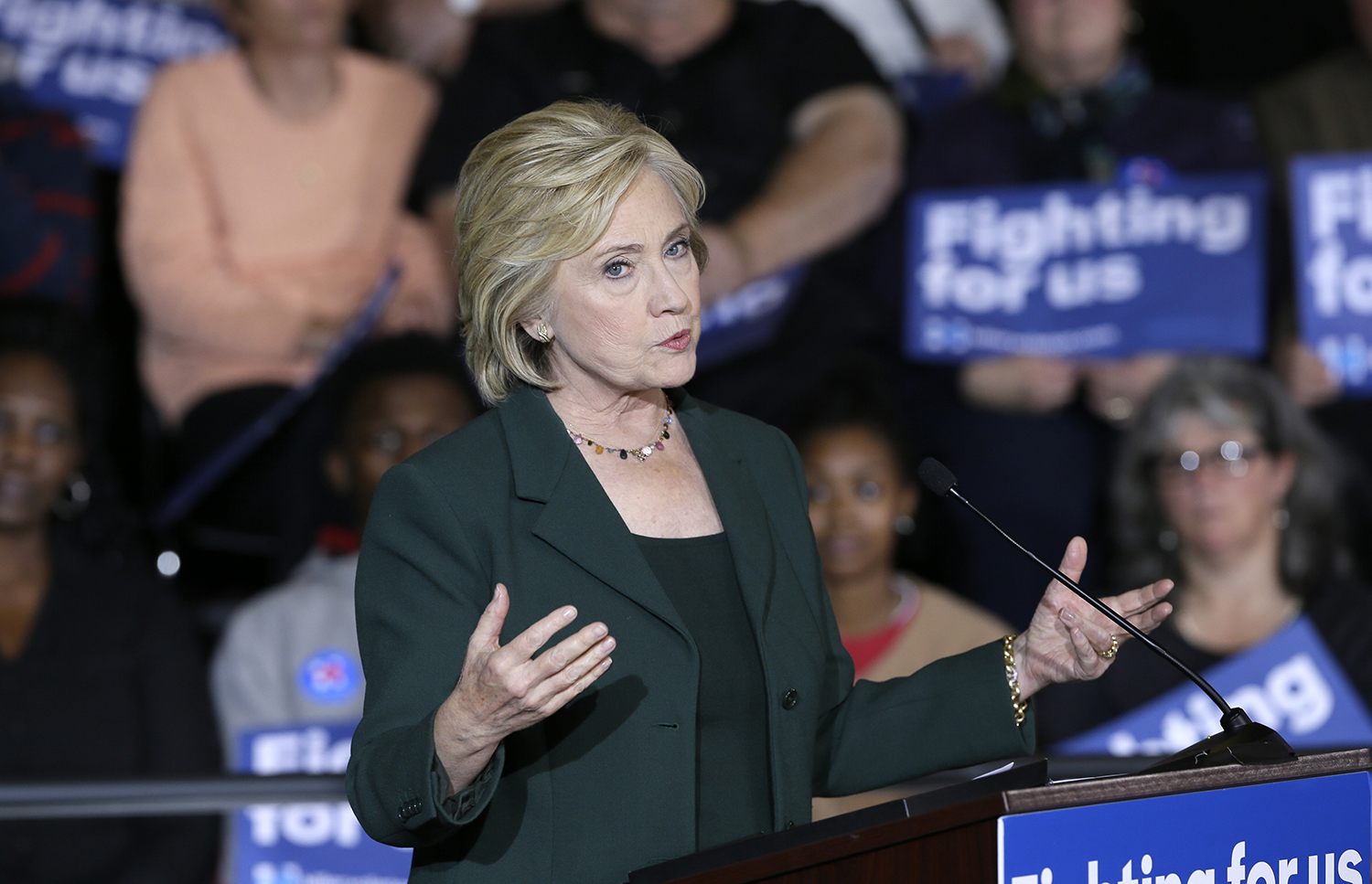
More than four dozen millennials who participated in a virtual focus group after Monday’s presidential debate said Hillary Clinton undeniably defeated her Republican opponent and came away looking better prepared to be commander in chief.
Recommended Stories


The focus group, hosted by the Harvard Institute of Politics, featured responses from young voters ages 18 to 29, who represented more than 20 colleges and universities across the country. By the end of the 90-minute debate, 63 percent of participants had identified Clinton as the winner, while 20 percent said it was a draw. Only 17 percent of participants said Trump walked away on top.
Clinton has long struggled to make inroads with millennials, who tend to view her as dishonest and corrupt. Despite recently pitching herself to the youngest members of the electorate, the Democratic presidential hopeful has mostly relied on surrogates like Bernie Sanders and Massachusetts Sen. Elizabeth Warren to shore up millennial support for her.
But Clinton’s performance in her first one-on-one debate against Trump may have been her most effective tool yet in reaching young Americans.
Seventy-one percent of the focus group participants said they trusted Clinton more than Trump to be president after watching the two face off, and 84 percent said she seemed far more prepared to occupy the Oval Office than the GOP nominee. One of Clinton’s most memorable lines of the night was when she said to her opponent: “I prepared for this debate, and you know what else I prepared for? I prepared to be president. And I think that’s a good thing.”
Another 46 percent of participants said Trump was “too aggressive” toward the former secretary of state during the debate, while 17 percent said he was “not aggressive enough.” Fewer participants (45 percent) also saw Trump as best equipped to grow the U.S. economy than did Clinton (55 percent).
While 65 percent of the focus group said their vote remained unchanged after watching the first debate, 20 percent said they are now more likely to cast their ballot for Clinton in November. Ten percent of the millennial participants said they now lean further toward Trump and 5 percent said they will likely vote third party.
Clinton and Trump will have two more opportunities to deliver messages that connect with millennials and prove their fitness for office in the second and third presidential debates on Oct. 9 and Oct. 19. Their running mates, Indiana Gov. Mike Pence and Virginia Sen. Tim Kaine, will meet for the first and only vice presidential debate next Tuesday in Farmville, Va.
