

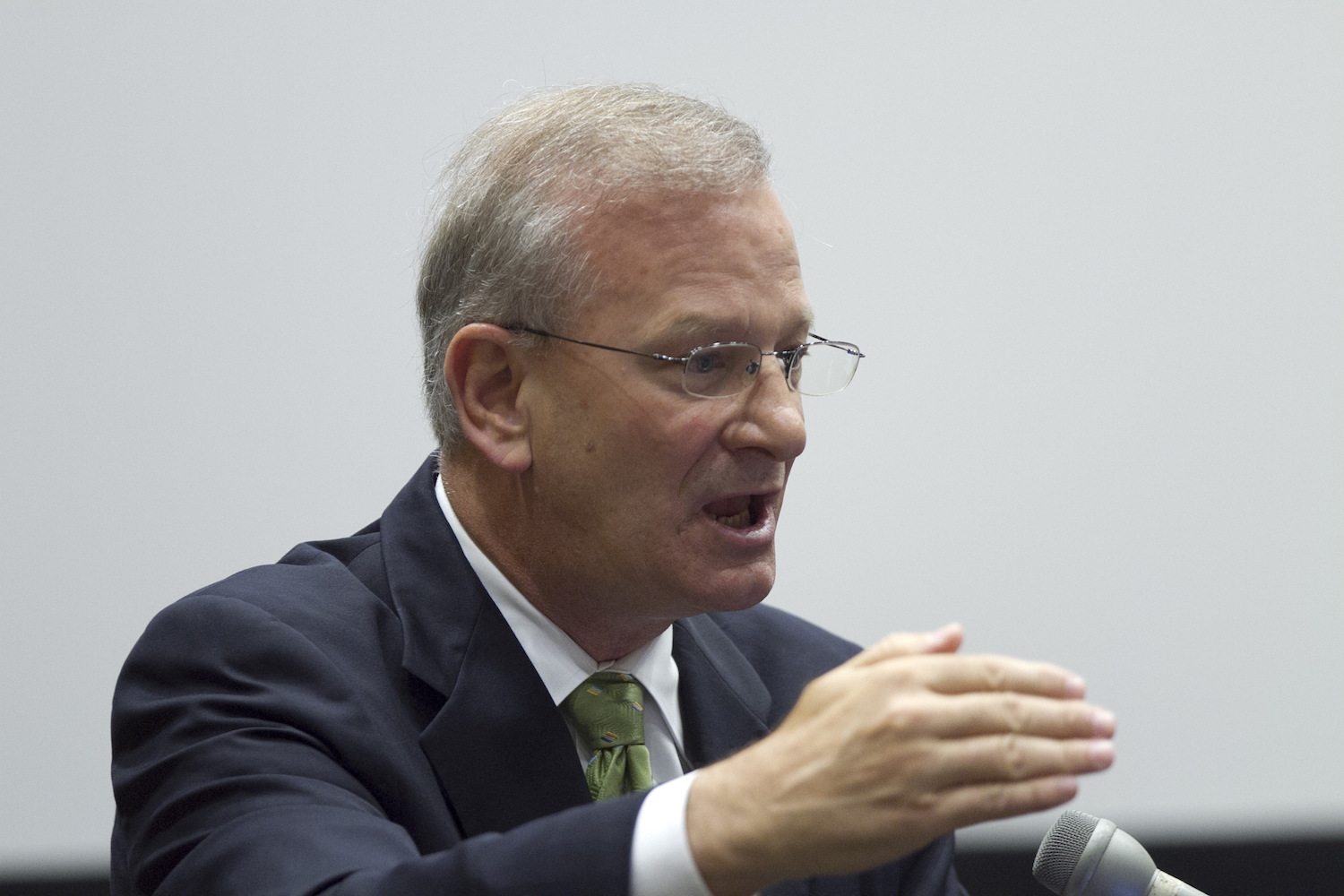
A high-ranking bank regulator warned Friday that the banking industry has grown more concentrated and is now less competitive “than at any time in recent history.”
Even after the new rules instituted after the 2008 crisis, the financial system remains “highly vulnerable” to crises, said Thomas Hoenig, vice chairman of the Federal Deposit Insurance Corporation.
Recommended Stories



Speaking at an event at Chapman University in Orange County, California, Hoenig laid out the case that Wall Street has remains dominated by big banks that remain “too-big-to-fail,” meaning that investors believe they would get bailed out if they failed.
The four largest banks control 42 percent of industry assets, he noted in remarks prepared for the event. That means the industry is three times as concentrated as in 1992, when those banks held 14 percent of total industry assets.
Some of that concentration reflects that some megabanks bought failing financial institutions during the crisis, sometimes at the urging of the government. For instance, JPMorgan Chase bought failed investment bank Bear Stearns in 2008 with the help of the government. Hoenig warned, though, that other factors are increasing the rise of big banks.
Because investors and creditors see big banks as too-big-to-fail, Hoenig argued, they lend to banks at lower prices than they might charge if they thought they would be on the hook for losses. That provides a “subsidy” to megabanks that could keep out competitors and harm innovation in banking, Hoenig said.
Hoenig has been promoting a plan for partitioning megabanks to price those “subsidies” correctly. He says he has had interest from congressional Republicans and Democrats.
Obama-era regulators at the Federal Reserve and Treasury generally stopped short of saying that the new post-crisis rules eliminated the problem of too-big-to-fail banks. But they have argued that the system is much safer today and that the government has better tools to prevent crises.
