

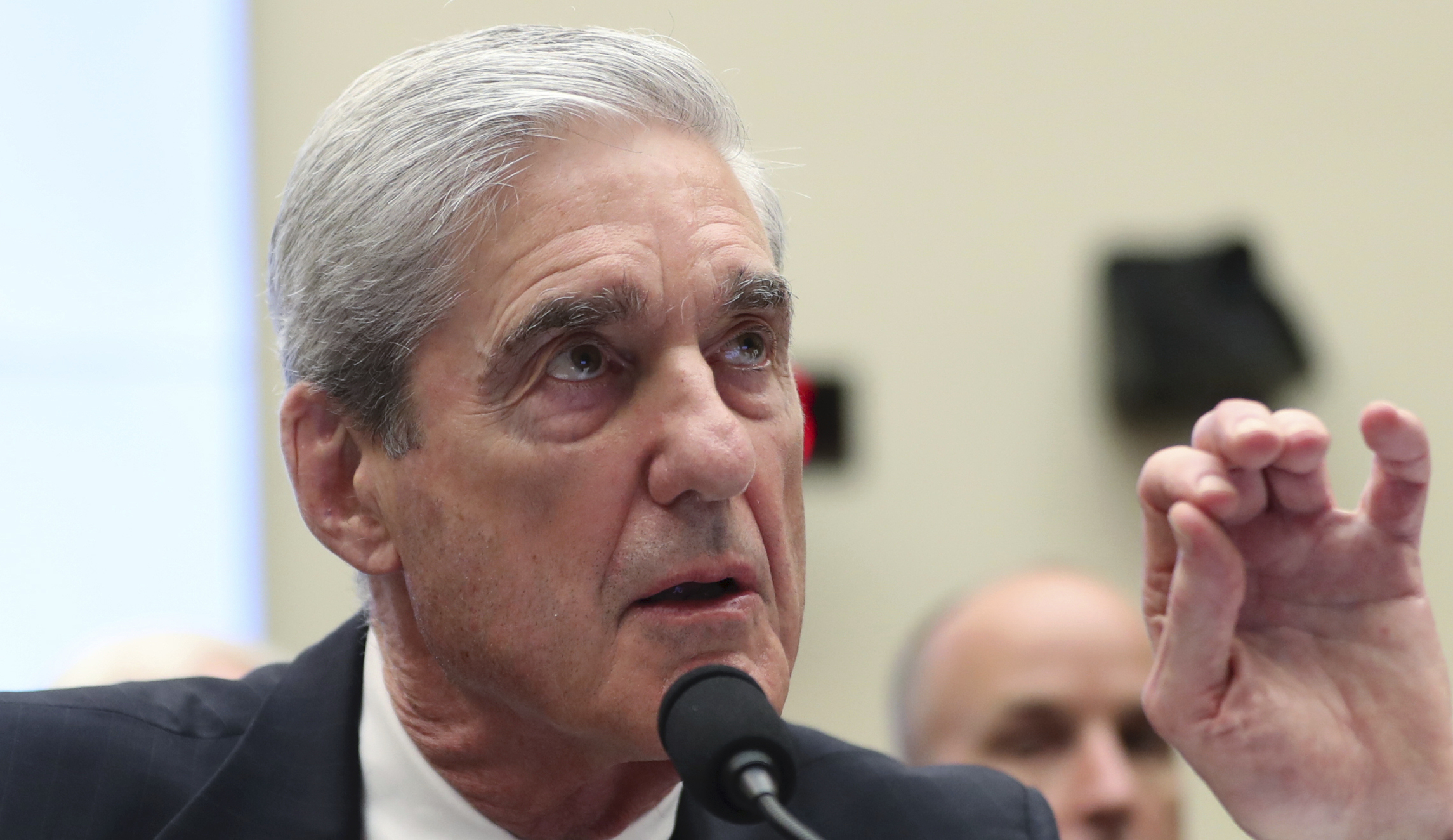
Although the articles of impeachment don’t mention special counsel Robert Mueller by name, the Trump-Russia allegations underpin both accusations of abuse of power and obstruction of Congress.
House Judiciary Committee Chairman Jerry Nadler, whose committee became responsible for drafting and passing the articles of impeachment following weeks of Ukraine-centered testimony and investigations spearheaded by the House Intelligence Committee, spent the months following the Mueller report’s release strongly hinting at a Russia-related impeachment — especially connected to the 10 instances of possible obstruction of justice laid out by the special counsel after his two-year investigation. The New York Democrat reportedly sought to include a third article of impeachment directly connected to Mueller’s investigation, but House Speaker Nancy Pelosi, a California Democrat, put her foot down.
Recommended Stories


But the two articles of impeachment passed by his committee charging the president with soliciting Ukraine’s help to interfere in the 2020 election are buttressed by language alleging this is a pattern of behavior by the president, claiming his actions toward Ukraine are “consistent” with those toward Russia.
“President Trump welcomed foreign interference in the 2016 election. He demanded it for the 2020 election. In both cases, he got caught, and in both cases, he did everything in his power to prevent the American people from learning the truth about his conduct,” Nadler said in his opening statement.
A Republican source familiar with congressional lawmakers’ thinking said the references to Trump-Russia allegations and Mueller’s findings in the articles of impeachment show Democrats aren’t confident about the Ukraine-related impeachment case they’ve built.
Nadler’s office did not respond to the Washington Examiner’s request for comment.
“It is an effort to condemn by implication,” constitutional law expert Jonathan Turley, who testified to the House Judiciary Committee as a GOP witness, told the Washington Examiner. “It is the introduction of an extrinsic, unproven claim to augment what is manifestly an incomplete and thin record.”
The first article of impeachment details the Democratic allegations Trump abused his power in soliciting Ukraine to interfere in the 2020 presidential election to benefit him, asking the foreign country to publicly announce investigations that would benefit his reelection and harm the election prospects of Joe Biden, a political opponent.
But the first article concludes with an apparent reference to Trump’s comments during the 2016 presidential campaign, claiming his actions “were consistent with President Trump’s previous invitations of foreign interference in United States elections.”
“The reference to President Trump inviting the Russians to find the emails in a speech, occurred before he was president and cannot be conceivably cited as an impeachable, let alone criminal act,” Turley said.
During a 2016 press conference, then-candidate Trump addressed the revelation that Russia had hacked Democratic email systems and asked the country to find the thousands of emails former Secretary of State Hillary Clinton deleted from a private email server.
Mueller’s report stated that within approximately five hours of Trump’s statement, Russian military intelligence officers “targeted for the first time Clinton’s personal office.”
Trump told Mueller’s office in writing that his comments were “made in jest and sarcastically, as was apparent to any objective observer.”
Mueller said that while the Russian government felt it would benefit from and worked toward a Trump presidency, and the campaign information stolen and released by Russian would help Trump, the investigation did not establish that the campaign “conspired or coordinated with the Russian government in its election interference activities.”
Democrats repeatedly claimed during the debate over the articles last week what Trump did vis-a-vis Ukraine was a continuation of what he’d done with Russia. Democratic Rep. Hakeem Jeffries, of New York, returned repeatedly to the point Thursday, calling Trump a “serial solicitor” of foreign interference.
Republicans rejected this line of attack.
“Gee, where have I heard that before? I remember. The same colleagues across the aisle first falsely accused the president of collusion and conspiracy with Russia. And when that fell apart, they accused him of obstructing justice into their investigation of false collusion and conspiracy allegations,” Texas Rep. John Ratcliffe said Wednesday. “Every time Democrats get caught trying to frame this president with some crime he didn’t commit, they follow up by accusing him of obstructing their efforts to frame him for the things he never did in the first place.”
The second article of impeachment details Democratic claims of obstruction of Congress, claiming he used executive power to shield against lawful subpoenas from the House of Representatives and “assumed to himself functions and judgments necessary to the exercise of the ‘sole Power of Impeachment’ vested by the Constitution in the House of Representatives.”
But the second section ends with the claim that “these actions were consistent with President Trump’s previous efforts to undermine U.S. government investigations into foreign interference in United States elections.”
Mueller’s report, which laid out 10 possible instances of obstruction of justice, left the question open.
“While this report does not conclude that the President committed a crime, it also does not exonerate him,” Mueller said in the report, going on to say, “because we determined not to make a traditional prosecutorial judgment, we did not draw ultimate conclusions about the President’s conduct.”
“Both Attorney General Bill Barr and Deputy Attorney General Rod Rosenstein rejected any obstruction claim over the Mueller findings,” Turley said.
Barr said he and Rosenstein reviewed Mueller’s report, consulted with DOJ officials, applied federal charging guidelines, and concluded Mueller’s evidence was “not sufficient” to establish Trump obstructed justice. Barr said his decision was made independent of the Office of Legal Counsel guideline that sitting presidents cannot be indicted, and Mueller made clear he was not saying that but for that opinion he would’ve charged Trump.
“The argument ‘Why don’t you just wait?’ amounts to this: ‘Why don’t you just let him cheat in one more election? Why not let him cheat just one more time? Why not let him have foreign help just one more time?’” Schiff said last week.
Turley said these repeated references to contested characterizations of Mueller’s report color the articles of impeachment.
“It is attempting to bias the jury, or in this case the voters, with references outside of the four corners of the actual charge,” said Turley. “It is like saying that someone is guilty of bank robbery by saying some people have long viewed him as a bank robber. It would be improper in an ordinary court of law and should not be viewed as a proper component of an impeachment case.”
