

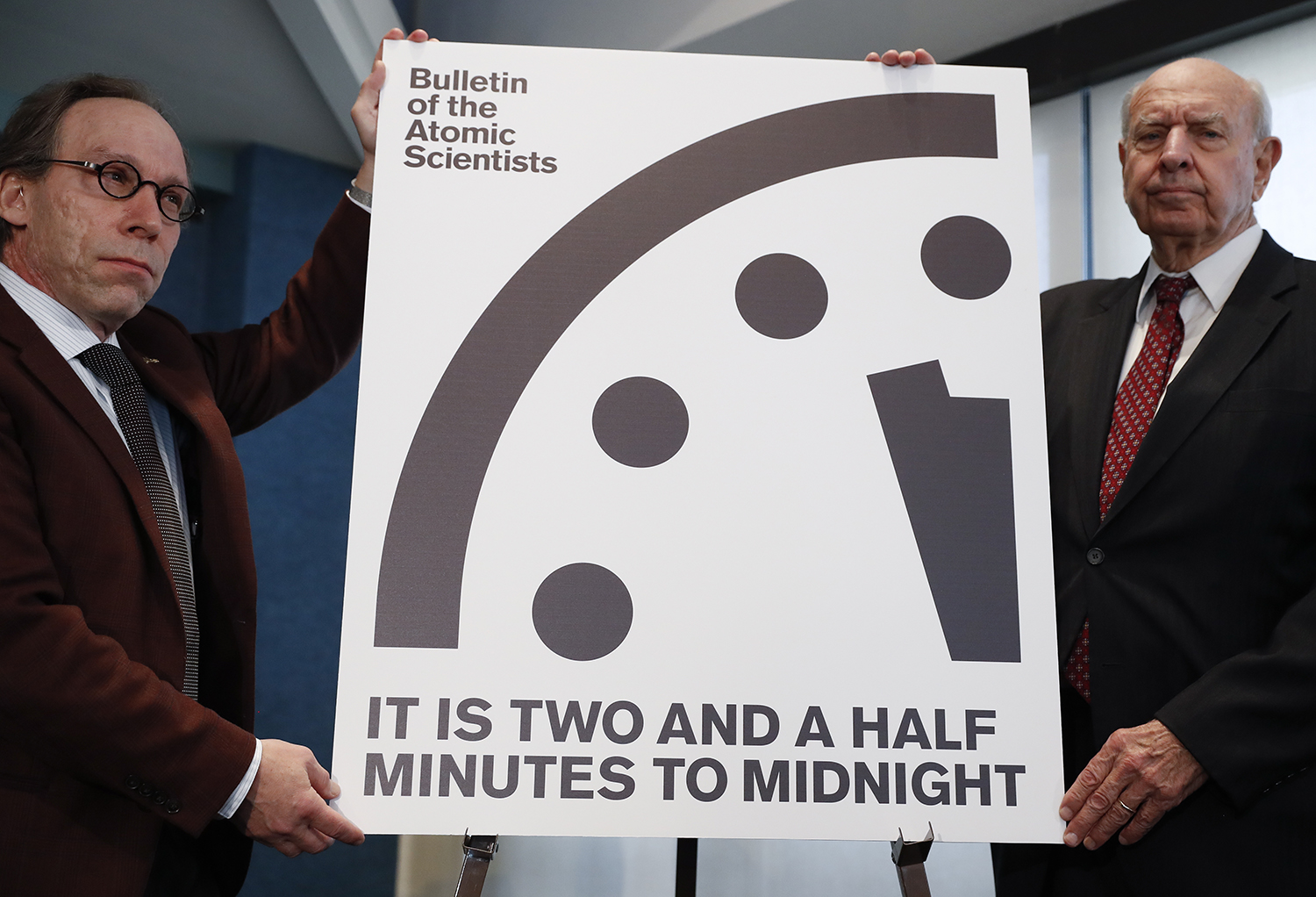
The Doomsday Clock moved 30 seconds closer to midnight due to a year of cavalier talk about the use of nuclear weapons and inaction on climate change and other global threats.
Rachel Bronson, executive director and publisher of the Bulletin of the Atomic Scientists, announced Thursday that it is now two-and-a-half minutes to midnight. She said two factors played into the decision: loose talk about nuclear weapons and the continued discrediting of expert analysis.
Recommended Stories



“There is a troubling propensity to discount or outright reject expert advice related to international security,” she said.
The Doomsday Clock is a symbolic message from the Bulletin of the Atomic Scientists showing how close humanity is to possible catastrophe. It was last moved from five minutes to midnight to three minutes to midnight in 2015. The group is an independent, nonprofit organization.
Bronson said the talk about nuclear arms in the U.S. presidential election and increased volatility among nuclear powers around the world is causing alarm.
“Words matter in ensuring the safety and security of our planet,” she said.
She added, “They have the ability to be walked back, but so too, as we have seen, influential actors alter their behavior in response to loose talk.”
Part of that rests on President Trump’s shoulders, she said.
“As we marked the 70th anniversary of the Doomsday Clock, this year’s clock deliberations felt more urgent than usual … as trusted sources of information came under attack, fake news was on the rise, and words were used by a president-elect of the United States in cavalier and often reckless ways to address the twin threats of nuclear weapons and climate change,” Bronson said.
In December, Trump tweeted: “The United States must greatly strengthen and expand its nuclear capability until such time as the world comes to its senses regarding nukes.” A day later, he told MSNBC “let it be an arms race.”
Thomas Pickering, a former American ambassador to the United Nations and career diplomat, said the volatility in relations between Russia and the United States, India and Pakistan, and North Korea’s testing of nuclear weapons all cause great concern.
He said more needs to be done to limit nuclear proliferation.
“Nuclear volatility has been and continues to be the order of the day,” he said.
