

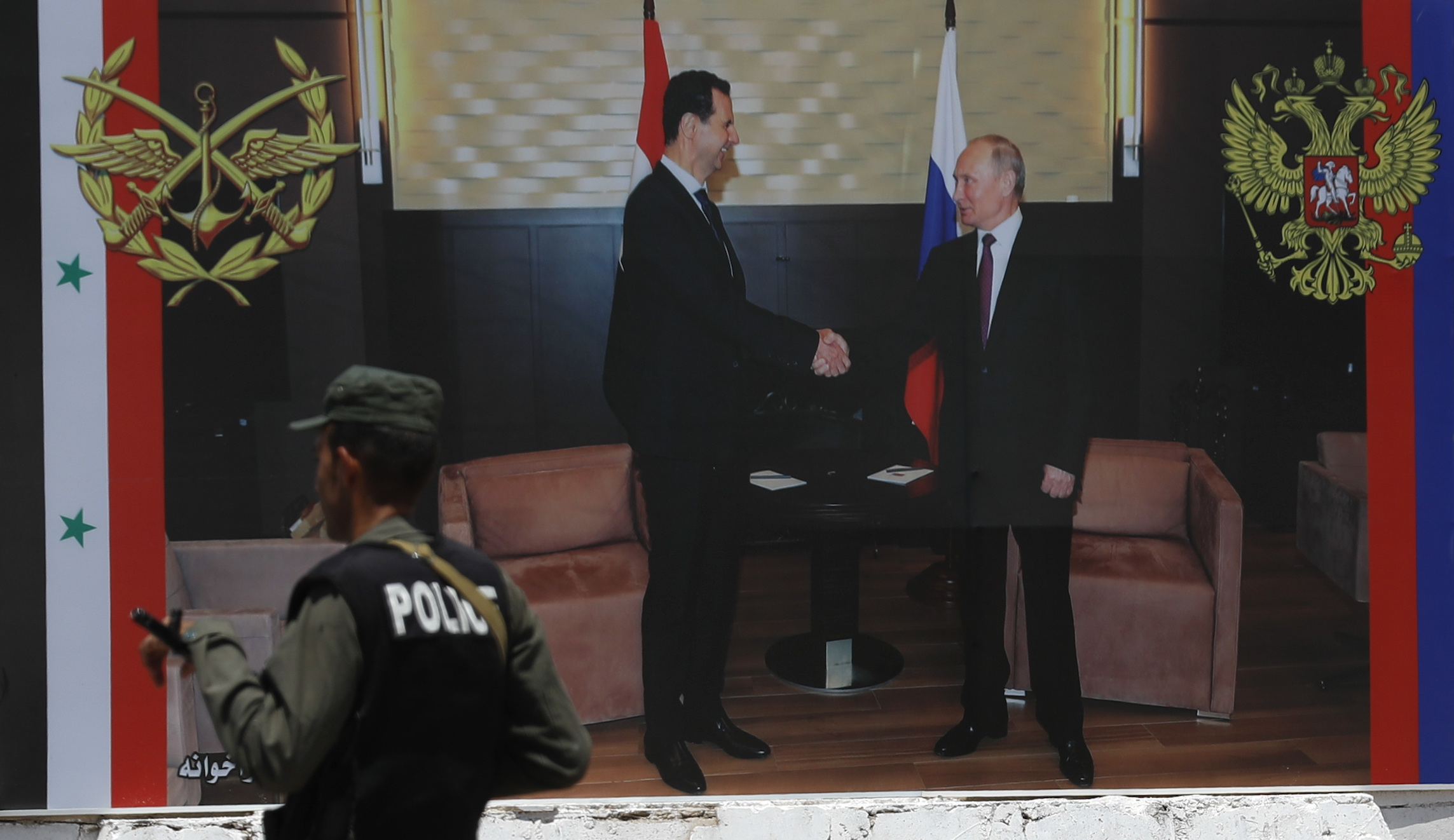
Syrian Kurdish and Arab warriors who fought alongside American forces against the Islamic State could wind up joining dictator Bashar Assad’s military, sources said.
“The Kurds are going to have to figure out how to survive,” Florida Sen. Rick Scott, a Republican member of the Armed Services Committee, told the Washington Examiner. “And so, if that’s what they have to do — they don’t have a choice.”
Recommended Stories


The Syrian Democratic Forces helped stop the Assad regime from regaining the oil-rich territory that ISIS once held. Now, sources say, the Kurds’ effort to survive could result in the Assad regime gaining control of the most important American partners in the country.
“There’s a pretty big chance, yes,” Ilham Ahmed, a Syrian Kurdish leader, told The Atlantic last week when asked if the SDF might join the Assad regime. “If it’s conditioned on what we’ve [pushed for], all of the SDF.”
A switch would deprive the United States of the battle-hardened partners — a fighting force that numbers “many tens of thousands,” said a top State Department official — whom President Trump’s team is relying on to keep Russia and Iran from dominating Syria. The Turkish assault could force Syrian Kurds to seek protection not just from Assad but also from Russia.
“That could be a danger,” James Jeffrey, the State Department’s lead negotiator for the Syria crisis, told the House Foreign Affairs Committee last week.
Assad additionally might try to punish SDF chiefs for opposing his regime, which pressures Kurdish leaders to seek additional support from Russian President Vladimir Putin.
A transfer of allegiances would deprive U.S. counter-terrorism officials of the assistance that proved crucial to finding and killing ISIS leader Abu Bakr al Baghdadi on Saturday, analysts say.
“[The Baghdadi raid] happened because we had partners on the ground who were getting intelligence from the ground that they were willing to share with us,” John Dunford, a Syria expert at the Institute for the Study of War, told the Washington Examiner. “If that relationship and the SDF becomes Russian-backed fighters within the Syrian army, then we lose that ground intelligence that we’ve had in Syria.”
Trump decided to send U.S. forces back into Syria to prevent Assad and his Russian and Iranian backers from gaining control of valuable oil fields. Kurdish leaders objected to his call for the SDF to help hold those fields — “It’s not right, it’s not proper, to move the Kurds from their homeland to other areas,” Ahmed said — but the redeployment raises the possibility of continuing the partnership.
“The SDF is very pragmatic, and as long as there are U.S. boots on the ground, and while the U.S. policy is in flux, they’re going to see how much they can get out of the U.S. before reaching a deal that would re-submit them under the regime fully,” Dunford said.
Trump seems geared to withdraw, Scott said. “I think the president’s committed to getting out, so, he’s going down that path,” the Florida Republican told the Washington Examiner. “And I think the Kurds gotta figure out how to survive.”
