

The Supreme Court agreed to hear a case between the Navajo Nation, the U.S. government, and three states over whether the tribe has the right to draw water from the Colorado River amid a historic drought in the region.
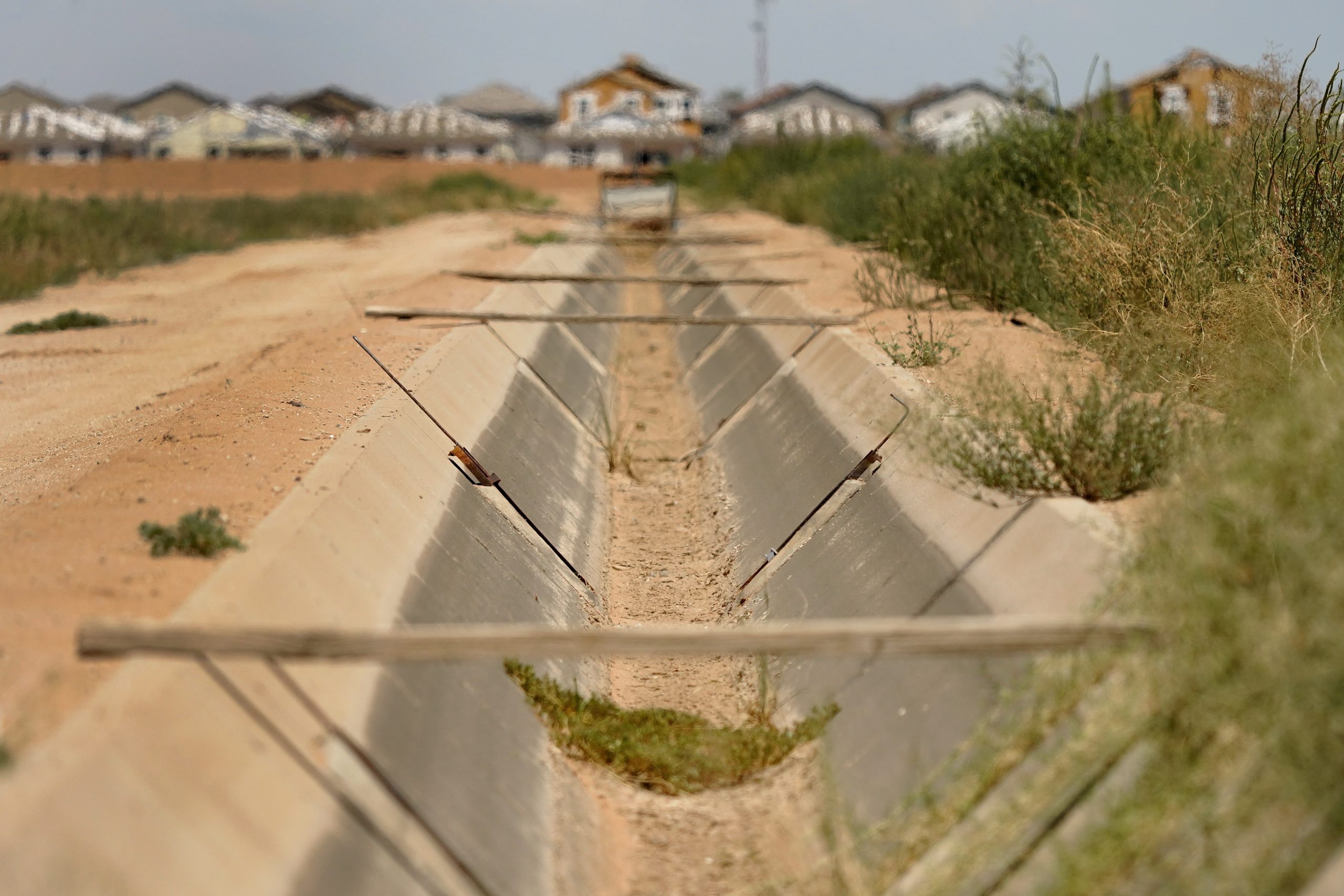
Justices said they would review a decision from the U.S. Court of Appeals for the 9th Circuit last year that ruled in favor of the Navajo Nation, a group that spans New Mexico, Utah, and Arizona. The high court’s decision to take up the case comes at a time when the Colorado River is shrinking due in part to drought and overuse.
The case stems back to 2003 when the tribe sued the U.S. federal government to gain access to the mainstream of the Colorado River, and litigation has persisted ever since. In a separate lawsuit, the tribe has attempted to gain access to the Little Colorado River, which is a separate tributary of the mainstream.
AS CLIMATE CRISIS DEEPENS, RIVERS DRY UP, UPENDING LIFE FOR MILLIONS
The government signed treaties with the Navajo Nation in 1849 and 1868, which established the reservation. The reservation was later expanded westward to the Colorado River, which forms its western boundary.
In recent litigation, a trial court dismissed the case, but the federal appeals court allowed it to proceed, a result the government is challenging.
The Biden administration, represented by Justice Department Solicitor General Elizabeth Prelogar, wrote in court filings that the Supreme Court has on several occasions ruled that a tribe cannot sue to enforce an obligation it believes the federal government has unless it can point to a specific law or regulation that gives it authorization.
CLICK HERE TO READ MORE FROM THE WASHINGTON EXAMINER
“Nothing in the supposed sources the court of appeals cited imposes any specific and affirmative duties on the federal government on behalf of the Navajo Nation with respect to the water of the Colorado River,” Prelogar noted.
The high court also agreed to hear two other cases on Friday. One centers on a $90 million trademark dispute involving controls used to operate heavy machinery, while another is a patent case in which a biotechnology company, Amgen, sued Sanofi and Regeneron for patent infringement.
