Iran cites new sanctions to spurn talks with Trump

Published June 8, 2019 8:23pm ET


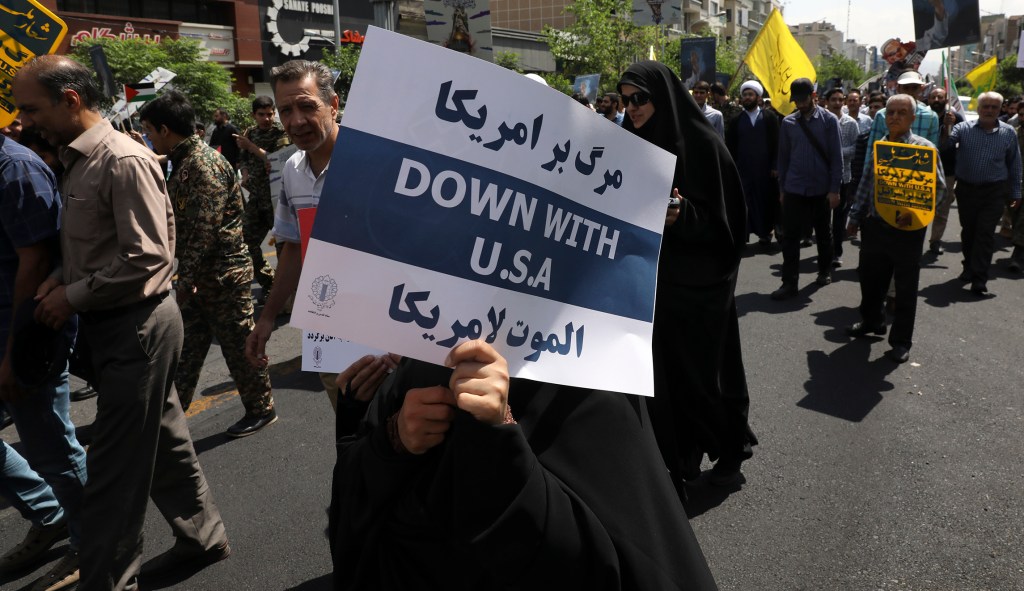
Iran is citing U.S. sanctions on a major petrochemical company to justify spurning new talks with President Trump.

“Only one week was needed for [Trump’s] claim that he was ready to negotiate with Iran to be proven hollow,” Foreign Ministry spokesman Abbas Mousavi said Saturday in remarks carried by state-run media.

The United States blacklisted Iran’s most profitable oil refiners on Friday, citing their financial ties to the Iran’s Revolutionary Guard, which Trump’s team designated as a foreign terrorist organization in April. The Treasury Department offered the sanctions as an example of U.S. efforts to starve the regime of finances for regional aggression, while Secretary of State Mike Pompeo invoked the measures as leverage to force Iran to the negotiating table.

“Our maximum economic pressure is aimed at depriving the Iranian regime of the funding it needs to sustain its expansionist foreign policy,” Pompeo said Friday. “Iran must end its nuclear threats and escalation, stop the testing of advanced ballistic missiles, cease support for terrorist proxies, and halt the arbitrary detention of foreign citizens. The only path forward is for Iran to negotiate a comprehensive deal that addresses these destabilizing behaviors.”

Iran has maintained a defiant posture over the last year, as Trump renewed U.S. sanctions after withdrawing from the 2015 nuclear deal. Iran remained in the deal while demanding that European powers ensure that the regime continues to reap the benefits of the pact, but those efforts have largely failed because major corporations fear being sanctioned by the United States for investing in Iran.

The standoff deepened in recent weeks, after Trump revoked waivers that allowed Iran to produce heavy water and low-enriched uranium. Iran responded by announcing that it would stockpile those key nuclear materials beyond the caps set by the 2015 nuclear deal, setting the table for an open violation of the pact later this year.

“The U.S. policy of maximum pressure, which has repeatedly been tested by former presidents, is a failure,” Mousavi said.