

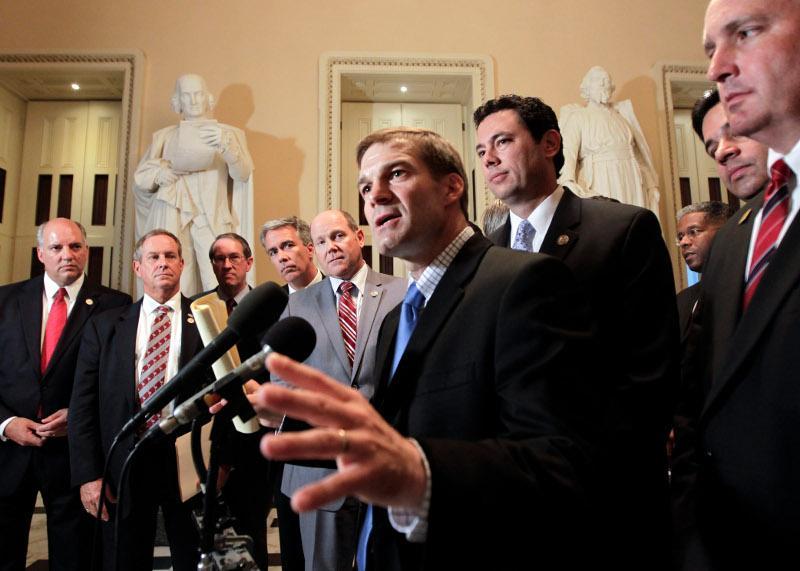
House lawmakers return to Washington Tuesday to open the second session of the 112th Congress and their first move will be to block President Obama from raising the nation’s debt ceiling by $1.2 trillion.
Obama notified Congress last week that the nation was about to reach the $15.2 trillion limit on its borrowing authority and would be unable to keep paying its bills.
With Republicans dominating the House, the chamber will most likely approve blocking the increase. That won’t satisfy the party’s sizable right flank, which is anxious to deeply cut spending, something to which both parties agreed last summer when they approved an earlier increase in the debt ceiling.
Defeating Obama’s proposal to increase the borrowing limit, conservatives say, is a gimmick that sidesteps the more difficult problem of cutting spending and reducing the deficit.
“Conservatives are frustrated at the lack of cuts that even our own party is proposing,” an aide to the fiscally conservative House Republican Study Committee told The Washington Examiner. “The RSC is the only entity that consistently puts out real, significant, politically viable cuts, but of course the committees and leadership want only to trim around the edges and then blame the Democrats. What a shame.”
Wednesday’s vote will indeed be largely symbolic. Senate Democrats will block any effort to stop the debt ceiling increase, which would allow the Treasury to borrow enough to pay the government’s bills through the end of 2012.
A bipartisan group of House and Senate lawmakers, the so-called supercommittee, last year failed to find a way to cut $1.2 trillion in spending as required by the debt limit deal reached in August. If Congress can’t agree on those cuts by year’s end, the cuts will kick in automatically and reduce agency budgets across the government, including at the Pentagon.
The Republican Study Committee, meanwhile, proposed a fiscal 2012 budget that aggressively reduces the deficit, in part, by freezing discretionary spending at 2008 levels and by cutting $1.9 trillion in “unnecessary” nonentitlement spending between 2012 and 2021.
But the study committee’s plan won’t be considered this year, with the House, Senate and White House all up for grabs in the fall elections.
“There are limited opportunities to get anything passed, and after Memorial Day it is likely that all we will see out of Washington is gridlock,” said Republican strategist Ron Bonjean, a former top House and Senate aide.
Bonjean said Wednesday’s House vote against the debt ceiling increase “will only help Republicans keep on the side of fiscal responsibility.”
A top House Democratic aide called the House vote “a waste of time, especially when we have more pressing matters at hand.”
The two parties are expected to negotiate an extension of a payroll tax cut, unemployment insurance and a Medicare “fix” that would keep payments flowing to participating doctors. A two-month extension of those three items expires in February.
The good news is that unlike the debt ceiling fight last summer, where congressional approval was in doubt, the latest debate is unlikely to roil the markets, said Mike Tanner, a senior fellow at the libertarian Cato Institute.
“This is just pure politics,” Tanner said. “Wall Street is not paying the slightest bit of attention to this.”
