

President Trump gained a small amount of weight since his physical early last year but “remains healthy,” according to the White House doctor.
The White House released the results of Trump’s third physical on Wednesday, months after he spent a November afternoon at Walter Reed National Military Medical Center in Bethesda, Maryland, beginning the process.
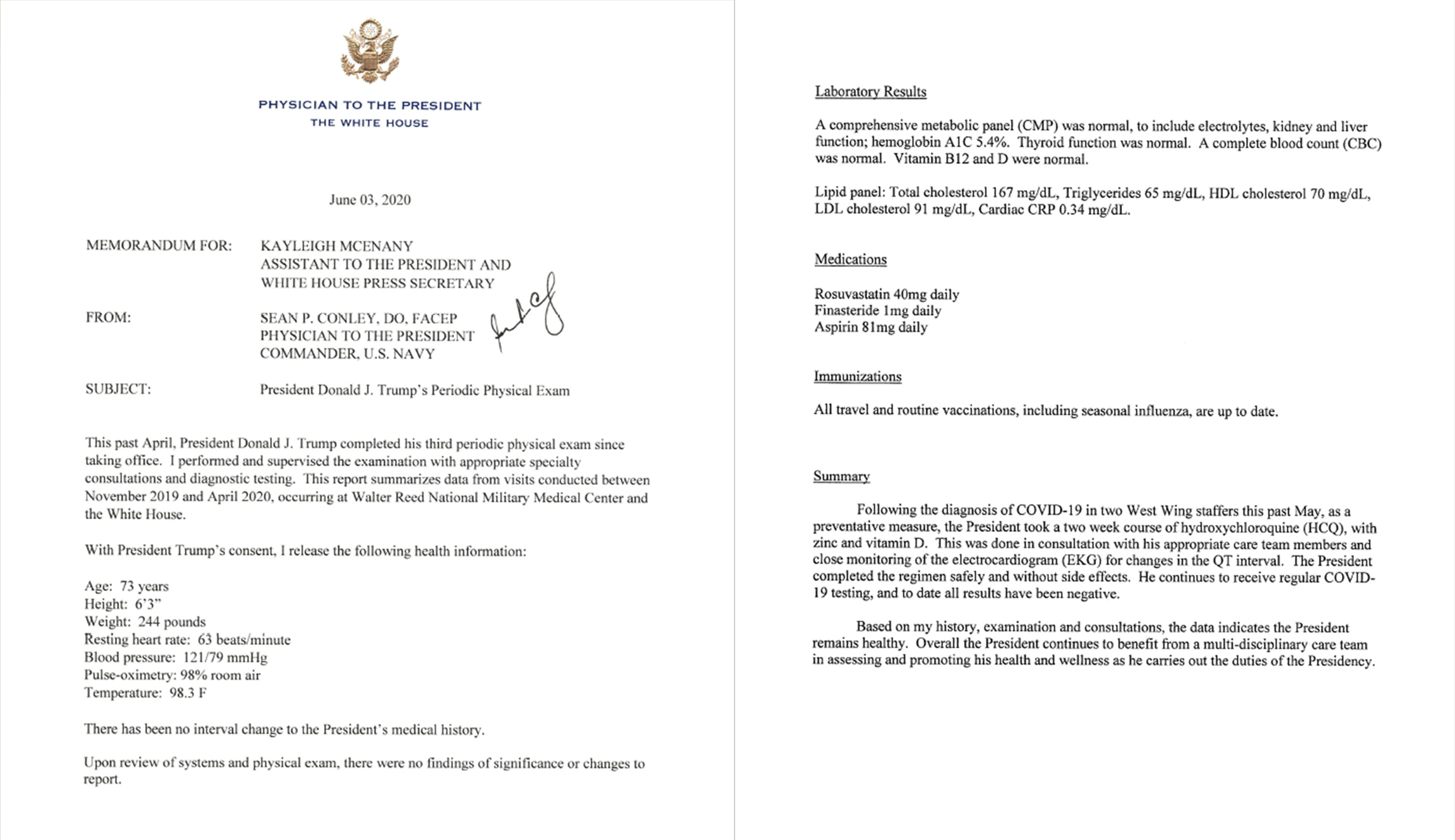
Trump completed the annual physical in April, according to a memo from the president’s doctor on Wednesday. The second part of the physical was completed at the White House.
The president weighs 244 pounds, a gain of one pound since his 2019 annual exam. At 6 feet, 3 inches tall, the president is considered obese.
The results also include a brief summary of Trump’s use of hydroxychloroquine, which he took as a preventative measure against the coronavirus after two White House staffers tested positive. Trump took the drug for two weeks along with zinc and vitamin D and was monitored by his doctors for issues through the use of an electrocardiogram, the report read.
“Upon review of systems and physical exam, there were no findings of significance or changes to report,” White House doctor Sean Conley wrote, adding that Trump had no side effects from using hydroxychloroquine.
“He continues to receive regular COVID-19 testing, and to date all results have been negative,” Conley said.
Then-White House press secretary Stephanie Grisham said in November that Trump made the trip to Walter Reed for a “quick exam and labs.”
The visit was heavily scrutinized because it’s unusual for a president to undergo a physical exam in multiple stages and months apart, and it was not announced beforehand. The speculation about Trump’s health led the White House physician to clarify that the president did not have “any chest pain, nor was he evaluated or treated for any urgent or acute issues.”
“Specifically, he did not undergo any specialized cardiac or neurologic evaluations,” Conley said in a memo at the time.
