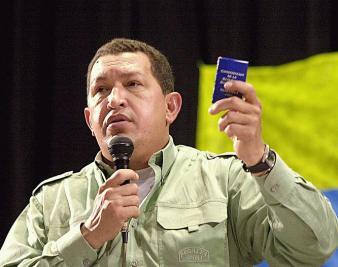
Since the election of President Evo Morales in December 2005, relations between the United States and Bolivia have steadily deteriorated. Morales has embraced a political model that thrives on conflict, confrontation, and bullying. His policies have raised the specter of large-scale turmoil. Much like Venezuelan President Hugo Chávez, he uses anti-Americanism as a political tool and spins wild conspiracy theories about the United States. In September, Morales expelled the U.S. ambassador to Bolivia, whom he accused of stoking Bolivian separatism. Shortly thereafter, the United States pulled its Peace Corps volunteers from Bolivia, citing the growing political violence. In November, Morales demanded that the U.S. Drug Enforcement Administration (DEA) cease its operations in Bolivia. The DEA completed its exit from Bolivia in late January.
Before leaving office, President George W. Bush responded to Bolivia’s lack of cooperation with anti-drug efforts by suspending its privileged trade status under the Andean Trade Preference Act (ATPA) and Andean Trade Promotion and Drug Eradication Act (ATPDEA). Both the ATPA and ATPDEA require that beneficiary countries provide a certain level of assistance to U.S. counternarcotics activities. The Bush administration was justified in suspending Bolivia’s trade benefits, although its decision will have a considerable economic impact on the South American country and has been used by Morales for domestic propaganda purposes. Now the Obama administration must decide whether and when to restore those trade benefits.