‘Fuller explanation’ of obstruction issue will appear in redacted report, Barr says

Published April 10, 2019 3:01pm ET


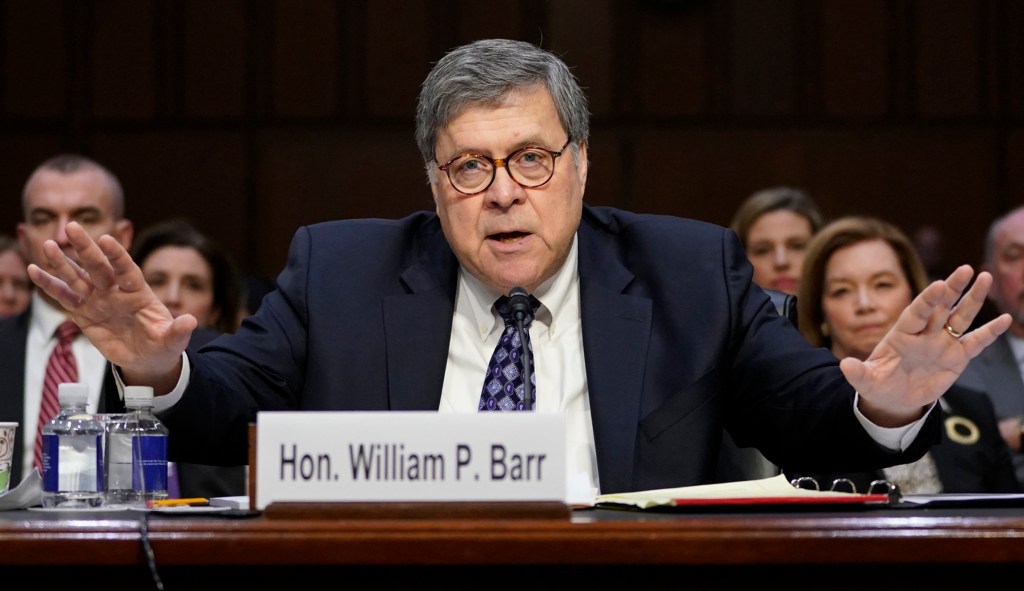
Special counsel Robert Mueller provides a “fuller explanation” on obstruction of justice in the report that will be released next week, Attorney General William Barr testified Wednesday.

During a hearing, Sen. Patrick Leahy, D-Vt., asked Barr if he had any conversation with Mueller about why he did not reach a conclusion one way or the other on whether President Trump obstructed justice.

“Yes, I did. And he also has a fuller explanation of that in the report that I’ll be making available hopefully next week,” Barr replied.

Mueller concluded his monthslong Russia investigation last month, after which Barr submitted a four-page letter that stressed the special counsel did not find evidence of collusion between the Trump campaign and Russia.

Barr also said Mueller left the obstruction question unresolved. A line taken from Mueller’s final report says, “while this report does not conclude that the President committed a crime, it also does not exonerate him.” Barr said he and Deputy Attorney General Rod Rosenstein found there was a lack of “sufficient” evidence to determine whether Trump obstructed justice.

Barr appeared before a congressional committee for a second day in a row on Wednesday — both hearings were intended to focus on the proposed Justice Department budget, but often got sidetracked with questions about Mueller’s investigation.

In his appearance Tuesday, Barr said Mueller played no role in crafting the summary and added he suspects special counsel Robert Mueller’s team “wanted more” out of his summary of the final report for the Russia investigation.

Democrats not satisfied with Barr’s summary, who are angling to get access to Mueller’s full report, were further incited by reports last week from the New York Times and Washington Post in which anonymous sources said members of Mueller’s team were frustrated with the way Barr portrayed the findings in his summary.

In a March 29 letter, which followed the summary, Barr identified four categories of information that will not be made public in the redacted report he intends to release, including material related to grand jury proceedings which by law cannot be made public, information deemed by the intelligence community to compromise sensitive sources and methods, details that could affect other ongoing investigations — including those referred by the special counsel’s office to other offices — and material that would “unduly infringe on the personal privacy and reputational interests of peripheral third parties.”

Barr testified Wednesday that he never “overruled” Mueller on any redactions.

The Judiciary Committee, ruled by Democrats, voted last week in favor of subpoenaing Barr to turn over the entire Mueller report.

However, House Judiciary Committee Chairman Jerry Nadler, D-N.Y., said Tuesday his panel will not actually issue a subpoena for Mueller’s full report until they see the redacted version provided by Barr.