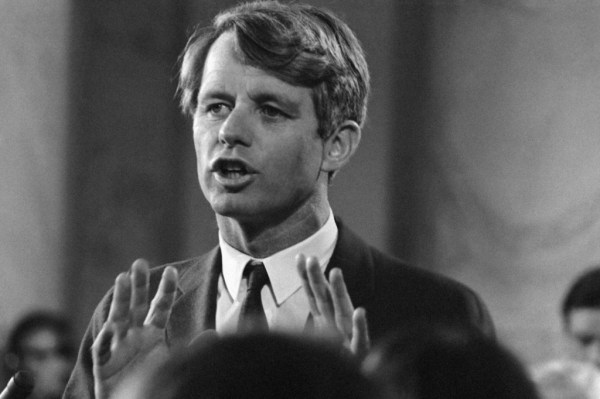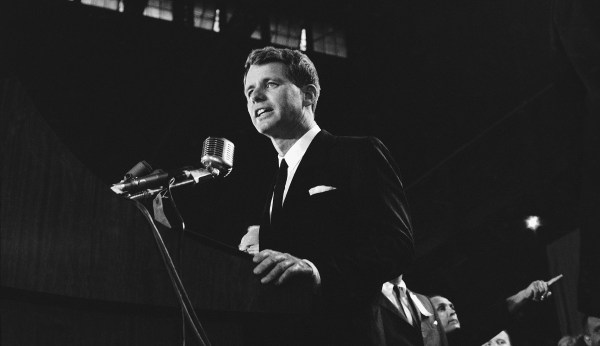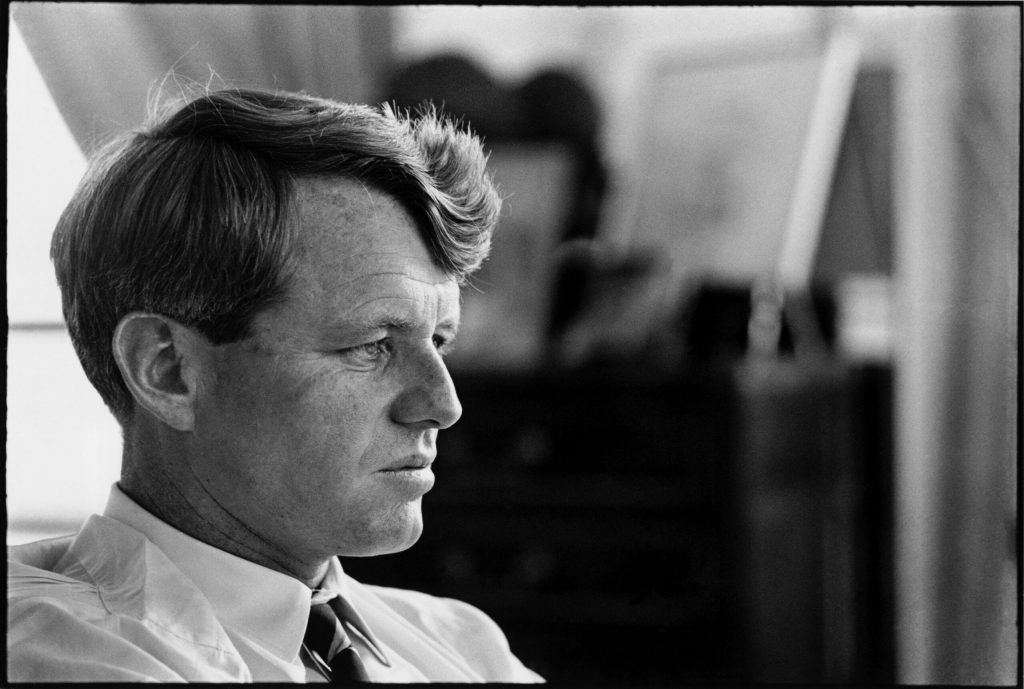
Robert F. Kennedy, who died 50 years ago this week, appears as a sort of “Mr. 1960s” in the new four-part Netflix documentary series bearing his name. There he is in a grainy recording working the floor of the 1960 Democratic National Convention, prospecting for votes for his brother. In crisp monochrome, he is sleeves furled and all-business at the Justice Department. Here, he spars with Alabama governor George Wallace, dispatches troops to integrate the state’s main public university, and schools Southern lawmakers denying blacks the vote on the Constitution. Later, he kibitzes with Cesar Chavez and migrant workers in California, travels the grim folkways of rural poverty in Mississippi and Appalachia, and bears witness to urban blight in New York City. The hair grows flouncier as the decade begins to swing (he’s forever fussing with that recalcitrant forelock) and the footage becomes saturated in color. In multiple frames, he’s borne through milling mob scenes. Politicians today would scarcely appear in such unruly moshes (let alone excite such adulation), but there he is advancing through the churning melee, an aide’s arm clamped about his midriff to prevent him being yanked bodily from the motorcade as he clasps outstretched arms. His single senatorial term looks like a one-man shadow presidency.
Bobby Kennedy for President chronicles its subject’s awakening to the issues—civil rights, peace in Vietnam, and an adequately-funded war on poverty—that defined his platform as a presidential candidate in 1968 and the events and experiences that acted like a refining fire on his beliefs. It’s narrated by aides and intimates, but it’s in the unmediated archive footage that it soars.