

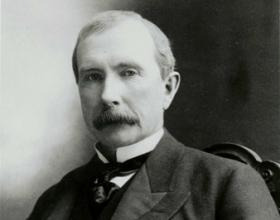
Under the auspices of the Hudson Institute’s Bradley Center for Philanthropy and Civic Renewal, Martin Morse Wooster has revised and expanded his 2006 study of where and why foundations go wrong. A frequent contributor to THE WEEKLY STANDARD, and maestro of the rarefied art of philanthropic study, no one is better equipped than Wooster to cast a cold eye on the world of foundations, define their mistakes, and point the way—more in sorrow than anger—toward philanthropy that actually accomplishes something.
As this unexpectedly fascinating study suggests, the basic problem of the great charitable foundations—Ford, Rockefeller, Pew, Carnegie, MacArthur, etc.—is that they were founded by entrepreneurs but are administered by bureaucrats. The founders were (almost invariably) men who had made great fortunes in the American system and wished to preserve and promote that system to afford others the same opportunities from which they had benefited. But the second, third, and successive generations of founding families tended to look upon their ancestors in light of their own comfortable upbringing and elite education. And coupled with the natural tendency of institutions to expand, they handed their inheritance to managers and trustees, who presided over relentless growth and distortion of donor intent. It is interesting to speculate what Henry Ford would make of the Ford Foundation, or J. Howard Pew of the Pew Charitable Trust.
Stay informed.Stay ahead.
Join Washington Examiner for unlimited access to the news, analysis, and commentary that matter most.
Already a member? Log in
