
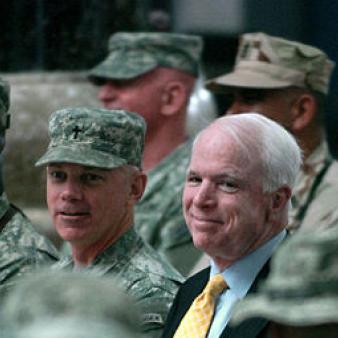
At the ongoing Senate hearing on “Don’t Ask, Don’t Tell” John McCain defended the policy in his opening remarks. After thanking the service of all Americans in the military, he cited the findings made by Congress when the “Don’t Ask, Don’t Tell” policy was implemented in 1993:
First, Congress found in the law that the military’s mission to prepare for and conduct combat operations requires servicemen and women to accept living and working conditions that are often spartan and characterized by forced intimacy with little or no privacy. Second, the law finds that civilian life is fundamentally different from military life, which is characterized by its own laws, rules, customs, and traditions, including many restrictions on personal conduct that would not be tolerated in civil society. Finally, the law finds that the essence of military capability is good order and unit cohesion, and that any practice which puts those goals at unacceptable risk can be restricted. These findings were the foundation of Don’t Ask, Don’t Tell, and I am eager to hear from our distinguished witnesses what has changed since these findings were written such that the law they supported can now be repealed.
“Has this policy been ideal? No, it has not. But it has been effective. It has helped to balance a potentially disruptive tension between the desires of a minority and the broader interests of our all-volunteer force.
“Has this policy been ideal? No, it has not. But it has been effective. It has helped to balance a potentially disruptive tension between the desires of a minority and the broader interests of our all-volunteer force.
Read his full remarks after the jump:
Recommended Stories


Print subscriber? Click here to login/register your account
Digital subscriber? Click here to login/register your account.