

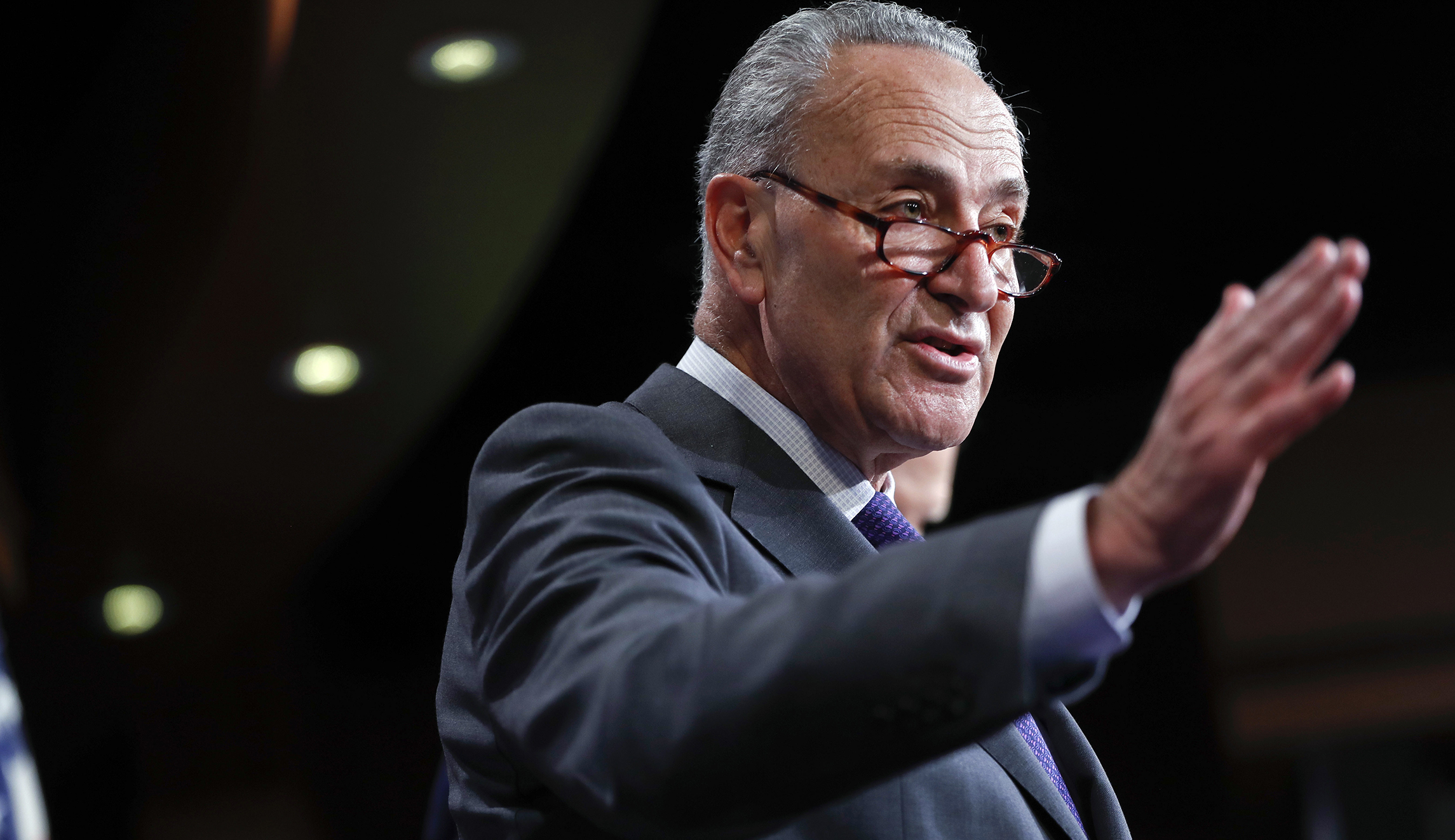
Congress still has ways to fund Obamacare even after a recent decision by President Trump to no longer authorize insurance payments, Senate Minority Leader Chuck Schumer said Friday.
“We Democrats are going to work very hard to get these cost-sharing payments restored,” the New York Democrat said in a call with reporters. “A whole lot of Republicans want to get them restored, too.”
Recommended Stories



The funds, which are expected to reach about $9 billion in 2018, could be appropriated through a bipartisan deal on healthcare or through an omnibus spending deal, Schumer said.
The call came in response to Trump’s decision to quit authorizing the Obamacare payments after making payments around the 20th of each month since taking office. The funds initially had been authorized under former President Barack Obama after Congress would not appropriate them. The GOP-controlled House sued in response, and a judge sided with its position. The case was appealed and funding continued to flow to insurers, leaving Trump to make a decision about whether to continue authorizing them.
An official White House statement said the decision was made because the funds needed to be appropriated by Congress. Trump also said Friday that he hoped it would lead Congress to strike a deal.
Schumer warned that the public would blame Trump and Republicans for resulting troubles in the healthcare system. He said he did not know where talks stood in the Senate Health, Education, Labor and Pensions Committee, where its chairman, Lamar Alexander, has been working with the top-ranking Democrat, Patty Murray, to arrive at a bipartisan agreement that would include appropriating the funds for two years. Before Trump’s announcement, Alexander told reporters that a deal had not been reached because Democrats have not offered enough flexibility for states in exchange for the funding.
Trump’s decision on the cost-sharing subsidies came a few hours after he signed an executive order that would kick off a process to loosen some of Obamacare’s mandates. Schumer said the actions by Trump and by Republicans as they sought to overhaul Obamacare this year had created mistrust.
“We are willing to work with the president when he is willing to work with us and provided we don’t sacrifice our principles,” Schumer said. “The president if anything in the last week has undermined trust.”
It’s unclear whether Republicans will appropriate the funds and whether Trump will support a bipartisan agreement. Though more centrist members have voiced a willingness to do so, conservatives have referred to the funding as a “bailout.” Some Democrats also had previously said they didn’t think an appropriation was necessary because they thought the president should continue to authorize the funding as Obama had done.
More questions remain about what the strategy will be. On Thursday night, Schumer issued a statement with House Minority Leader Nancy Pelosi, D-Calif., saying that Trump’s actions meant he was “walking away from the good faith, bipartisan Alexander-Murray negotiations and risking the healthcare of millions of Americans.”
When asked why the statement did not instead urge members to pass the Alexander-Murray bill, a senior Democratic aide replied, “Calling CSRs an insurance company ‘bailout’ doesn’t exactly suggest that the president is supportive of a deal that includes them,” referring to various tweets Trump has sent on the subject during the last year.
Without the funds, the deficit will increase by $194 billion and premiums will rise by 20 percent, according to the Congressional Budget Office. Insurers may announce they no longer want to sell Obamacare plans, and without the funding from the federal government they are likely to sue because Obamacare requires them to offer discounts on out-of-pocket medical expenses.
“The decision to end the cost-sharing payments is going to be devastating for millions of Americans, poor Americans and those in the middle class,” Schumer said in a call with reporters, adding that Trump’s decision was among the “worst things” he could have done to the healthcare system.
