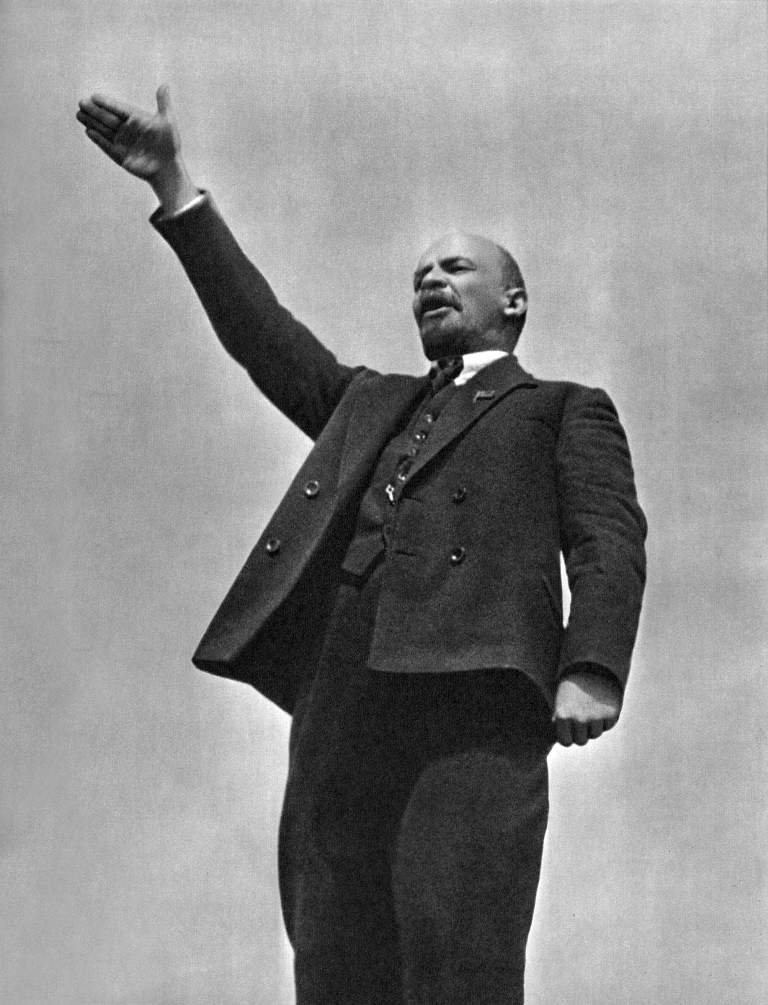
What is the world’s most effective weapon? During the First World War, gas killed about 90,000 people. During the Second World War, it was used to kill 6,000,000 Jews. Directly and indirectly, the two atomic bombs killed about 200,000 Japanese; the Japanese used anthrax, cholera and the bubonic plague to kill about 400,000 Chinese. The bubonic plague killed about 50 million Europeans in the 14th century, but that was an act of god, so to speak. I’m just using it to establish scale: a hundred years ago, in 1917, the Germans took the exiled Lenin, put him on a sealed train, and sent him to Russia. They believed that he would destabilize the new Russian Republic and deliver Germany a swift victory on the Eastern Front. They were right; directly and indirectly, by dropping Lenin on Petrograd, the Germans killed about 100 million people. And that number is still climbing.
The 100th anniversary of Lenin’s sealed train-trip has just passed. In late February 1917, Tsar Nicholas II was at the Eastern Front, leading the Russian war on the Central Powers. At home, his Tsarina Alexandra ruled, with spectacular incompetence. Under the Tsarina’s rule, the Russian government burned through four prime ministers, three foreign minsters, three war ministers and five ministers of the interior. As the political turmoil worsened, protests in Petrograd (formerly St. Petersburg, later Leningrad, now St. Petersburg again) gained momentum. On March 10, the Tsar ordered the Petrograd garrison to disperse the crowds of protestors with rifle fire. On March 11, some of the Petrograd garrison joined the protestors, and exchanged fire with soldiers loyal to the Tsar. The Tsar suspended the Duma.