

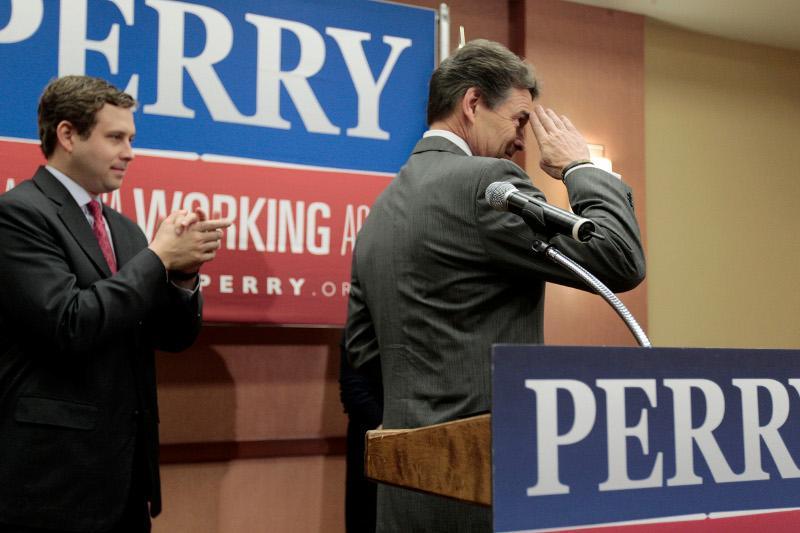
NORTH CHARLESTON, S.C. — The exit of Texas Gov. Rick Perry from the 2012 presidential race on Thursday closed the books on one of the more surprising collapses in the history of modern politics.
Announcing the end of his presidential candidacy here, from the same city he declared his White House aspirations last year, the longest-serving governor in Texas history — who cruised through one election after another in the Lone Star State — was left to ponder a series of self-inflicted wounds that doomed his campaign.
In Perry, many conservatives saw a potential chief executive with a deep war chest capable of bankrolling a national campaign that might bring together the GOP establishment and Tea Party conservatives.
Perry’s “strategic retreat,” as he described his withdrawal, proved that a White House bid is a unique political undertaking, one in which organization, planning and debates matter.
Faced with a large and confusing field of Republican contenders, voters turned to the nationally televised forums to shape their opinions. And from the first time Perry took the stage to debate other candidates until almost the end of his campaign, his performances generated questions about whether he possessed the temperament and aptitude to take on President Obama in the fall.
In the defining moment of his campaign — a painful exchange during which he couldn’t remember the federal agencies he wanted to eliminate — Perry never measured up as the alternative to front-runner Mitt Romney that many envisioned.
“There is no viable path forward for me in this 2012 campaign,” he said at a hotel here, joined by his wife, Anita. “Therefore, I am suspending my campaign and endorsing Newt Gingrich.”
Perry was the last candidate to enter the GOP race and was unable to deliver a strong showing in Iowa, where a heavy presence of social conservatives could have boosted his standing there, or in New Hampshire.
After that, he was dogged by calls from party insiders and social conservatives to drop out of the race so the right wing of the party could unite behind a candidate to challenge the more-moderate Romney.
As for Perry, his campaign aides would not rule out a future bid for the White House. And Gingrich said Perry would play a major role in his campaign — a far cry from the lofty hopes with which he began what seemed a promising quest just a few months ago.
