

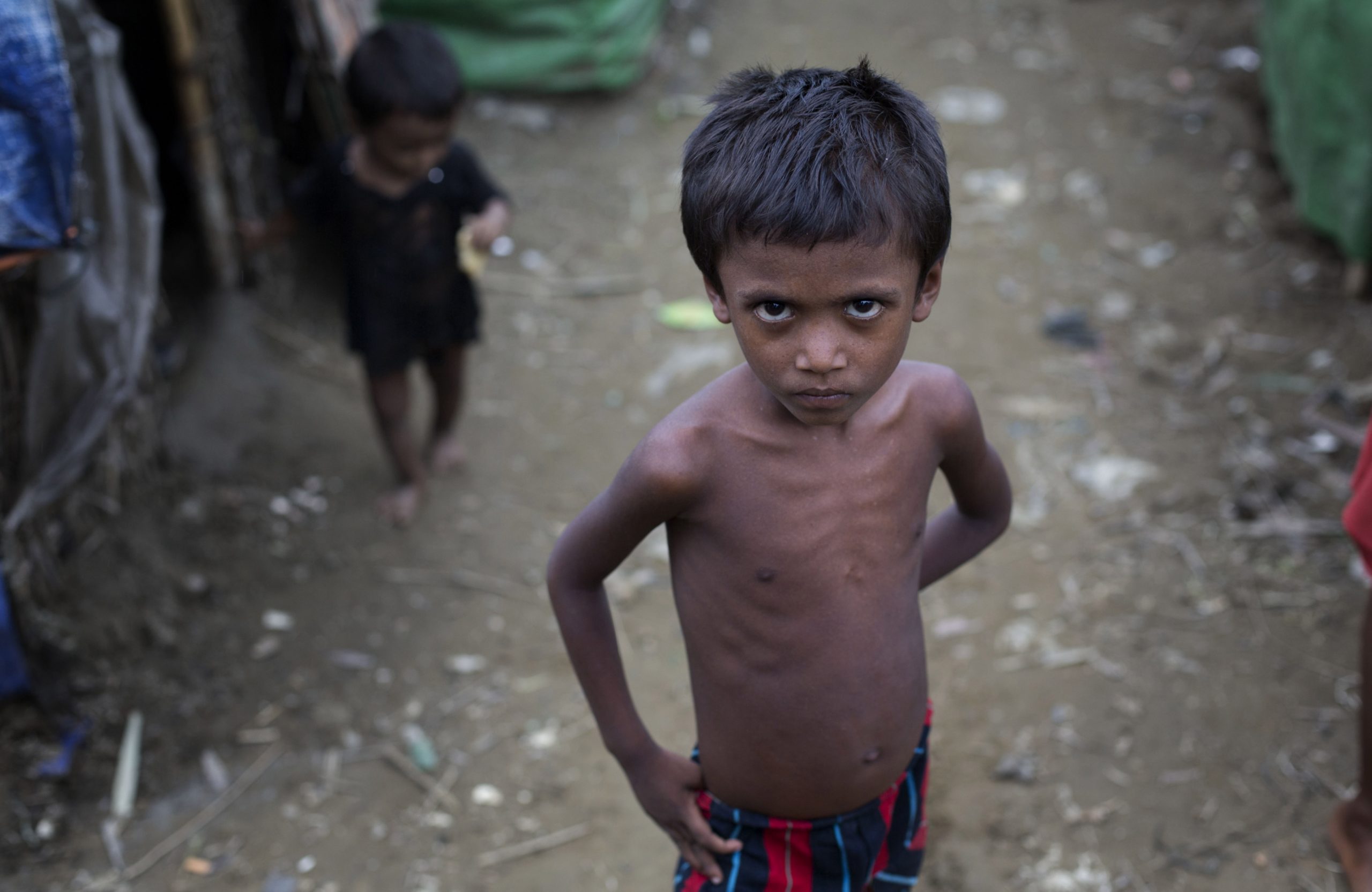
The Trump administration on Friday imposed sanctions on four Myanmar officials involved in the “ethnic cleansing” of a Muslim minority in Myanmar’s Rakhine state.
“Treasury is sanctioning units and leaders overseeing this horrific behavior as part of a broader U.S. government strategy to hold accountable those responsible for such wide scale human suffering,” said Sigal Mandelker, Treasury Under Secretary for Terrorism and Financial Intelligence.
Recommended Stories


Myanmar’s security forces unleashed a brutal campaign against the Rohingya Muslims of the Rakhine state in 2017. Witnesses reported massacres of entire villages by government forces, along with widespread rape, “mass deportation; and the systematic burning of villages,” according to Amnesty International.
Treasury blacklisted four military and border guard commanders and two military units, moves that freeze any assets under U.S. jurisdiction and bar Americans from working with them.
“There must be justice for the victims and those who work to uncover these atrocities, with those responsible held to account for these abhorrent crimes,” Mandelker said.
The Treasury Department imposed the sanctions pursuant to the Global Magnitsky Human Rights Accountability Act, a federal law named for an accountant who died in Russian government custody after blowing the whistle on state-sanctioned tax fraud. The sanctions come on the same day that Russia touted a plan to deepen military cooperation with Myanmar.
“The parties have discussed topical issues of bilateral military and military-technical cooperation and expressed interest in strengthening ties between the two countries’ armed forces in the future,” the Russian Defense Ministry said Friday, according to state-run media.
Russia in February announced a plan to sell fighter jets to Myanmar, which is known as Burma in the United States in defiance of the military junta that established the Myanmar government in 1989.
The human rights abuses complicate U.S. outreach to a strategically-significant state. Myanmar sits between India and China, and controls access to much of the Bay of Bengal and the wider Indian Ocean. U.S. officials hope India and southeast Asian states such as Myanmar and Vietnam will help curb China’s efforts to dominate the region.
“The U.S. government is committed to ensuring that Burmese military units and leaders reckon with and put a stop to these brutal acts,” Mandelker said. “We will continue to systematically expose and bring accountability to human rights abusers in this region and many others and greatly appreciate the efforts of civil society who are doing the same.”
Friday’s announcement stops short of declaring the massacre of the Rohingya an act of “genocide,” a designation which could “obligate the U.S. under international law to intervene, especially if the violence is ongoing,” according to Politico. A leaked draft of an forthcoming speech on the crisis by Secretary of State Mike Pompeo showed that he is considering the language, but hasn’t made a final determination.
The leak drew an unusually forceful condemnation from Nauert. “It’s a real disappointment … when colleagues, professionals leak deliberative documents,” she told reporters on Wednesday. “It harms our ability to make decisions, to have free conversations among our colleagues about certain issues in the news, certain things that we need to make very important decisions about … [and] when documents like that leak, it can also lead to people being injured in the field.”
