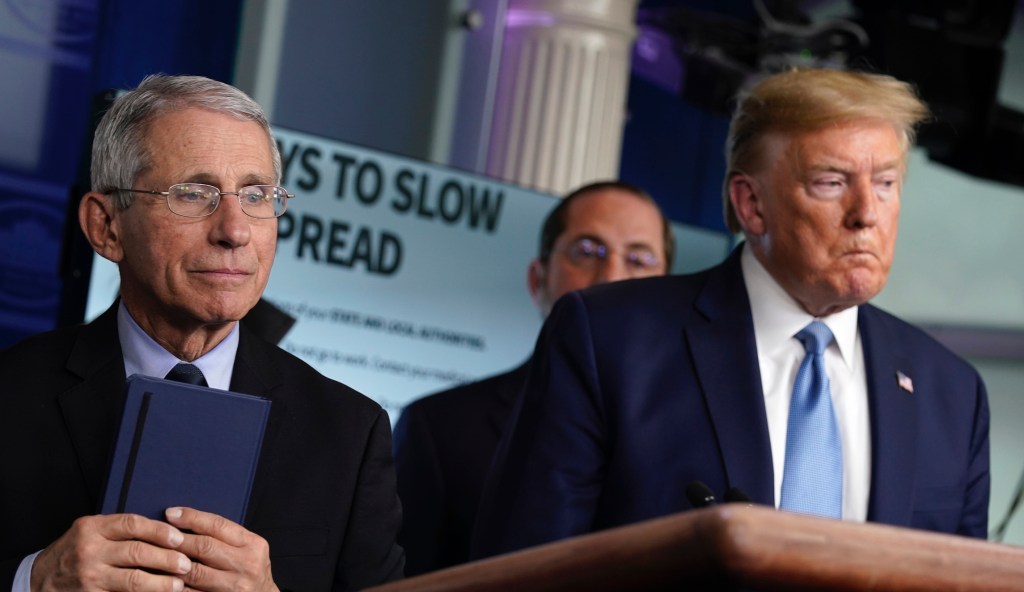
The Trump administration announced that more than 8,200 new coronavirus tests were conducted on Monday alone, signaling a massive increase in diagnostic testing capabilities.
“This is showing the dramatic ramp as the high throughput comes in,” Adm. Brett Giroir, the assistant secretary for health at the Department of Health and Human Services, said at a White House press conference Tuesday.
Recommended Stories
Public health laboratories reported to the task force that they have conducted about 32,000 diagnostic tests, cumulatively, and medical laboratories reported that they have conducted about 27,000 tests, meaning that nearly a third of medical laboratory tests were conducted just Monday.
Access to diagnostic testing has been difficult since the outbreak in the United States worsened in February, and the administration has been criticized for failing to report accurately how many people have been tested. A community project called the COVID Tracking Project estimates that about 49,000 people in the U.S. have been tested so far, and more than 5,200 have tested positive. Meanwhile, the Centers for Disease Control and Prevention reported that only about 25,000 people have been tested in CDC or private labs thus far.
Members of the task force said Monday that they expect to have about 2 million new test kits available by the end of the week.
[Click here for complete coronavirus coverage]
Still, the Trump administration has not rolled out enough test kits for physicians to administer. However, the task force announced that drive-through testing facilities are “blossoming” all over the country. Giroir said they are supplying equipment to many of them and expect to see about 47 new drive-through test centers across 12 states in the coming days.
“We did a trial site yesterday with a full mobile unit for drive-through,” Giroir said. “We had a lot of kinks in the system, as you can expect. That’s why we do a test before we go out into the field.”
The Food and Drug Administration authorized states to allow laboratories within their borders to develop their own diagnostic tests without having to seek emergency use authorization on Monday. Manufacturers can also distribute newly created tests before the agency grants them emergency clearance, which is normally required.
Less than a week ago, the FDA granted emergency approval for a coronavirus test that could speed up diagnostics tenfold, used on Roche Holding AG machines that many hospitals already have. Giroir said, though, that the task force did not have data from the American Hospital Association showing how many patients have been tested so far.
He then cautioned that the drive-through testing facilities will not be “100% perfect the moment they come,” but added that they will make a substantial difference in access to newly developed commercial tests.