

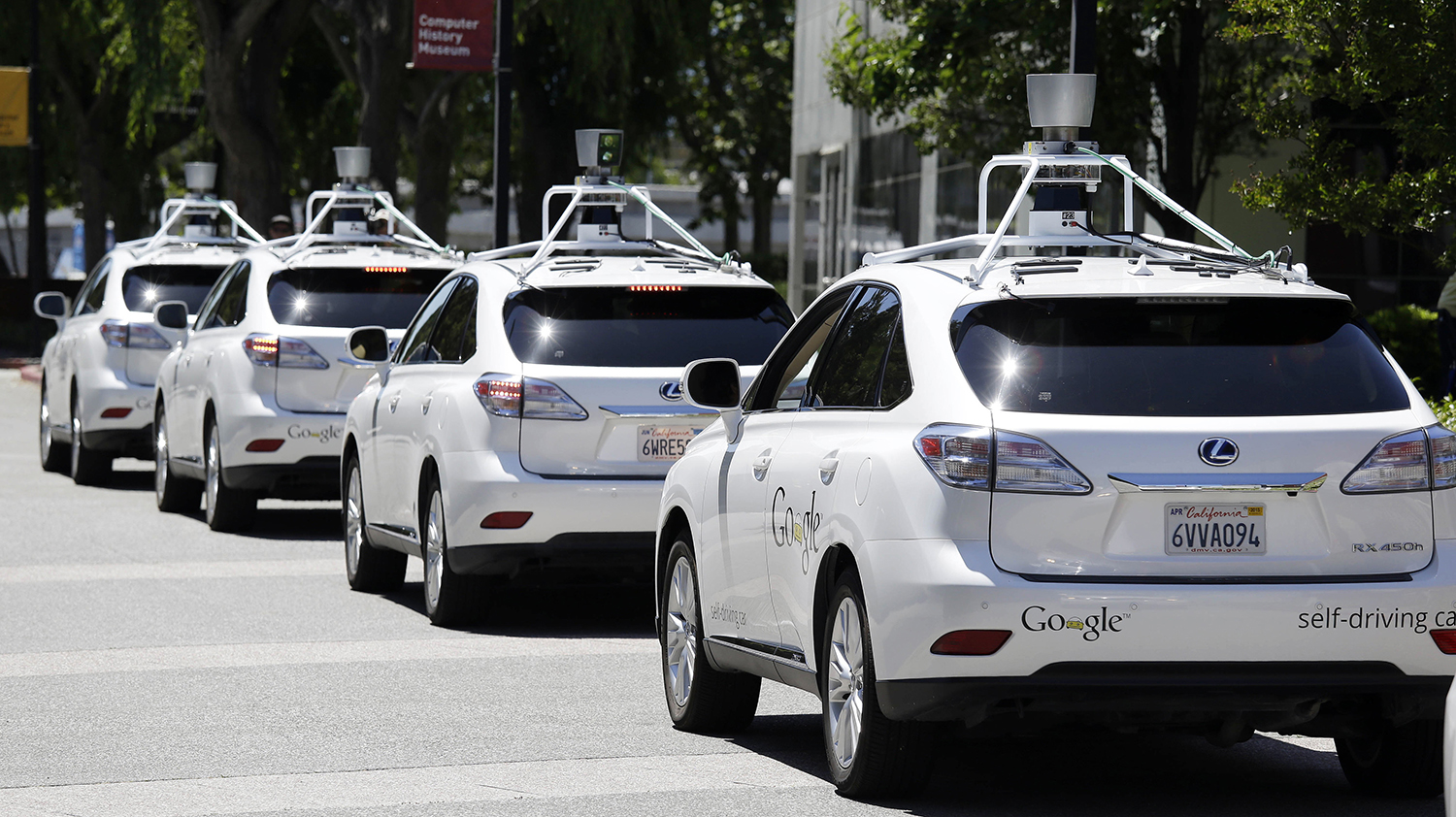
The House and Senate are expected to introduce complimentary bills as soon as Tuesday meant to reduce confusion between the states and federal government when it comes to regulating self-driving cars.
The House is expected to drop its bill first, introduced by Rep. Bob Latta, R-Ohio, who serves as chairman of the Energy and Commerce Committee’s digital commerce panel.
Recommended Stories


The Senate bill will be introduced some time later by Sens. John Thune, R-S.D., chairman of the Senate Commerce, Science, and Transportation Committee, Gary Peters, D-Mich., and Bill Nelson, D-Fla.
These cars, also known as autonomous vehicles, or AVs, blend advances in digital communications with that of vehicle mobility to enable newer cars and trucks to navigate highways and city streets without the need of a driver. Advocates of the technology point out its advantages when it comes to lowering fuel consumption by making driving more efficient and also more safe.
But confusion between states and the federal government on the role of regulating these new cars could imperil the technology by creating a patchwork of state-by-state policies governing AVs, according to advocates.
The House and Senate bills look to restore Washington leadership on regulation in creating a clear path for states to follow regarding the regulation of these vehicles.
A legislative blueprint released last week by the Senate commerce committee said its bill will “clarify the responsibilities of federal and state regulators to protect the public and prevent conflicting laws and rules from stifling this new technology.”
The legislation will respect the “existing relationship between federal and state regulators and their current separation of authority,” while at the same time creating the “necessary targeted updates” to regulations that pose challenges.
The House bill is expected to include measures to specifically prevent states from regulating the design, or creating roadworthiness standards for AVs, according to the group Securing America’s Future Energy, which is lobbying for the legislation as a matter of energy security and reducing oil consumption from the Middle East and other unstable regions.
“We remain concerned that states might use their ability to license AV drivers to place obstacles to innovation, including preventing persons with disabilities from riding in an AV without being licensed,” according to a primer on the House legislation from the group.
Even though the U.S. has become a major producer of its own oil from shale, it still imports between 8 and 10 million barrels per day. AVs have the ability to improve fuel efficiency by more efficient control of a vehicles speed, acceleration, and braking, according to the group.
The group is also advocating for updating federal fuel economy standards to incorporate fully-autonomous and semi-autonomous vehicles, as well as new business models such as ridesharing.
Advocates for updating the standards are optimistic that the Trump administration could be open to the idea of including AVs in future fuel-efficiency regulations. President Trump rolled back the Obama administration’s decision to move ahead with the next phase of vehicle standards, opening up a new review of the entire program, giving groups like SAFE the opportunity to makes its case for the new technologies.
