

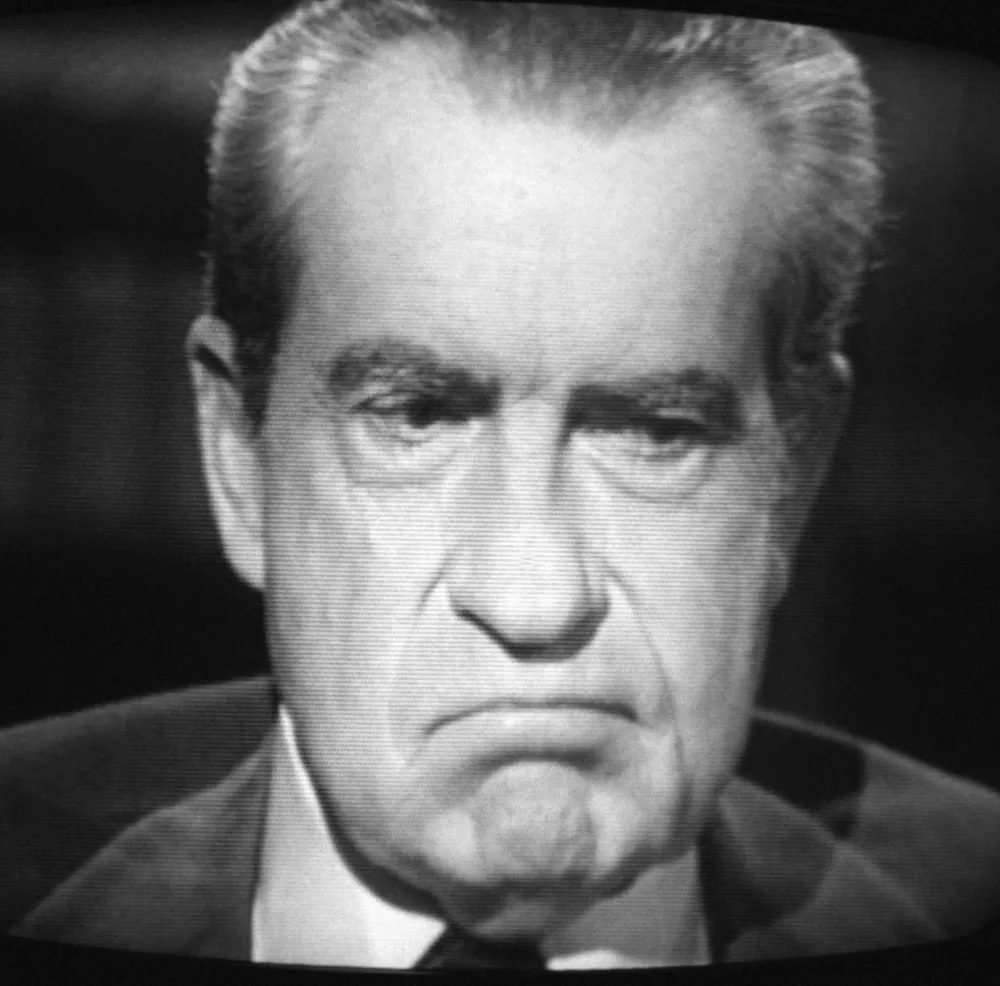
Amateur psychology is best avoided in a biography, but in a life of Richard Nixon, an author probably cannot help but indulge in it. In his new book, Richard Nixon: The Life, author John A. Farrell employs armchair diagnosis just enough to capture the flavor of one of the most bizarre men to ever sit in the Oval Office. Along the way, he delivers a nuanced, balanced, and well-researched look at Nixon that should rank among the best one-volume biographies yet of the 37th president of the United States.
Farrell begins at the beginning, with the story of Nixon’s hardscrabble youth in a Quaker family in California. The up-from-poverty story of Nixon’s childhood could have been a real political asset. Nixon himself thought it was inspiring, and the American people liked the versions of it they had heard before from the likes of Abraham Lincoln and James Garfield, and the version they would hear later from Bill Clinton. Part of the tragedy of Nixon is that he never let people love him enough to be inspired. The privations of his humble beginnings and the memory of the two brothers he lost to tuberculous drove the young Nixon to excel, and excel he did. College, law school, marriage, and a stint in the Navy during World War II shaped a man who had earned success but hungered for more. The author notes Nixon’s wartime poker games as an insight into his character: While his comrades played for fun and distraction, Nixon played to win.
Stay informed.Stay ahead.
Join Washington Examiner for unlimited access to the news, analysis, and commentary that matter most.
Already a member? Log in
