

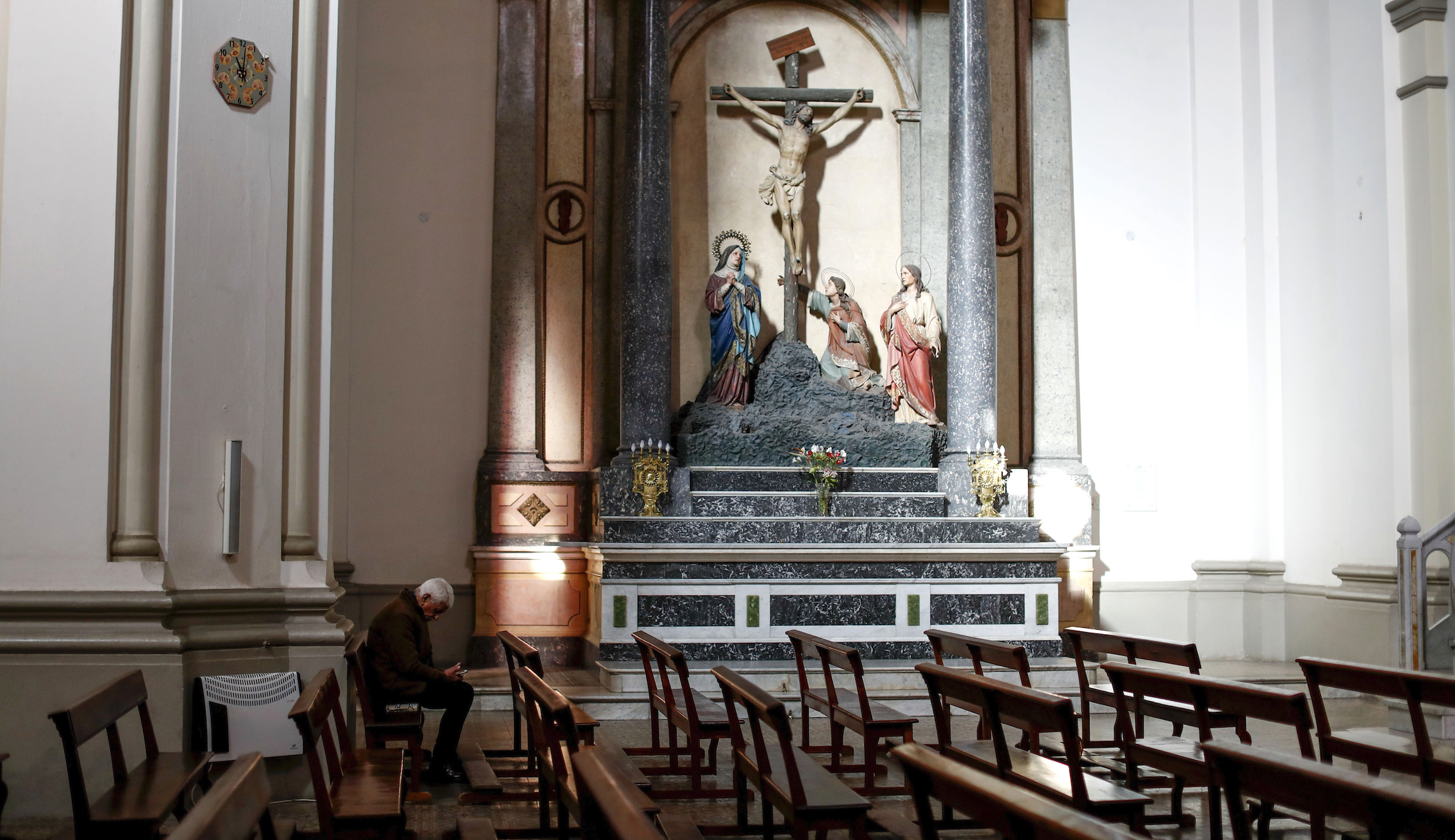
Christians could make up less than half of the U.S. population over the next few decades, reflecting an accelerating trend that may reshape the U.S. religious landscape.
Recommended Stories


About 64% of U.S. citizens identified themselves as Christian in 2020, compared to 30% who said they are religiously unaffiliated, or “nones,” according to the Pew Research Center. Another 6% identified themselves as belonging to another religion, such as Judaism, Islam, Buddhism, or Hinduism.
CHRISTIAN UNIVERSITY SUED FOR POLICY BARRING LGBT EMPLOYEES
However, the number of people who have left Christianity to identify themselves as “nones” has steeply increased since the 1990s, leading experts to believe this could lead to a religious makeup in which Christians represent less than half the U.S. population by 2070, while those who are religiously unaffiliated overtake the majority.
Depending on if current rates of religious switching continue at the same pace, projections show the percentage of Christians decreasing from the current 64% to anywhere between 35% and 54% by 2070, according to the Pew Research Center.
If there are no changes in religious affiliation over the next 50 years, Christians are expected to make up 54% of the population. However, if current trends remain stable in terms of the number of people leaving Christianity versus those who are joining, Christians will fall below the majority and make up 46% of the population, according to the center.
In the most drastic case, the religious group will fall to 35% of the population by 2070 if a growing number of Christians leave the religion and only a small share of “nones” switch in.
Meanwhile, the number of those who are religiously unaffiliated is expected to grow over the next 50 years, potentially reaching the majority. If there are no changes in current trends, “nones” will make up 34% of the U.S. population by 2070, according to Pew’s projections.
However, if there are major changes in the number of people who leave Christianity to become religiously unaffiliated, “nones” could overtake the majority and make up 52% of the country’s population.
“These are not the only possibilities, and they are not meant as predictions of what will happen,” the center said in its study. “None of these hypothetical scenarios is certain to unfold exactly as modeled, but collectively they demonstrate how much impact switching could have on the overall population’s religious composition within a few decades.”
It’s not clear what is causing the shift in religious tides, but it’s largely due to people leaving Christianity voluntarily.
Global trends indicate that religion-switching is also caused by widespread immigration, which has altered the religious composition in different countries. However, it’s not clear whether this is the case in the United States, as changing race trends do not seem to have an effect on the country’s religious shift.
CLICK HERE TO READ MORE FROM THE WASHINGTON EXAMINER
However, it’s expected that decreasing numbers of Christians could affect other factors, such as fertility rates and intergenerational transmission, according to the center. Other events could reverse the study’s predictions, with things such as war, economic depression, or climate crises possibly leading to a revival of Christianity in the U.S., according to Pew.
The findings suggest that the U.S. could be following in the footsteps of other countries in Western Europe that used to have overwhelming Christian majorities that have diminished in recent decades.
