

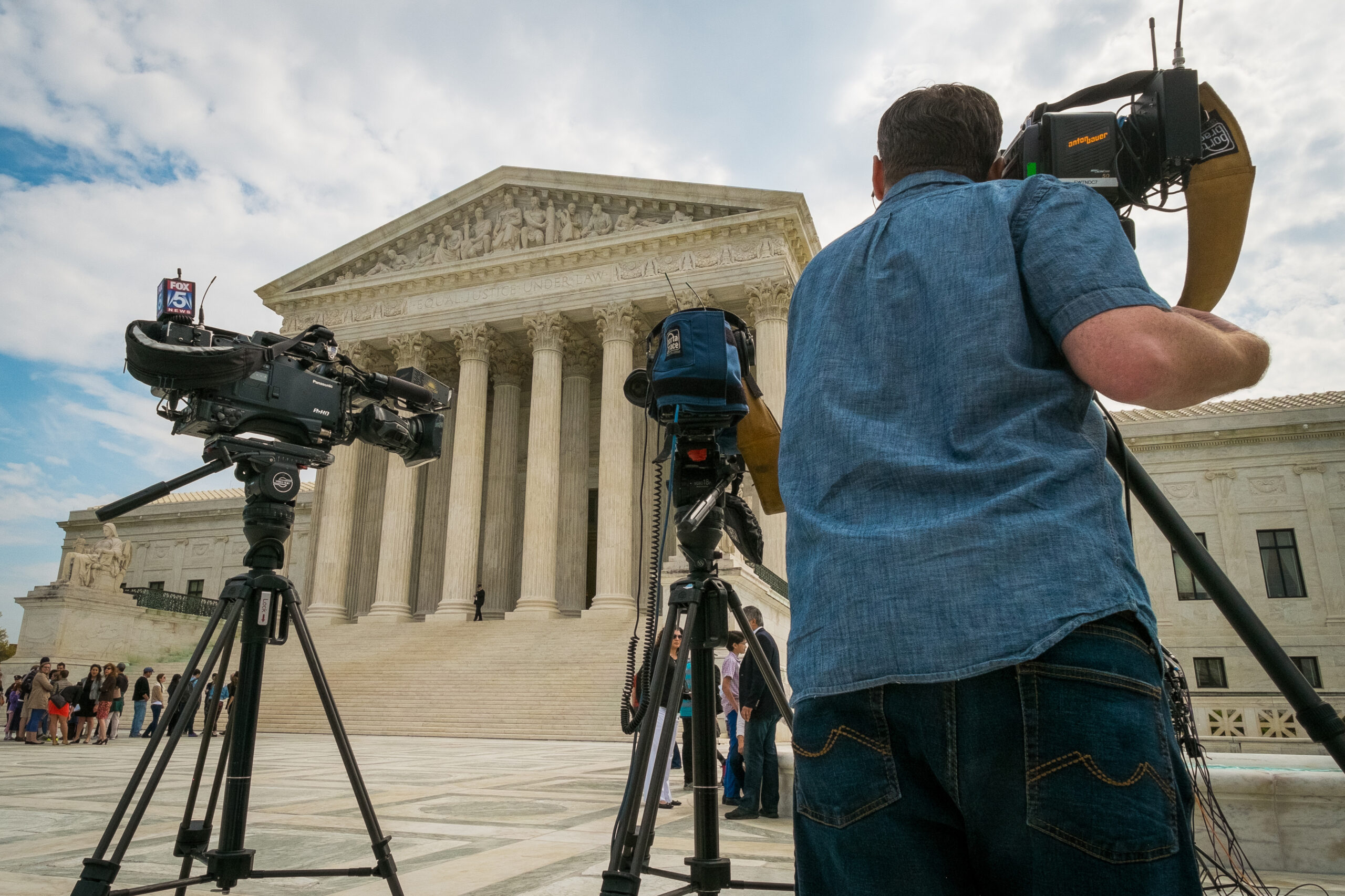
The Supreme Court will decide in its next term whether states face limits when it comes to the fees and fines they can impose on people, just like the federal government does, in a case that could radically change the way state and local governments mete out punishment.
The court agreed on Monday to hear the case Timbs v. Indiana, which raises the question of whether the 8th Amendment’s excessive fines clause, which provides protections against the federal government imposing excessive fees and fines, also applies to states.
Recommended Stories


The case has drawn the interest of those who think state and local governments are using fines to generate revenue without having to raise taxes. In 2013 in Ferguson, Mo., for example, fees, fines and forfeiture made up more than 20 percent of the city’s general revenue fund.
Jay Schweikert, a policy analyst at the Cato Institute, said the ability of state and local jurisdictions to impose steep fines leads to a misalignment of priorities for law enforcement and the public they protect.
“Right now, the power that law enforcement has to extract fines, fees and forfeitures from citizens means that law enforcement’s priorities are very different from the public interests,” Schweikert told the Washington Examiner. “There’s less of an interest on the most serious crimes, on public safety, than what generates revenues.”
“That’s a difficult problem to solve, but this would go some way toward solving that,” he said. “It’s one way of a larger effort toward better aligning law enforcement’s priorities and making sure they’re going after the people who are most dangerous.”
In a brief filed with the court, the Cato Institute and the Southern Poverty Law Center argued that the fees and fines levied by state and local governments can disproportionately harm low-income people.
“For those without the ability to pay, fees and fines mean that even the most casual encounter with the criminal justice system can have catastrophic results,” the two groups wrote. “Those facing criminal debt must often choose between paying their debts and providing for basic needs like food and shelter.”
The case dates back to 2013, when petitioner Tyson Timbs sold heroin to undercover police officers on two different occasions. While on his way to the third transaction in a Land Rover he purchased for roughly $41,500 with money from his father’s life insurance policy, he was pulled over and arrested.
Police seized his Land Rover and the state later sought to forfeit it through civil forfeiture.
Timbs pleaded guilty and served one year of house arrest. The maximum penalty for Timbs’ offense was $10,000.
A state trial court reviewing the state’s forfeiture request decided that forfeiture of the vehicle — which was purchased using legally obtained funds — would be “grossly disproportional” to his offense and unconstitutional because of the 8th Amendment’s excessive fines clause.
The Indiana Court of Appeals agreed, but the Indiana Supreme Court did not, and ruled that the Supreme Court “has never held that the states are subject to the Excessive Fines Clause.”
With its decision, the state high court split from two federal circuit courts and 14 state high courts, which have applied the excessive fines clause to the states. But courts in three states have said it does not apply to the states.
The way the Supreme Court decides the question could have a lasting impact on the practices of state and local police and governments. It could also place limits on the ability of state and local governments to seize property from people they suspect committed crimes.
Sam Gedge, a lawyer for the Institute for Justice, which is representing Timbs, said a ruling that the 8th Amendment’s excessive fines clause does apply to states would boost protections for residents around the country.
“We’re just asking the court to confirm that the same basic protection applies when it’s your state police or your local police taking your property,” he told the Washington Examiner.
